29 Aug 2026
How Online Virtual Number Solutions Work | SMS COOL Guide
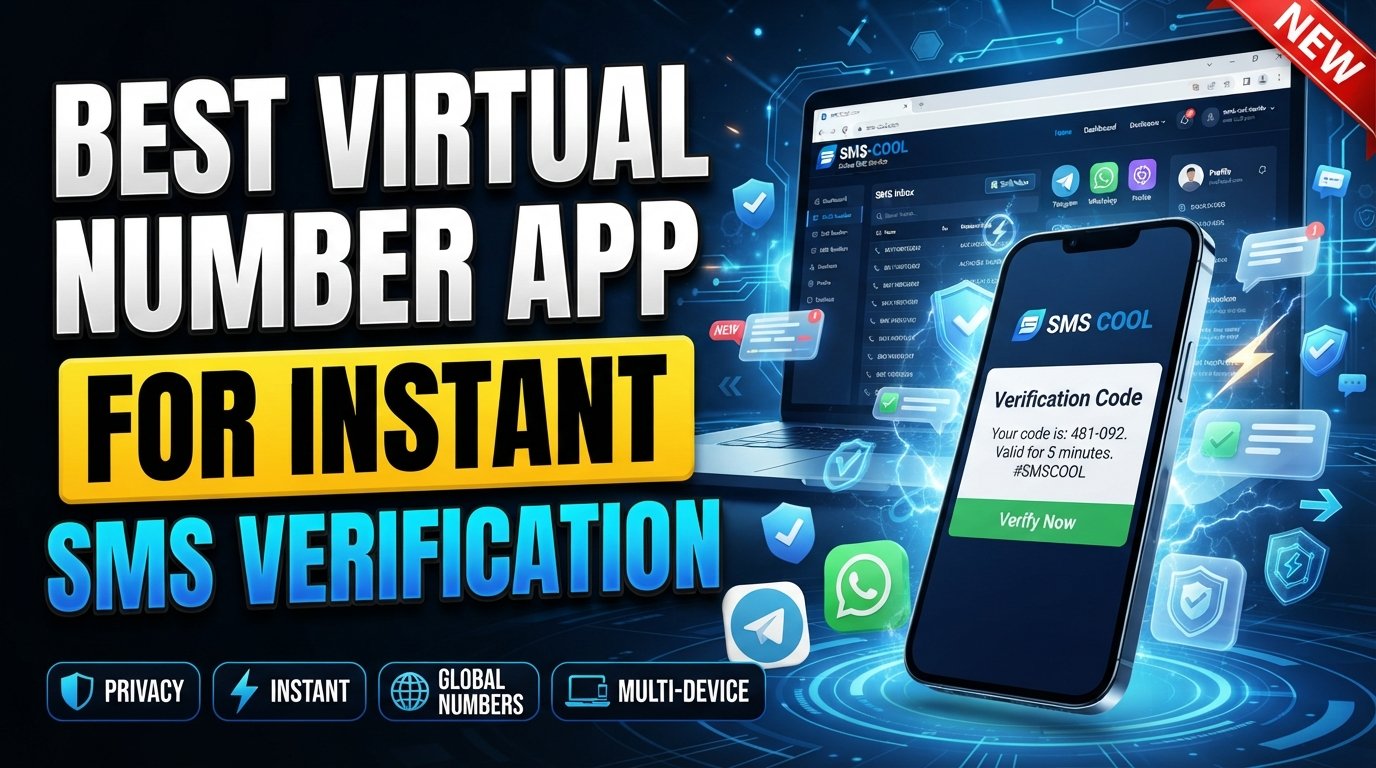
How Online Virtual Number Solutions Work
A phone number is no longer limited to a physical SIM card sitting inside a smartphone. Today, people and businesses can use an online virtual number to receive messages, handle verification processes, and maintain a separate communication channel without relying entirely on their personal number.
This is where virtual number solutions become useful. Instead of connecting a number directly to a traditional mobile device, these services make numbers available through an online platform. Depending on the service and its intended use, users can receive SMS, access verification codes, and manage communications through a web-based interface.
For someone who wants to keep a personal number private, a business that needs a separate communication channel, or a user who needs an online phone number for a specific verification task, choosing a suitable provider can make the process considerably easier.
SMS COOL provides a practical way to approach these needs by bringing virtual numbers and online SMS functionality into one convenient solution.
What Is an Online Virtual Number?
An online virtual number is a phone number that is managed through an internet-based system rather than being tied exclusively to a physical phone or traditional SIM card.
The number can be used for supported communication activities, such as receiving SMS. Instead of waiting for a message to appear on a personal smartphone, a user can access the message through the provider's online platform.
The exact functionality varies between providers, but the basic concept is straightforward:
- A user selects an available virtual number.
- The number is assigned or made accessible through an online service.
- A website or application sends an SMS to that number.
- The message is received by the virtual number.
- The user views the incoming message through the online platform.
This makes a virtual phone number particularly useful when separating online activities from a personal mobile number is important.
How Online Virtual Number Solutions Work
The technology behind an online virtual number service may sound complicated, but the user experience can be surprisingly simple.
When a message is sent to a virtual number, the service's underlying telecommunications infrastructure receives the SMS. The provider then makes the message available through its online system, allowing the authorized user to view it.
For example, imagine that you are signing up for an online service that requests phone number verification. Rather than immediately providing your personal number, you may choose a supported virtual number for verification.
After entering the virtual number where appropriate, the service sends a verification message. The virtual number provider receives that SMS and displays it online. You can then read the verification code and complete the relevant process.
The important point is that a virtual number acts as a bridge between traditional SMS communication and an online interface.
How Do Users Receive SMS Through Virtual Numbers?
Receiving SMS online generally involves just a few steps.
1. Choose a virtual number
The user starts by selecting a number offered through the virtual number service. The appropriate choice depends on the intended use and the provider's available options.
2. Enter the number where needed
The virtual number can then be entered into a supported website, application, or online service that requests a phone number.
3. Wait for the SMS
If the service sends an SMS, the message is routed to the virtual number.
4. View the message online
The user accesses the incoming SMS through the provider's platform and can read the contents, including a verification code when applicable.
With SMS COOL, the goal is to make this process straightforward so users can focus on what they actually need to accomplish rather than dealing with unnecessary complexity.
Common Uses of Virtual Numbers
There is no single reason people use virtual numbers. Different users have different communication and privacy requirements.
Common use cases include:
- SMS verification: Receiving supported verification messages during account or service registration.
- Online phone number needs: Using a separate number for certain online activities.
- Privacy: Keeping a personal phone number separate from selected online interactions.
- Temporary communication: Using a temporary virtual number for a limited-purpose task where appropriate.
- Business communication: Establishing a separate number for work-related activities.
- Testing and development: Certain businesses and teams may require virtual numbers when testing SMS-based workflows.
- Online services: Managing communication for platforms that support virtual numbers.
- Customer interactions: Businesses may use separate numbers to distinguish professional communication from personal communication.
A disposable phone number can be suitable for certain short-term purposes, while a more flexible virtual number service may be more appropriate when users need a broader communication solution.
The key is matching the type of number with the task.
SMS Verification and Receiving Verification Codes Online
One of the most familiar applications of virtual numbers is SMS verification.
Many online platforms use phone number verification as part of registration, login, security, or account-management processes. A typical workflow looks like this:
Enter number → Receive SMS → Read verification code → Enter code → Complete verification
A virtual SMS number can simplify the first part of this process by providing a separate number through an online platform.
However, not every website accepts every type of virtual number. Some platforms may restrict VoIP, temporary, or virtual numbers. Therefore, users should always check the rules of the service they are trying to access and use virtual numbers only for legitimate purposes.
For supported use cases, an SMS verification service can be a convenient alternative to repeatedly sharing a personal mobile number.
Benefits of Using a Virtual Number
The appeal of virtual numbers comes down to flexibility and separation.
Privacy
A virtual number can help separate certain online activities from a personal phone number. This can reduce the need to share personal contact details with every online service.
Convenience
Because messages can be accessed online, users do not necessarily need to manage another physical SIM card or device for every communication requirement.
Accessibility
An online SMS service can make messages accessible through an internet-connected platform, depending on the provider's system and supported functionality.
Separation
Keeping personal and professional communication separate can make life easier. A business virtual number, for example, can help distinguish work-related interactions from a personal mobile number.
Flexibility
Different situations require different types of numbers. Flexible virtual number solutions allow users to choose an approach that better fits a particular task.
Simpler online verification
For supported services, receiving verification codes online can reduce the friction associated with using a personal number for every registration or verification request.
Virtual Numbers for Personal and Business Use
Virtual numbers aren't limited to individual users.
For personal use, someone might want a separate number for selected online interactions, temporary communication, or supported verification tasks.
Businesses have broader requirements. A company may need separate communication channels for teams, customers, campaigns, applications, or internal workflows.
Virtual numbers for businesses can therefore provide useful separation between professional and personal communication.
A business virtual number may be particularly practical when a company wants to manage communications without tying every activity to an employee's personal phone number.
For example, a small online business could use a dedicated virtual number for a particular communication workflow while keeping the owner's personal number private.
The right solution depends on the company's communication model, the platforms it uses, and the functionality supported by its chosen provider.
Security, Privacy, and Convenience
Privacy is one of the biggest reasons people explore online virtual number services, but users should still approach them thoughtfully.
A virtual number is not automatically a guarantee of anonymity or complete security. The level of privacy depends on the provider, the platform being used, and how the user manages their account and information.
When choosing a service, consider questions such as:
- How are messages displayed and managed?
- Is the platform easy to navigate?
- Is the number appropriate for the intended purpose?
- Does the provider clearly explain its service?
- Can the service support the type of SMS you need?
- Are the provider's terms compatible with your intended use?
The best virtual number experience combines convenience with sensible privacy practices.
What to Look for in a Virtual Number Provider
Choosing the right virtual number service is about more than simply finding a number.
Look for a provider that offers:
Easy access
The process of finding and using a virtual number should be clear rather than confusing.
Straightforward SMS access
If your primary requirement is to receive SMS online, the platform should make incoming messages easy to locate and read.
Practical verification support
For users interested in receiving verification codes online, the service should clearly communicate how its numbers are intended to be used.
A simple user experience
A complicated interface can turn a straightforward task into a frustrating one. Clear navigation matters.
Flexible options
Different users have different requirements, so flexibility is valuable when selecting a virtual number solution.
Transparent information
A provider should clearly explain its services, limitations, and appropriate use cases rather than leaving users to guess.
Common Mistakes When Choosing a Virtual Number Service
Not every virtual number service is suitable for every purpose. Several common mistakes can lead to unnecessary problems.
Choosing based only on price: A low-cost option may not provide the experience or functionality you actually need.
Assuming every service accepts virtual numbers: Some websites restrict certain categories of numbers, so acceptance should never be assumed.
Ignoring the intended use: A temporary virtual number, business number, and verification number can serve very different purposes.
Overlooking privacy: Users should understand what information they are sharing and how they are accessing messages.
Selecting a complicated platform: If you only need a simple way to receive SMS online, an unnecessarily complicated interface can make the process harder.
Expecting universal compatibility: Virtual numbers are not guaranteed to work with every website, application, or verification system.
Taking a few moments to understand your requirements before selecting a provider can save time later.
Why SMS COOL Is a Useful Solution
When the goal is to access virtual numbers without turning the process into a technical project, SMS COOL offers a practical approach.
Its value is centered on making online SMS and virtual number use more convenient for people who need a separate communication channel.
Whether the requirement involves receiving SMS online, handling supported verification-code use cases, or keeping online communication separate from a personal number, SMS COOL provides a straightforward place to start.
Rather than treating a virtual number as a complicated telecommunications concept, SMS COOL focuses on the practical side of the experience: access the number, use it for the intended purpose, and view incoming SMS through an online environment.
That simplicity can be especially useful for users who do not want to manage additional physical devices or repeatedly expose their personal number.
For businesses, the flexibility of virtual numbers can also help create clearer boundaries between personal communication and professional activities.
How SMS COOL Simplifies Online SMS Needs
The biggest advantage of an online SMS solution is that it removes some of the friction traditionally associated with managing phone numbers.
With SMS COOL, users can approach virtual number requirements through an online platform instead of treating every task as something that requires a separate physical phone.
The experience can be useful when you need to:
- Access a virtual phone number online
- Receive supported SMS messages
- Handle verification-code requirements
- Keep certain online activities separate from your personal number
- Explore flexible virtual number solutions
- Support selected personal or business communication needs
Of course, users should always confirm that a particular number and service are accepted by the website or application they intend to use.
The goal isn't to replace every traditional phone number. Instead, a virtual number provides another practical option when an online communication channel makes more sense.
Final Thoughts: Is an Online Virtual Number Right for You?
Online virtual number solutions have made phone-based communication more flexible. Instead of relying exclusively on a physical SIM and personal smartphone, users can access numbers through online services and, where supported, receive SMS and verification codes through an internet-based platform.
For individuals, this can mean greater separation between personal information and selected online activities. For businesses, it can provide another way to organize professional communication.
The most important step is choosing a provider that matches your needs, offers a straightforward experience, and clearly explains how its numbers can be used.
SMS COOL is a practical solution for users looking to simplify virtual SMS and online number requirements. From receiving SMS online to handling supported verification-code use cases, it brings convenience and flexibility into one accessible approach.
If you're looking for a simple way to explore online virtual numbers, consider SMS COOL for your next virtual SMS or verification need.