17 Aug 2026
Why Online Phone Verification Matters for Account Security
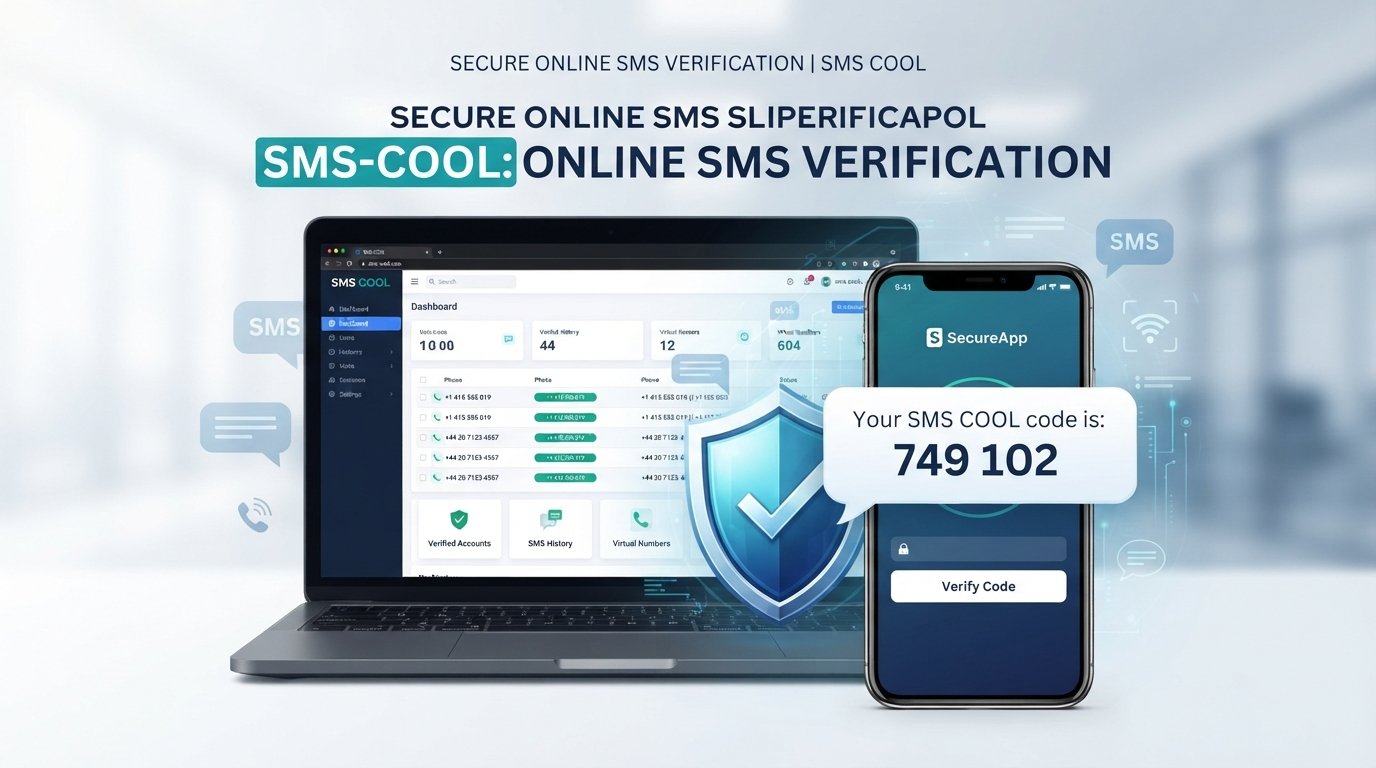
Why Online Accounts Use Phone Verification
Creating an online account often seems simple: enter your email address, choose a password, and click Sign Up. Then comes a step that many people recognize immediately—a website or app asks for a phone number and sends a short verification code.
For some users, this extra step feels inconvenient. Why does a service need a phone number when an email address is already available?
The answer is that online phone verification can help websites distinguish genuine users from automated or suspicious activity while adding another layer to the account verification process. At the same time, sharing a personal phone number with every online service can raise legitimate privacy concerns.
This is where services such as SMS COOL can be useful. When a website legitimately requires SMS verification, a temporary phone number can provide a practical alternative to immediately sharing your everyday personal number.
Let's look at how phone verification works, why businesses use it, and where an SMS verification service can fit into a privacy-conscious online routine.
What Is Phone Verification?
Phone verification is a process in which an online service asks you to provide a phone number and then sends a verification code by SMS.
The basic process is straightforward:
- You enter a phone number during registration or account verification.
- The website or app sends an SMS OTP, usually containing a short numerical code.
- You enter that code into the requested verification field.
- The service confirms that the submitted number can receive the verification SMS.
This is commonly known as SMS verification, OTP verification, or phone number verification.
The goal is not necessarily to identify everything about a user. Instead, the service is generally checking whether the supplied phone number can receive a message and complete a particular verification step.
Why Do Websites and Apps Require Phone Verification?
Online platforms have several reasons for adding phone verification to their signup or login processes.
Reducing Automated Account Creation
Websites can attract automated registrations, spam, and other unwanted activity. Requiring a phone-based verification step can make mass automated registration more difficult.
A verification code sent through SMS introduces an additional step that a person or system must complete before an account can proceed.
Adding Another Verification Layer
An email address and password are useful account credentials, but services may want additional information during account creation or certain account actions.
Phone verification provides another channel through which the service can confirm that the person completing the online account verification process has access to the supplied number.
Helping With Account Recovery
Some platforms use a verified phone number as one option for account recovery. If a user forgets a password or needs to confirm an account-related action, the service may send a verification SMS to a previously registered number.
Whether this option is available depends entirely on the individual platform.
Supporting Trust and Platform Quality
Online services need to manage fake registrations, spam, and abusive automated behavior. Phone verification can be one component of a broader approach to maintaining the quality of a platform.
It is important to remember that phone verification is only one security measure. It does not replace strong passwords, account recovery controls, device security, or other protections.
How Does SMS Verification Work?
The process behind SMS verification is relatively simple from a user's perspective.
Suppose you are registering for an online service. After entering your phone number, the platform generates a temporary verification code and sends it as a text message.
You might receive a message such as:
Your verification code is 482731.
You then enter the code on the website or app. If the code is correct and still valid, the verification process is completed.
The code is often called an OTP, or one-time password. An SMS OTP is generally designed for a specific verification attempt rather than permanent use.
Why Are Verification Codes Used?
A verification code is useful because it creates a short-lived confirmation step.
Instead of simply asking someone to type a phone number, the service can ask them to demonstrate access to the number by entering the code received through SMS.
This makes the process more meaningful than simply submitting an unconfirmed number.
However, users should never share verification codes with strangers or enter them into suspicious websites. A legitimate verification code should only be used for the account or service that requested it.
Phone Verification and Online Account Security
There is a close connection between online phone verification and online account security, but the two concepts are not identical.
Phone verification can strengthen an account's verification process by adding another communication channel. It may also help services manage registration and recovery workflows.
At the same time, users should avoid assuming that having a verified phone number makes an account completely secure.
Good account security typically involves several habits:
- Use a strong, unique password.
- Enable available security features such as multi-factor authentication.
- Keep recovery information up to date.
- Avoid sharing OTPs or verification codes.
- Be cautious with unexpected verification messages.
- Review which services have access to personal information.
Phone verification works best as one part of a broader strategy for keeping secure online accounts.
The Privacy Question: Should You Give Every Website Your Personal Number?
This is where the situation becomes more complicated.
Your everyday phone number can be connected to personal communications, contacts, professional services, delivery accounts, financial services, and other aspects of your digital life.
That does not automatically mean every website that requests a number is unsafe. However, it is reasonable to consider whether a particular service genuinely needs your personal number.
Some users want to protect their personal phone number when signing up for an online service they may use only occasionally.
Others may simply prefer to separate personal communications from online services that require SMS-based verification.
This is one reason a temporary phone number or virtual phone number can be useful in appropriate situations.
When Might You Need a Temporary Phone Number?
A temporary SMS number can be helpful when an online service requires phone verification but you do not want to immediately use your everyday number.
For example, you might be:
- Testing an online service that requires account verification.
- Signing up for a service you expect to use only occasionally.
- Keeping personal and online-service communications separate.
- Participating in a legitimate platform that requires SMS OTP during registration.
- Looking for a way to receive verification codes without unnecessarily exposing your primary number.
The important consideration is always the service's own terms and requirements. Some platforms may restrict temporary or virtual numbers, so users should check the applicable rules before proceeding.
How an SMS Verification Service Can Help
An SMS verification service provides access to phone numbers that can receive SMS messages for supported verification purposes.
For someone who wants to receive SMS online, the concept can be convenient: instead of giving a personal number to every website, the user can use an available number for a legitimate verification task and retrieve the relevant verification SMS through the service.
This can be particularly useful when privacy is a consideration.
Rather than treating a phone number as something that must automatically be shared whenever a signup form requests it, users can make a more deliberate choice about which number they provide.
How SMS COOL Fits Into the Process
SMS COOL is a practical option for users who need to receive SMS verification codes while avoiding unnecessary use of their personal phone number.
The basic idea is straightforward. When a supported online service requires phone number verification, a user can explore SMS COOL as an alternative way to handle the SMS portion of the verification process.
The value is primarily about convenience and separation.
Your personal number may be important for family, friends, work, and services you use regularly. Using a separate number for an appropriate online verification task can help keep those purposes distinct.
SMS COOL can therefore be considered when you need a convenient way to receive verification SMS and want to avoid immediately providing your everyday number.
As with any third-party service, users should review the applicable terms, supported services, and current availability before relying on a number for a particular verification process.
Benefits of Using SMS COOL for Verification SMS
There are several practical reasons someone might consider SMS COOL.
Less Unnecessary Exposure of Your Personal Number
If a website only needs a number for a particular verification step, you may prefer not to use the number associated with your personal communications.
A separate number can help you make that distinction.
Convenient Access to Verification Codes
When a supported service sends a verification SMS, the ability to access the message through an SMS service can make the signup process more convenient.
The exact availability of numbers and supported services can vary, so it is sensible to check what is currently offered.
Useful for Short-Term Online Needs
Not every online account becomes part of your daily digital life. For temporary or occasional legitimate uses, a temporary SMS number may be more appropriate than immediately attaching your personal number to another service.
A More Privacy-Conscious Approach
Using a separate number does not mean abandoning account security or ignoring a website's rules. Instead, it gives users another option when considering how much personal information they want to provide during an online signup.
That makes SMS COOL particularly relevant to people who value privacy online and want more control over how their phone number is used.
Practical Situations Where SMS COOL Can Be Useful
Consider a simple example.
You discover an online platform that interests you, but registration requires a phone number and SMS OTP. You do not expect to use the platform frequently, and you would rather not give it the same number you use for personal communications.
After checking the platform's requirements, you can consider whether an available SMS COOL number is suitable for the verification process.
Another example is testing an online service that requires online services verification during registration. Instead of automatically using your primary number, you can first consider whether a separate verification number makes more sense for your situation.
The principle is simple: use the appropriate verification method for the service while being thoughtful about the personal information you share.
What to Remember About Phone Verification
Phone verification exists for legitimate reasons. It can help platforms confirm access to a phone number, reduce certain forms of automated registration, and support account verification or recovery workflows.
For users, however, there is a second consideration: privacy.
Your phone number is personal information, and you do not necessarily need to treat every signup request the same way. When a service permits it, a temporary or virtual number can provide useful separation between your everyday communications and online account activity.
Most importantly, never treat a verification code as something to share casually. A verification SMS is intended for the specific verification process that requested it.
Conclusion: A Practical Way to Handle SMS Verification
Phone verification has become a familiar part of the internet experience because websites and apps use it to confirm access to a number and add another step to their account verification process.
For users, the challenge is balancing convenience with privacy.
If you need to verify a phone number for a legitimate online service but would prefer not to expose your personal number unnecessarily, an SMS verification service can offer a practical alternative where supported.
SMS COOL is worth exploring when you need to receive verification SMS and want a convenient way to separate an online verification task from your everyday phone number.
Before using any service, check the platform's requirements and make sure the chosen verification method is permitted. When it fits the situation, SMS COOL can make the process of receiving verification codes simpler while giving you another option for managing your phone number online.
Need a convenient way to handle SMS verification? Explore SMS COOL and see whether it fits your next legitimate online account verification need.