17 Aug 2026
Online Phone Number vs Real Phone Number: Key Differences Guide
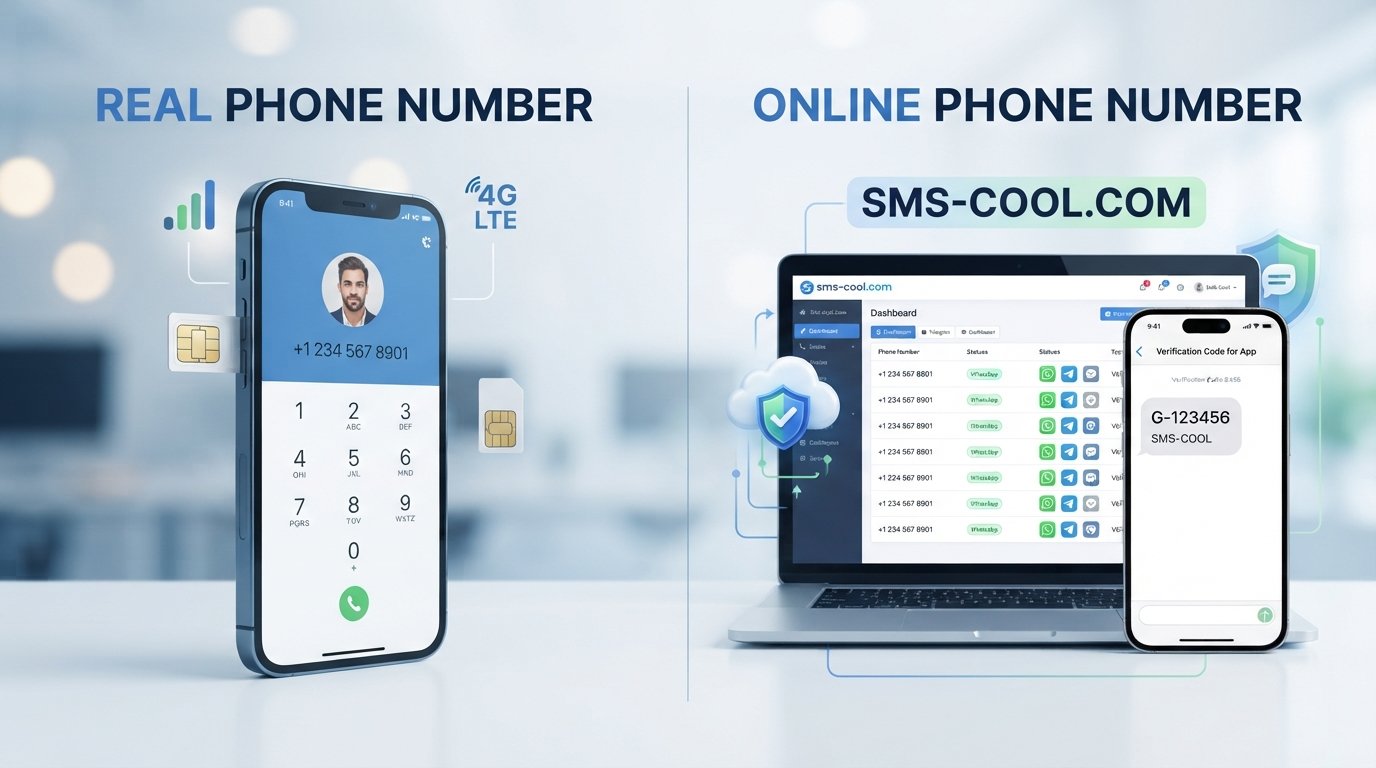
Online Phone Number vs Real Phone Number
Giving out your phone number online can feel like a small decision—until your inbox starts filling with messages, calls, promotions, and verification requests.
That is why many people look for an alternative when signing up for online services. Instead of using their personal mobile number everywhere, they consider an online phone number designed for specific digital activities.
But how different are these options? And when should you choose one over the other?
The question of online phone number vs real phone number is really about purpose. A traditional mobile number is often best for permanent personal communication, while an online or virtual number can offer additional flexibility and privacy for suitable online activities.
Let's look at the differences in practical terms.
What Is a Real Phone Number?
A real phone number is the number provided through a traditional mobile carrier or telecommunications provider. It is normally connected to a physical SIM card or an eSIM and associated with your mobile device.
Your real number is typically the one you use for calls, personal texts, family communication, banking alerts, and important accounts.
Advantages of a real phone number
A traditional number offers several important benefits:
- Reliable personal communication: It is designed for everyday calls and messages.
- Long-term ownership: You can generally keep the same number for an extended period.
- Broad compatibility: Many services are designed around traditional carrier numbers.
- Mobile connectivity: Calls and SMS can work directly through your phone and carrier network.
- Important account access: A permanent number can be useful for accounts that require a stable contact method.
There are disadvantages, too.
Your personal number can become widely distributed if you use it for every website, registration, newsletter, marketplace, and online service. Once shared, it can be difficult to control where that number appears.
This is where privacy becomes an important consideration.
What Is an Online Phone Number?
An online phone number, often called a virtual phone number or virtual number, is a number that is managed through an online service rather than being tied to your everyday physical SIM in the traditional way.
Depending on the service and number, it may support functions such as receiving SMS messages or verification codes.
For suitable services, an online number can provide a convenient way to keep your personal number separate from online activities.
For example, you might need a number during an online registration or another legitimate verification process but prefer not to give the website your everyday personal number.
An online phone number can create that separation.
However, virtual numbers are not universally accepted. Some platforms restrict or reject certain types of online numbers, and some verification systems specifically require a traditional carrier number. Always follow the requirements and terms of the service you are using.
Online Phone Number vs Real Phone Number: Key Differences
The easiest way to understand the difference is to compare how each option fits different situations.
Privacy
A real phone number is closely connected to your personal communication and mobile identity. Sharing it with numerous online services can increase unwanted contact and make it harder to separate personal and digital activities.
An online number can provide an additional layer of separation. Instead of immediately sharing your primary number, you may use a privacy-friendly phone number for appropriate online purposes.
Convenience
A real number is extremely convenient for everyday communication because it is already connected to your phone.
An online number can be convenient when your main goal is a specific digital activity, such as receiving an SMS message through an online SMS service.
Accessibility
Your real number normally requires your mobile device and carrier connection.
An online number is managed through the service providing it, which can make SMS access more convenient in certain situations. The exact experience depends on the provider and the type of number.
SMS verification
Traditional carrier numbers are widely used for phone number verification and SMS-based account confirmation.
Online numbers can also be useful for SMS verification, but acceptance varies. A website may accept one virtual number while another may require a mobile carrier number.
For that reason, an online number should be viewed as a practical option—not a universal replacement for your personal number.
Cost considerations
A real phone number is usually part of a mobile plan that may include calls, data, SMS, and other services.
An online number is generally obtained through a dedicated online phone number service, where pricing depends on the provider, country, number type, and intended use.
The right choice depends on what you actually need rather than simply which option costs less.
Flexibility
Online numbers can be useful when you want a separate number for a particular online activity.
A real phone number is generally more suitable when you need consistent, long-term access for personal communication.
Personal use vs. online use
Your real number is usually the better choice for family, friends, emergency contacts, banking, and important personal accounts.
An online number can make more sense for registrations, testing, online projects, and other suitable digital activities where privacy or separation is valuable.
Dependence on a physical SIM or device
A traditional number is normally connected to a carrier account and SIM or eSIM.
An online number is handled through an online platform. This difference can make virtual numbers attractive for users who need SMS access without relying on their primary mobile number for every online interaction.
Why Do People Use Online Phone Numbers?
There are several legitimate reasons someone might choose an online number.
Protecting personal contact information
Not every website needs your primary phone number. Using a separate number can help reduce the amount of personal contact information you share online.
Online registrations
Some registrations require a phone number. Where virtual numbers are accepted, an online number can help keep registrations separate from your personal communication.
Separating personal and online activities
A dedicated virtual number can create a useful boundary between your private life and online activities.
Receiving SMS verification codes
Some online services use SMS verification as part of their registration or login process. A suitable SMS verification number can make receiving those messages more convenient.
Testing services
Developers, testers, and businesses may need separate numbers when evaluating an SMS workflow or testing how a service handles phone verification.
Business communication
A virtual number can sometimes help businesses establish a separate communication channel without mixing customer communication with an owner's personal number.
Temporary online activities
A temporary phone number can be useful when you need a number for a limited online purpose and do not want to immediately associate that activity with your primary number.
The important point is responsible use. A temporary or disposable phone number should never be used to mislead people, evade legitimate security controls, or violate a platform's rules.
When Should You Use a Real Phone Number?
There are situations where your traditional number is clearly the better option.
Use your real phone number when you need:
- Long-term personal communication
- Reliable contact with family and friends
- Banking or financial notifications
- Important personal accounts
- Emergency communication
- A permanent recovery method
- Services that specifically require a carrier-based mobile number
For critical accounts, stability matters. Losing access to a temporary or online number could create unnecessary problems if that number is being used as the only recovery method.
When an account is important, always check its recovery options and verification requirements before choosing a number.
When Should You Use an Online Phone Number?
An online number can be a sensible choice when privacy, separation, or convenience matters more than having a permanent carrier-based number.
Consider an online number for appropriate situations such as:
- Receiving SMS online when the service permits it
- Online registrations
- Testing SMS functionality
- Separating online activities from personal communication
- Temporary projects
- Suitable SMS verification requests
Before using one, check whether the website or app accepts virtual numbers. Some services explicitly require a traditional mobile number.
Responsible use is essential. An online number should complement legitimate digital activity, not be used to bypass security measures or break the rules of a service.
How SMS COOL Makes Online SMS Verification Easier
If your goal is to use an online number for suitable SMS verification, SMS COOL can provide a practical alternative to sharing your personal number every time a website requests one.
The basic idea is straightforward: instead of relying on your everyday mobile number for every online interaction, you can use an available online number for supported verification purposes and access incoming SMS through the service.
A typical process may look like this:
- Choose a suitable number or service through SMS COOL.
- Use the provided number on the website or service that permits online numbers.
- Request the SMS verification code from that service.
- Check the incoming message through the SMS COOL interface.
- Enter the verification code where required.
This can be useful when you want to receive SMS verification codes without immediately exposing your primary phone number.
SMS COOL is best viewed as a convenience and privacy tool for appropriate online verification needs. It does not mean every website will accept every virtual number, and no responsible SMS service should be presented as a guaranteed solution for every platform.
Always follow the terms, verification requirements, and acceptable-use policies of the service you're accessing.
Online Phone Number vs Real Phone Number: Which Is Better?
There is no single winner in the online phone number vs real phone number comparison.
A real phone number is usually the stronger choice for permanent personal communication, important accounts, banking, emergency contact, and situations where long-term ownership matters.
An online phone number can be more useful when you want privacy, flexibility, or a separate channel for suitable online activities.
Think of it this way: your real number is your primary communication identity, while an online number can serve as a practical secondary tool for specific digital needs.
The best choice depends on what you are trying to accomplish.
Final Conclusion
The difference between an online phone number and a real phone number comes down to how each is designed to be used.
A real number offers the stability and broad compatibility of a traditional mobile connection. An online number can offer added flexibility and separation when you need to keep your personal number private during suitable online activities.
For users who need to receive SMS online or handle appropriate SMS verification without immediately sharing their personal number, an online phone number can be a convenient option.
SMS COOL makes this approach easier by providing access to online numbers for suitable SMS-based verification needs. Just remember that acceptance depends on the individual website or service, so always use the number responsibly and follow the applicable rules.
If protecting your personal number while handling legitimate online verification is important to you, exploring SMS COOL can be a practical next step.
8. FAQs
What is the difference between an online phone number and a real phone number?
A real phone number is normally provided by a mobile carrier and connected to a SIM or eSIM. An online phone number is managed through an online service and may support functions such as receiving SMS. Real numbers are generally better for permanent communication, while online numbers can be useful for suitable online activities.
Can an online phone number receive SMS?
Yes, some online phone numbers can receive SMS through the provider's online interface. However, available features depend on the specific service and number. Some websites may also restrict messages sent to virtual numbers.
Are online phone numbers useful for SMS verification?
They can be useful for SMS verification when the website or service accepts virtual numbers. They provide a way to separate verification activity from your primary number. However, acceptance varies, so an online number should not be considered a guaranteed solution for every verification system.
Why use an online phone number instead of a personal number?
The main reasons are privacy, convenience, and separation. An online number can help you avoid sharing your primary phone number for every suitable online registration or verification request.
Is an online phone number suitable for long-term use?
It depends on the provider and your purpose. For important personal accounts, banking, recovery information, and permanent communication, a traditional carrier number is often more appropriate. An online number is generally better suited to specific online activities where it is accepted.
When should I use a real phone number?
Use a real phone number when you need stable, long-term communication or when a service specifically requires a traditional carrier-based number. It is particularly appropriate for important personal accounts, financial services, emergency contacts, and trusted personal communication.
How does SMS COOL help with online SMS verification?
SMS COOL can provide online phone numbers that may be used for suitable SMS verification purposes. Users can select an available number, provide it to a service that permits virtual numbers, and check the incoming SMS through the SMS COOL service. Acceptance depends on the individual platform's requirements.