17 Aug 2026
How Online Account Verification Works: SMS & OTP Verification
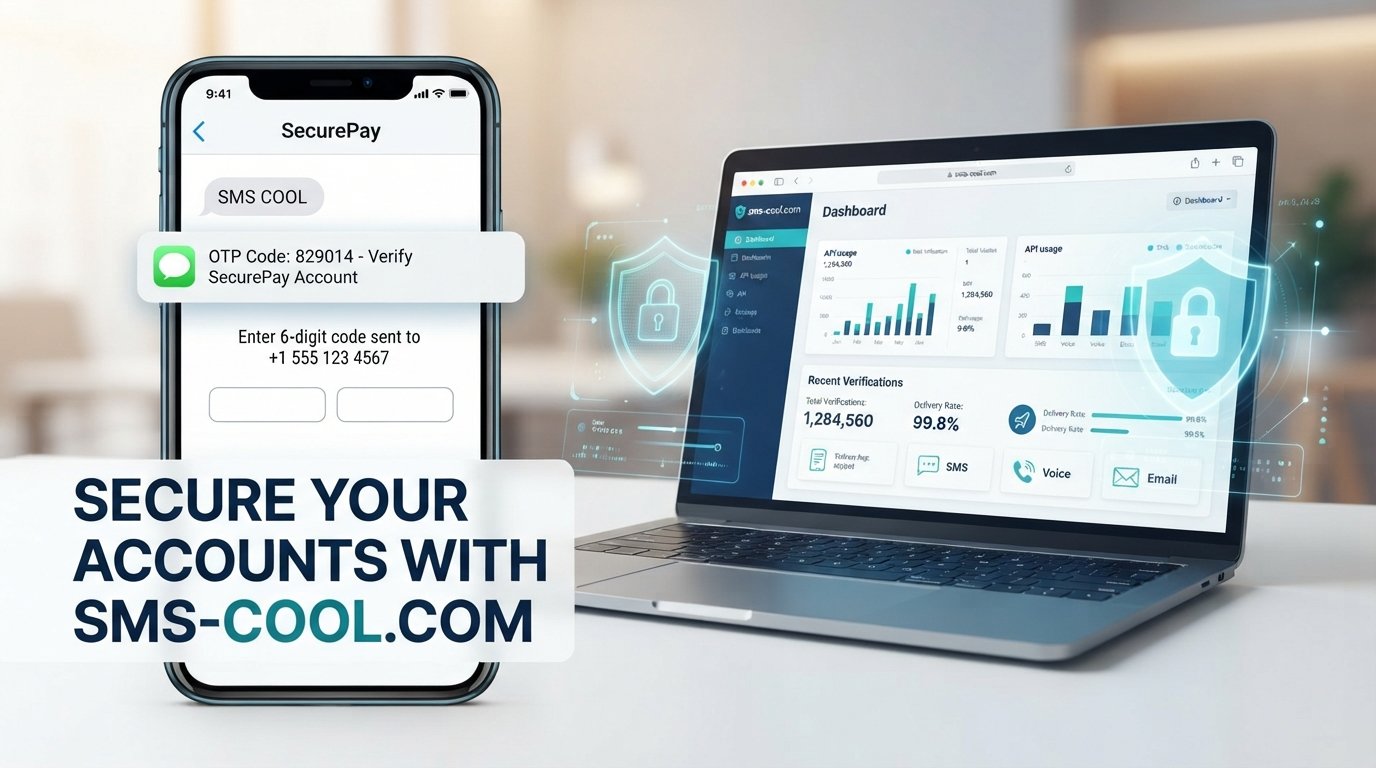
Online accounts are now part of everyday life. Whether you are signing up for a social platform, creating an account with an online service, accessing a marketplace, or trying a new app, there is a good chance you will be asked to confirm that you are a real user.
That is where online account verification comes in.
At first, verification can seem like a simple step: enter your phone number, receive a message, type in the code, and continue. Behind that short process, however, several security checks are taking place.
Understanding how online account verification works can make the process easier to navigate, especially when you encounter delayed messages, unavailable phone numbers, or services that require an SMS verification code before allowing you to proceed.
For users who need a practical way to receive verification SMS messages, SMS COOL can be a useful solution to consider.
What Is Online Account Verification?
Online account verification is the process a website or app uses to confirm information associated with a user or account.
The purpose is usually to make sure that the person creating or accessing an account has control over a particular contact method, such as an email address or phone number.
Verification can take several forms, including:
- Email confirmation links
- SMS verification codes
- OTP verification
- Phone calls with automated codes
- Authentication applications
- Identity documents or other security checks
SMS-based verification is particularly common because it is straightforward for users. A service sends a temporary code to a phone number, and the user enters that code into the verification field.
This simple interaction helps connect an online account with a phone number that the user can access.
How Online Account Verification Works
The exact account verification process varies from one platform to another, but SMS verification generally follows a familiar sequence.
1. You Enter a Phone Number
During registration or another security step, the service asks for a phone number.
The number may be used specifically for verification, or it may later become part of the account's recovery and security options.
2. The Service Sends a Verification Code
Once the number is submitted, the platform generates a temporary verification code.
This is often a short numerical code delivered by SMS. The message may contain instructions telling you to enter the code on the website or app.
3. You Enter the SMS Verification Code
You receive the SMS and enter the code into the appropriate verification field.
This is sometimes called OTP verification, where OTP stands for "one-time password."
The important part is that the code is temporary and normally intended for a single verification attempt.
4. The Platform Checks the Code
The service compares the code you entered with the code it generated and sent.
If they match and the code has not expired, the phone number can be marked as verified.
5. Your Account Continues
After successful verification, you can usually continue creating the account or accessing the feature that required verification.
The entire process may take only a few minutes when everything works normally.
Why Do Websites Use SMS Verification?
Online services have to deal with fake registrations, automated activity, spam, and attempts to create accounts using information that cannot be verified.
Phone number verification provides an additional layer of friction.
It does not make an account completely immune to abuse, but it can make certain types of automated or fraudulent activity more difficult.
For legitimate users, SMS verification also offers a familiar way to confirm account ownership without installing additional software.
An SMS verification code can be especially convenient because most mobile phones can receive text messages without requiring a dedicated authentication application.
Common Problems With Online Verification
Although the basic process is simple, online verification does not always go smoothly.
Users may run into problems such as:
Verification SMS Doesn't Arrive
A message can sometimes be delayed or fail to arrive. Network conditions, carrier issues, platform restrictions, or other technical factors can affect delivery.
Your Phone Number Is Not Accepted
Some websites restrict particular number types or geographic regions. A number that works on one platform may not necessarily work on another.
You Don't Want to Use Your Personal Number
There are situations where users prefer not to associate their everyday phone number with every website or service they try.
Privacy considerations can be an important reason to look for another option.
The Verification Code Expires
OTP codes are generally designed to be temporary. If you wait too long before entering one, the code may no longer be valid.
You Request Too Many Codes
Repeatedly requesting new codes can sometimes create confusion or trigger temporary restrictions. It is generally better to wait for a message before requesting another one.
These challenges explain why having a practical method to receive verification codes can make online registration considerably easier.
What Is a Temporary Phone Number?
A temporary phone number is a number that can be used for a particular purpose without necessarily being the user's everyday personal number.
In online verification, temporary numbers can be useful when a service requires SMS confirmation and the user needs access to a suitable number for receiving the message.
However, users should always check the rules of the platform they are using. Some services may restrict temporary, virtual, or VoIP numbers, while others may accept them.
The goal should be to use an appropriate verification method responsibly and in accordance with the service's terms.
How SMS-Based Verification Fits Into Online Security
SMS verification is only one part of a broader security system.
A platform may combine phone number verification with passwords, device checks, login alerts, authenticator applications, or other security measures.
The one-time password sent through SMS is typically useful because it provides a temporary confirmation that someone has access to the phone number receiving the message.
For important accounts, users should also enable stronger security options whenever the service provides them. SMS verification can be convenient, but account security should not depend on a single protection method when additional safeguards are available.
How SMS COOL Can Help With Online SMS Verification
One of the biggest practical challenges in online account verification is simply having access to a phone number capable of receiving the required SMS.
This is where SMS COOL becomes relevant.
SMS COOL is designed around the need to receive SMS messages for online verification. Instead of relying on your primary personal number for every registration, users can consider an available number through the service when appropriate.
The general workflow is straightforward:
- Choose a suitable number through SMS COOL.
- Use the number where the online service requests a phone number.
- Wait for the platform to send its verification SMS.
- Access the incoming message through the service.
- Enter the received verification code on the original website or app.
This can simplify the process for users who need a practical way to handle SMS-based verification.
The important point is that SMS COOL is not a replacement for the website or app's own security process. The platform still generates and checks its own code. SMS COOL simply provides a way to receive the SMS when its service and the relevant platform support that use.
When Should You Consider SMS COOL?
SMS COOL may be worth considering when you need a dedicated method for receiving an SMS verification code and do not want to rely on your everyday phone number for every online registration.
It can be particularly relevant when:
- A service requires phone number verification.
- You need to receive a one-time verification message.
- You want a separate number for a particular online service.
- Your regular number is unavailable for the verification process.
- You are looking for an option for online SMS verification.
As always, compatibility can vary between platforms. Before starting, check whether the website or app accepts the type of number you intend to use and follow its rules.
Tips for a Smoother Account Verification Process
A few simple habits can prevent unnecessary frustration.
Check the number carefully.
A single incorrect digit can prevent the verification SMS from reaching you.
Give the message time to arrive.
Avoid immediately requesting multiple codes if the first message is delayed.
Enter the latest code.
If you request several codes, an earlier OTP may become invalid when a newer one is generated.
Keep your verification code private.
A verification code is intended for you. Never share it with someone who asks for it unexpectedly.
Use trusted services.
When handling account credentials or verification information, choose services you understand and use them according to their terms.
Consider account security beyond SMS.
For sensitive accounts, use strong passwords and additional authentication features whenever available.
The Bottom Line
Online account verification may look like a small step in the signup process, but it plays an important role in confirming access and adding a layer of security.
The process is usually straightforward: provide a phone number, receive an SMS verification code, enter the OTP, and let the platform confirm the information.
The challenge comes when receiving that message is difficult, inconvenient, or you would rather not use your everyday number.
That is where SMS COOL can provide a practical option for users who need to receive verification SMS messages. By giving users a way to handle supported SMS verification needs separately, it can make the account verification process more convenient while keeping the actual verification with the platform requesting the code.
If you regularly need to verify an account online, consider whether SMS COOL fits your needs and the requirements of the service you're using. For supported platforms, it can be a simple way to receive the SMS verification codes needed to complete online account verification.