15 Aug 2026
What Is a Mobile Verification Service? Practical User Guide
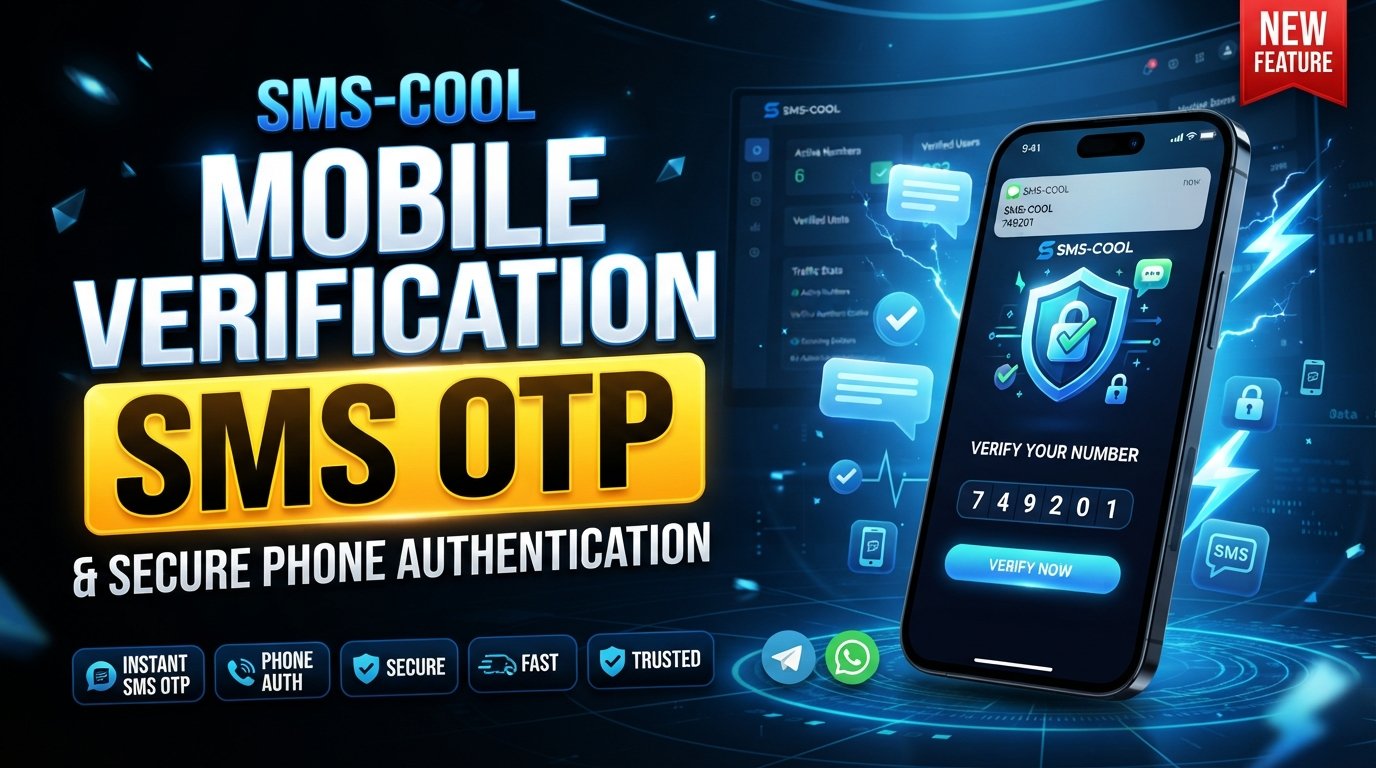
What Is a Mobile Verification Service?
Imagine signing up for an online service, reaching the final step, and seeing one simple request: “Enter the verification code sent to your phone.” It takes only seconds, but that small step can play an important role in confirming that a real person is behind an account.
That is where a mobile verification service comes in.
Mobile verification helps websites, applications, and digital platforms confirm a user's mobile number through an SMS message, usually containing a one-time password (OTP) or verification code. For businesses, it can support account security, user authentication, and fraud prevention. For users, it can make account verification quick and straightforward.
A practical SMS-based solution such as SMS COOL can simplify the process for people who need convenient access to verification messages while keeping the experience focused on speed, accessibility, and ease of use.
What Is a Mobile Verification Service?
A mobile verification service is a system that helps confirm whether a mobile number can be used to verify a user or account.
The most familiar method is SMS verification. A website or app asks the user to enter a phone number. It then sends a unique verification code to that number. The user enters the code on the platform, and the platform checks whether it matches the code it generated.
In simple terms, mobile number verification connects a phone number with an account or verification request.
Websites and apps use phone verification for several reasons. It can help establish that a user has access to a particular number, add another layer of account protection, and reduce certain types of automated or fraudulent registrations.
It is important to understand that verification is not the same as complete identity proof. A verified phone number confirms access to that number, but it does not automatically prove every detail about the person using it.
How Does SMS Verification Work?
The basic process behind SMS verification is remarkably simple.
1. The user enters a mobile number
During registration, login, password recovery, or another verification step, the user provides a mobile number.
2. The platform sends an OTP
The service generates a temporary OTP code or verification code and sends it through SMS.
3. The user receives the SMS
The message arrives on the phone associated with the number. It may contain a short instruction and a numerical SMS OTP.
4. The user enters the code
The user returns to the website or app and enters the code into the verification field.
5. The platform verifies the number
If the entered code matches the expected code and remains valid, the platform can mark the verification step as successful.
This process is often called phone authentication, SMS authentication, or OTP verification.
In some situations, users may also work with a virtual phone number. Depending on the service and the platform being verified, a virtual number can provide an alternative way to receive SMS messages without relying on a personal mobile number. However, users should always check the rules of the service they are trying to access because not every platform accepts every type of number.
Why Is Mobile Verification Important?
Online services need practical ways to distinguish legitimate account activity from suspicious or automated behavior. Mobile verification can help with that goal.
Better account security
A phone-based verification step can add another layer between an account and unauthorized access. When combined with passwords or other authentication methods, it can strengthen the overall login process.
User authentication
Phone verification provides a convenient way to confirm that a user has access to a particular mobile number.
Fraud prevention
Requiring verification can make certain forms of mass account creation or automated abuse more difficult. It is one tool businesses can use as part of a broader fraud prevention strategy.
Fewer fake or disposable registrations
When appropriate controls are in place, phone verification can make it harder to create large numbers of accounts without completing an additional verification step.
Protection for online services
For businesses, verification can be useful during registration, account recovery, transactions, and sensitive account changes.
Greater user trust
A clear and understandable verification process can also improve the user experience. People are more likely to trust an online service when security steps are easy to understand and do not create unnecessary friction.
Common Uses of Mobile Verification
Mobile verification is not limited to account registration. It appears in many everyday online workflows.
Common examples include:
- Account registration: Confirming a mobile number when creating a new account.
- Login authentication: Adding phone-based verification to a login process.
- Two-factor authentication: Using SMS as one part of a 2FA verification process.
- Password recovery: Confirming account access before allowing a password reset.
- Business platforms: Supporting user verification for business applications and online tools.
- Social platforms: Confirming numbers during registration or account-security processes.
- Apps and online services: Verifying users before enabling specific features or services.
For businesses, the key is choosing a verification approach that balances security with usability. A process that is technically secure but difficult to complete can create unnecessary frustration.
What Is an SMS Verification Service?
An SMS verification service is a solution designed specifically to deliver verification messages containing temporary codes.
Mobile verification is the broader concept, while SMS verification is one of the most common ways to perform it.
A typical verification SMS may contain an OTP code that is valid for a limited period or a single verification attempt. The user receives the message, enters the code, and completes the requested action.
This makes SMS attractive for online verification because the process is familiar to most mobile users.
For people who need to receive SMS online, an appropriate service can provide a convenient way to access verification messages through an available number. Depending on the service, this may involve a virtual phone number or a temporary phone number.
However, convenience should never replace caution. Users should consider privacy and security, understand where their verification messages are handled, and avoid using a number for sensitive accounts unless they are comfortable with the associated risks.
SMS COOL: A Simple Solution for Mobile Verification
When the goal is straightforward SMS-based mobile verification, simplicity matters.
SMS COOL can be positioned as a practical solution for users who need convenient access to verification messages. Instead of making the verification process feel complicated, the focus is on helping users receive the SMS they need and complete the relevant verification step.
For suitable use cases, the value of an SMS verification service comes down to several practical factors:
- Convenience: Accessing verification messages without unnecessary complexity.
- Accessibility: Making SMS-based verification easier to manage online.
- Simple verification: Keeping the process focused on receiving and using the verification code.
- Practical number access: Providing options that can be relevant when a user needs an alternative number.
- User control: Helping users handle verification messages with greater awareness of their privacy needs.
SMS COOL should not be viewed as a replacement for every authentication method. Rather, it is a useful option when SMS-based verification fits the situation.
The best solution is always the one that matches the requirements of the website, app, business, and user. Checking whether a particular service accepts a given number type is an important part of that process.
SMS COOL vs. Traditional Verification Methods
SMS verification is only one approach to authentication. Email verification, authenticator applications, passkeys, and other security methods can also play important roles.
Email verification can be convenient, particularly when an account is already closely connected to an email address. SMS verification, however, can provide a direct phone-based confirmation step.
For stronger account protection, SMS may also be used as part of two-factor authentication alongside a password. More advanced authentication methods can offer additional security characteristics, depending on the platform and implementation.
The main advantage of SMS-based verification is its familiarity. A user receives a verification SMS, finds the OTP code, and enters it. There is usually little to learn.
That simplicity is one reason an accessible service such as SMS COOL can be useful for people whose needs are specifically centered around receiving SMS verification messages.
How to Choose a Reliable Mobile Verification Service
Not every verification experience is equally convenient. Before choosing a service, consider the following factors.
Reliability
A verification service should provide a dependable way to receive the expected messages. Failed or delayed verification can interrupt registration and account access.
Speed
For time-sensitive verification, users generally want verification SMS messages to arrive promptly.
Number availability
If the service provides numbers, consider whether suitable numbers are available for the countries and platforms you need.
Privacy considerations
Understand how numbers and messages are handled. Avoid sharing sensitive personal information unnecessarily and review the service's privacy practices.
Ease of use
A good user experience should make it clear where to find the verification message and how to use the OTP code.
Supported services
Not every platform accepts every number type. Always check compatibility before relying on a particular number for account verification.
Verification success
A useful service should fit the specific verification workflow you are trying to complete. A number that cannot receive the required message is not useful, regardless of how convenient the interface looks.
Customer experience
Clear instructions, accessible information, and straightforward support can make a significant difference when something goes wrong.
Best Practices for Safe Phone Verification
Convenience should always be paired with sensible security habits.
- Never share an OTP code with another person, even if someone claims to represent a company.
- Use trusted websites and services when entering your phone number.
- Avoid suspicious verification pages that request unnecessary personal information.
- Protect your verification messages, particularly when they relate to financial, business, or sensitive accounts.
- Check the website address carefully before entering a phone number or verification code.
- Understand privacy implications before using a temporary phone number or virtual phone number.
- Use stronger authentication where available, especially for important accounts.
A verification code is intended for a specific verification event. Treat it like a security credential rather than an ordinary text message.
Frequently Asked Questions
What is a mobile verification service?
A mobile verification service helps websites or apps confirm access to a mobile number, commonly by sending an SMS containing a temporary verification code or OTP.
How does SMS verification work?
The user enters a phone number, the platform sends a verification SMS containing an OTP code, the user enters that code, and the platform confirms whether it matches.
What is an OTP verification code?
An OTP, or one-time password, is a temporary code used to confirm a verification request. It is commonly delivered through SMS during account registration, login, or recovery.
Why do websites require phone verification?
Websites may use phone verification to confirm access to a mobile number, strengthen account security, support user verification, and help reduce certain types of fraudulent activity.
What is a virtual phone number?
A virtual phone number is a number that can be managed through an online service rather than being tied to a traditional physical SIM in the usual way. Its suitability depends on the service being verified.
Can I receive SMS online for verification?
Yes, some services provide ways to receive SMS online using available numbers. Whether a particular number works depends on the platform's verification requirements and acceptance policies.
What makes SMS COOL useful for mobile verification?
SMS COOL can be useful when you need a convenient, straightforward way to access SMS verification messages. Its value is strongest when your specific verification task supports the available number and SMS-based authentication method.
Conclusion
Mobile verification has become a practical part of online account security and user authentication. From signing up for an app to recovering an account or completing 2FA verification, SMS can provide a familiar way to confirm access to a phone number.
A good mobile verification service should make that process reliable, understandable, and convenient without encouraging users to overlook privacy and security.
For users looking for a practical SMS-based option, SMS COOL provides a straightforward solution for accessing verification messages and simplifying the verification process where supported. The important step is to choose a service that fits the platform you are using and to handle every verification code responsibly.
If you need convenient SMS verification, explore SMS COOL and see how it can fit into your mobile number verification needs.