14 Aug 2026
Mobile Number Verification: Complete Guide for Businesses
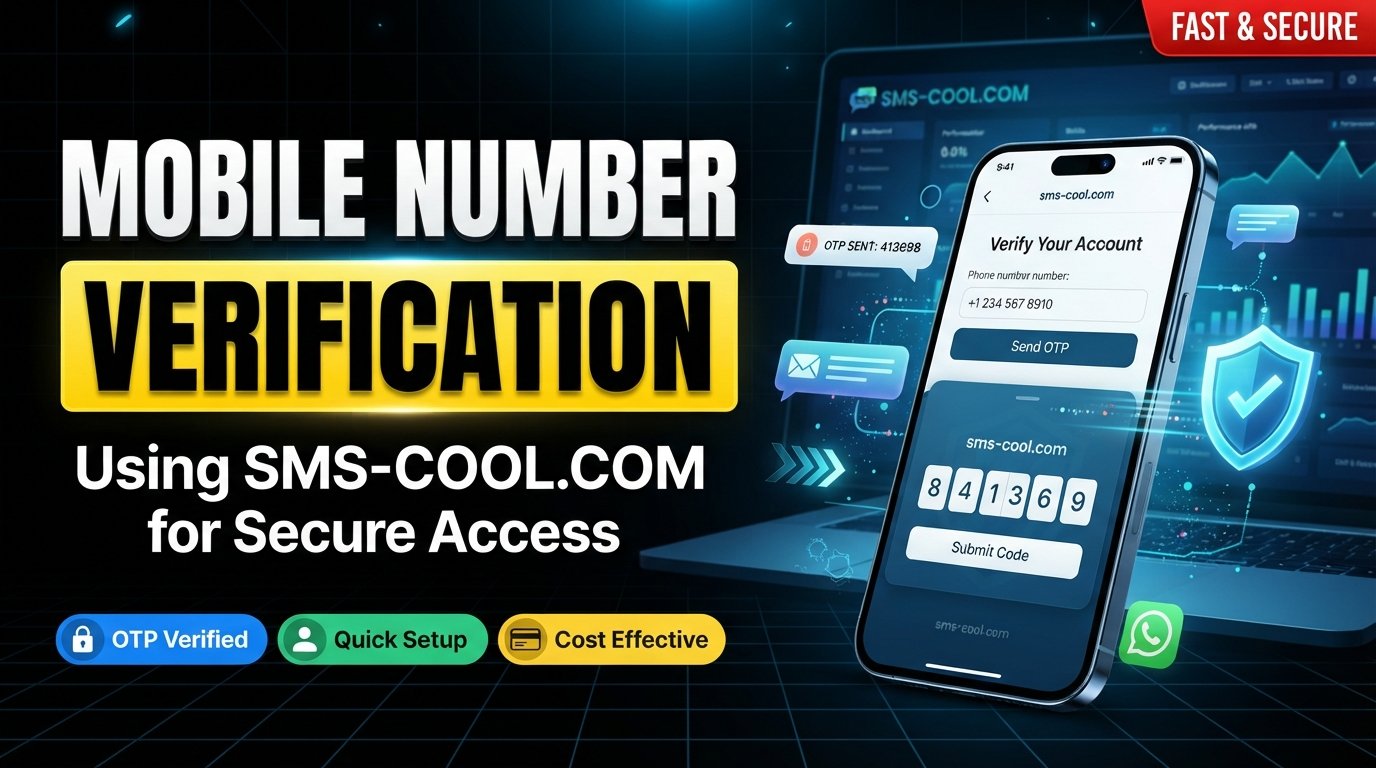
Mobile Number Verification: Complete Guide for Businesses
A phone number is more than a way to contact someone. For many online businesses, it is also an important part of confirming that a user is real, reachable, and authorized to access an account.
That is where mobile number verification comes in.
From creating an account and signing in to recovering a forgotten password, businesses use phone number verification to add an extra layer of trust and security. The process is usually simple: a user enters a mobile number, receives an SMS containing a verification code or OTP, and enters that code to confirm ownership of the number.
When verification messages arrive quickly and reliably, the experience feels effortless. When they are delayed, lost, or difficult to deliver, even a simple signup can become frustrating.
This guide explains how mobile number verification works, why it matters, what challenges businesses commonly face, and how SMS COOL can provide a practical solution for SMS verification and OTP delivery.
What Is Mobile Number Verification?
Mobile number verification is the process of confirming that a person has access to a particular mobile phone number.
A business typically asks a user to enter their phone number during registration, login, checkout, password recovery, or another security-sensitive action. The system then sends an SMS containing a temporary verification code.
The user enters the code into the website or application. If the code matches the one generated by the system, the number is considered verified.
This is commonly called:
- Phone number verification
- Phone verification
- Mobile verification
- SMS verification
- Number verification
- OTP verification
The basic purpose is straightforward: verify that the user can receive messages on the number they provided.
How Does Mobile Number Verification Work?
Although the user experience can look simple, several steps happen behind the scenes.
1. The user enters a mobile number
A user provides their phone number during account registration, login, password recovery, or another verification process.
The application should validate the number format before attempting to send a message.
2. The system generates an OTP
The platform generates a temporary OTP code, often consisting of several digits.
This code acts as a short-lived secret that the user must enter to complete verification.
3. An SMS verification message is sent
The verification platform sends an SMS containing the OTP or verification code to the user's mobile number.
For example:
Your verification code is 482731.
The message should be clear, concise, and easy to understand.
4. The user enters the code
The recipient enters the SMS verification code into the application.
5. The system validates the code
The application checks whether the submitted OTP matches the code generated for that verification attempt and whether it is still valid.
If everything checks out, the mobile number is marked as verified.
6. The requested action continues
The user can then finish registration, sign in, reset a password, or complete another protected action.
The entire process can take only moments when SMS delivery is reliable.
Why Is Phone Number Verification Important?
Businesses need to balance convenience with security. Requiring too many verification steps can frustrate users, but having no meaningful verification can leave accounts vulnerable to abuse.
Mobile number verification provides a practical middle ground.
Improve account security
A verified phone number can provide an additional security layer around an account. It can be especially useful when combined with passwords and other authentication methods.
Reduce fake or low-quality registrations
Phone verification can make automated or fraudulent account creation more difficult, helping businesses improve the quality of their user base.
Support password recovery
When users forget their passwords, an OTP can help confirm access to the registered phone number before allowing account recovery.
Enable two-factor authentication
SMS-based two-factor authentication can add another verification step during login. Instead of relying solely on a password, a user may also need a temporary code sent to their phone.
Build user trust
A smooth verification process signals that a business takes account security seriously without necessarily creating a complicated onboarding experience.
Common Uses of SMS Verification
SMS verification is useful across many industries and digital products.
Account registration
Online platforms can ask new users to verify their mobile number before an account becomes fully active.
Login security
Businesses can use an OTP during login when additional authentication is required.
Password recovery
A verification code sent by SMS can help confirm that the person requesting a password reset has access to the registered number.
Fraud prevention
Mobile verification can be incorporated into broader fraud-prevention workflows to identify suspicious or disposable registration patterns.
Customer verification
Businesses may use phone verification before providing access to certain services or completing specific customer actions.
Two-factor authentication
SMS OTP can serve as an additional authentication factor, particularly for users who may not have a dedicated authentication app.
Transaction and service confirmations
Depending on the business workflow, verification messages can also support sensitive actions where confirming the user's phone access is useful.
What Is an OTP Verification Code?
An OTP, or one-time password, is a temporary code created for a specific authentication or verification attempt.
An OTP is generally designed to be used only once and for a limited period.
For example, imagine a customer is registering for an online service. After entering their mobile number, they receive:
Your SMS verification code is 735184.
They enter that code on the registration page. The system verifies it and completes the account verification process.
The important distinction is that an OTP is not the user's permanent password. It is a temporary verification mechanism.
A well-designed OTP process should also consider expiration, incorrect attempts, secure code generation, and appropriate rate limits.
Common Challenges With SMS Verification
SMS verification looks straightforward, but businesses can encounter practical problems.
Delayed messages
If a verification SMS arrives several minutes after it was requested, users may assume the process failed. Some may request another code, creating additional messages and confusion.
Failed delivery
Messages can occasionally fail to reach their destination because of network conditions, carrier restrictions, routing issues, incorrect numbers, or other delivery factors.
Poor user experience
A confusing verification message, unclear instructions, or repeated failed attempts can lead users to abandon registration.
Scalability
A small application may have modest messaging requirements, while a growing platform can suddenly need to handle a much larger volume of OTP requests.
Security considerations
Verification systems must protect against abuse, excessive requests, code guessing, and other attacks. SMS delivery is only one part of a secure verification architecture.
These challenges make the choice of an SMS verification service important.
How SMS COOL Simplifies Mobile Number Verification
SMS COOL provides a practical option for businesses that need SMS-based communication for mobile number verification and OTP delivery.
Instead of treating verification SMS as an afterthought, businesses can use a dedicated SMS solution as part of their broader user-verification workflow.
The idea is simple: your application generates the OTP, and SMS COOL helps deliver the verification message to the user's mobile number.
This can be particularly useful for businesses that need:
- Mobile number verification
- Phone number verification
- SMS OTP delivery
- Account verification messages
- Customer verification
- Password-reset codes
- Login verification
- Business SMS verification
The value is not simply sending a text. The goal is to make the verification process fast, understandable, dependable, and convenient for the end user.
Key Benefits of Using SMS COOL
Reliable SMS verification
A verification process is only useful when users can actually receive the message. SMS COOL gives businesses a practical way to handle SMS-based verification as part of their application workflow.
Fast verification messages
Verification is usually time-sensitive. Users expect an OTP to arrive quickly so they can continue what they were doing without unnecessary waiting.
Support for OTP delivery
For applications that depend on temporary verification codes, SMS COOL can be used as an SMS delivery solution for OTP-based workflows.
Business-friendly SMS solutions
Businesses can incorporate SMS into registration, authentication, recovery, and other customer journeys rather than building every messaging component from scratch.
Scalability
As user activity grows, SMS requirements can grow with it. A dedicated mobile verification service can help businesses approach SMS delivery as an operational component of their platform.
Better user experience
A verification process should disappear into the background when it works well. Clear messages and timely delivery reduce friction and help users complete important actions more easily.
Who Can Benefit From SMS Verification?
Almost any business offering an online account or customer-facing digital service can potentially benefit from mobile verification.
Common examples include:
- E-commerce platforms
- Financial and payment applications
- SaaS platforms
- Marketplaces
- Social and community applications
- Delivery and logistics services
- Booking platforms
- Customer portals
- Online education services
- Subscription businesses
The exact verification strategy depends on the application's security requirements, audience, risk profile, and user journey.
For some businesses, SMS verification may be used during registration. Others may rely on it primarily for password recovery or two-factor authentication.
How to Choose an SMS Verification Service
Choosing a phone number verification service should involve more than looking at whether a provider can send SMS messages.
Consider these factors:
Delivery reliability
A verification code that does not arrive cannot complete the user journey. Look for an SMS solution designed around dependable message delivery.
Speed
OTP verification is time-sensitive. Faster delivery generally creates a smoother experience.
Scalability
Consider both your current messaging requirements and future growth. Your SMS solution should fit your expected usage without creating unnecessary complexity.
Security
The SMS provider is part of a larger authentication system. Make sure your overall implementation handles OTP generation, expiration, validation, rate limiting, and sensitive data appropriately.
Ease of integration
A practical SMS verification service should fit naturally into your application's existing workflow.
User experience
Think beyond technical delivery. Messages should be clear, recognizable, and easy for users to act on.
Business suitability
Different organizations have different needs. The right OTP SMS service should support the type and scale of verification your application actually requires.
For businesses looking for a practical starting point, SMS COOL is worth considering as a dedicated solution for mobile number verification, SMS verification, and OTP delivery.
A Simple Example of Mobile Number Verification
Imagine an online marketplace where a new customer creates an account.
The process might look like this:
- The customer enters their mobile number.
- The platform creates a temporary OTP.
- SMS COOL is used to send the verification SMS.
- The customer receives the verification code.
- They enter the code on the website.
- The application validates the OTP.
- The phone number is marked as verified.
- The customer continues using the account.
From the customer's perspective, this takes only a few steps. Behind the scenes, however, the business has created a basic layer of user verification that can support account security and reduce friction later.
Why Reliable Verification Matters
Verification is often the first real interaction a user has with a security system.
If the SMS arrives quickly and the process is clear, users barely notice it.
If the code never arrives, arrives too late, or the user receives multiple confusing messages, trust can disappear quickly.
That is why secure verification is not only a security concern. It is also a user-experience concern.
A good mobile verification strategy combines an appropriate authentication flow with dependable SMS delivery, sensible security controls, clear communication, and a simple interface.
For businesses building that experience, SMS COOL offers a practical path for handling SMS-based verification and OTP messaging without making the verification journey unnecessarily complicated.
Conclusion
Mobile number verification has become an important part of modern digital account security and user onboarding. By confirming access to a phone number through an SMS verification code or OTP, businesses can add useful protection to registration, login, password recovery, customer verification, and other sensitive workflows.
But verification is only effective when the overall experience works smoothly. Slow delivery, failed messages, confusing instructions, and unreliable SMS can turn a simple security step into a major source of user frustration.
That makes the underlying SMS delivery solution an important consideration.
SMS COOL provides a practical option for businesses that need mobile number verification, phone verification, SMS OTP delivery, and business SMS verification. By focusing on reliable messaging, convenient verification workflows, and scalable SMS communication, businesses can create a verification experience that is both security-conscious and user-friendly.
The best verification process is one that protects users without getting in their way. With the right SMS verification service behind it, mobile number verification can become a seamless part of the customer journey rather than another obstacle.