14 Aug 2026
What Is Mobile Number Verification? A Complete Business Guide
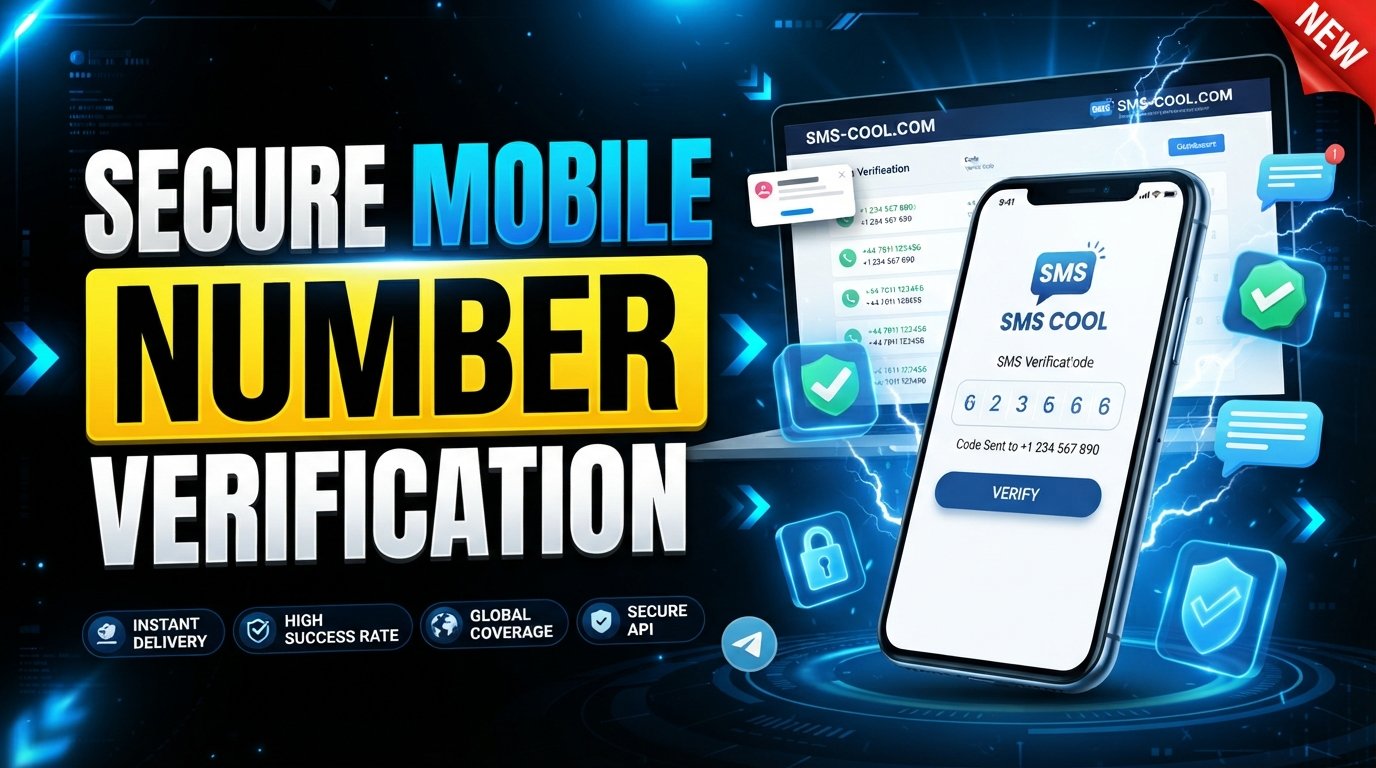
What Is Mobile Number Verification? A Complete Business Guide
A mobile number is more than a way to make calls or receive messages. For businesses, it can also be an important part of confirming that a real person is behind an account, transaction, or service request.
Mobile number verification is the process of confirming that a user has access to a particular mobile phone number. The most common method is sending a one-time password, or OTP, by SMS and asking the user to enter that code into a website or application.
This simple process helps businesses reduce fake registrations, improve account security, and create a more trustworthy user experience.
For companies that need dependable SMS-based authentication, an SMS verification service such as SMS COOL can help simplify the process of delivering verification codes and supporting customer authentication workflows.
What Is Mobile Number Verification?
Mobile number verification is a form of identity and account confirmation that uses a person's mobile phone number.
During registration, login, checkout, or another security-sensitive action, a business may ask the user to verify phone number ownership. The system then sends an OTP SMS containing a temporary verification code.
For example:
- A customer creates an account.
- The customer enters a mobile number.
- The system generates a unique verification code.
- The code is sent through SMS.
- The customer enters the code.
- The system confirms the number and completes verification.
This process is commonly called phone number verification, mobile verification, or SMS verification.
The underlying idea is straightforward: if a customer can receive and correctly enter the code sent to a number, the business has greater confidence that the customer controls that number.
How Does Mobile Number Verification Work?
Although the experience looks simple to the user, several steps happen behind the scenes.
1. The user enters a phone number
The process usually starts with a registration or verification form. The user enters their mobile number, often after selecting the appropriate country code.
2. The system generates an OTP
The application creates a temporary verification code, usually consisting of several digits. The code should be designed for a limited verification session rather than permanent use.
3. The OTP is delivered by SMS
The application sends the OTP through an SMS API or connected messaging infrastructure. The customer receives an OTP SMS on their phone.
4. The user enters the code
The customer enters the received code into the application.
5. The system validates the response
If the submitted code matches the expected code and remains valid, the system marks the mobile number as verified.
This workflow can be integrated into websites, mobile apps, customer portals, marketplaces, financial services, and other digital platforms.
Why Is Mobile Number Verification Important?
Online services face several common problems: fake accounts, automated registrations, fraudulent activity, duplicate profiles, and unauthorized access.
Mobile number verification can provide an additional layer of confidence during account creation and authentication.
Reduce fake registrations
Requiring a working mobile number can make it more difficult for automated systems to create large numbers of low-quality accounts.
Improve account security
Phone-based verification can be used alongside passwords and other authentication methods. In some workflows, it becomes part of two-factor authentication, adding another verification step when users access an account.
Improve customer trust
Customers are more likely to trust digital services when businesses take reasonable steps to protect accounts and confirm important actions.
Support account recovery
A verified number can also be useful in account recovery workflows, depending on the application's authentication design.
Mobile verification is not a complete security solution by itself, but it can be a valuable component of a broader user authentication strategy.
Common Uses of SMS and OTP Verification
SMS-based verification is useful across many industries and digital experiences.
Common applications include:
- New account registration
- Login verification
- Password recovery
- Two-factor authentication
- E-commerce checkout confirmation
- Customer onboarding
- Marketplace seller registration
- Appointment and service confirmation
- Digital subscription registration
- Transaction-related verification
- Business SMS verification
- Customer identity and account verification
For example, an online marketplace may require sellers to complete phone number verification before they can publish listings. A mobile application may use OTP verification during registration to reduce fake accounts.
The exact workflow depends on the business, but the goal is usually the same: confirm that the customer has access to the phone number they provided.
Benefits of Using Mobile Number Verification
When implemented thoughtfully, mobile number verification can benefit both businesses and customers.
Better account protection
A verified mobile number can add another layer to an authentication process, particularly when combined with passwords or other security controls.
Simple user experience
Receiving and entering an SMS code is familiar to many users. There is usually no complicated setup involved.
Faster customer onboarding
Automated verification can help businesses confirm customer numbers during registration without requiring manual intervention.
Useful fraud-control layer
Phone verification can make certain forms of mass account creation or automated abuse more difficult.
Flexible integration
With an appropriate mobile number verification service, businesses can integrate verification into existing websites, applications, and customer journeys.
Common Challenges With Phone Number Verification
SMS verification is practical, but it is not completely free from challenges.
Delayed messages
Network conditions, carrier routing, device settings, or other delivery factors can sometimes delay an OTP SMS.
Incorrect phone numbers
A simple typo can prevent a customer from receiving the verification code.
Poor user experience
If users have to request multiple codes, wait too long, or repeatedly re-enter information, verification can become frustrating.
Temporary phone numbers
Some users may attempt to register with a temporary phone number. Depending on the business model, this can create account-quality or security concerns.
Security limitations
SMS should not be treated as the only security mechanism for every high-risk scenario. Businesses should consider the sensitivity of their application and use appropriate authentication controls.
The key is to design verification carefully, provide clear instructions, and use reliable messaging infrastructure.
How SMS COOL Helps With Mobile Number Verification
For businesses that need SMS-based verification, SMS COOL provides a practical option for supporting communication workflows built around SMS.
A business can use an SMS verification service to send OTP messages when customers register, sign in, recover accounts, or complete other verification steps.
With SMS COOL, businesses can use SMS-based workflows for purposes such as:
- Sending OTP verification codes
- Supporting phone number verification
- Confirming mobile numbers
- Delivering OTP SMS messages
- Supporting customer authentication
- Building secure SMS communication workflows
- Connecting verification processes with applications through SMS infrastructure
The important point is that the SMS provider handles the messaging side while the business application controls the verification logic.
For example, a developer can create a registration flow in which the application generates an OTP, sends it through an SMS API, receives the customer's submitted code, and validates that code before completing account verification.
That separation can make a verification workflow easier to integrate into an existing digital product.
Why Businesses Choose SMS COOL for SMS Verification
A useful verification solution should fit naturally into the customer journey rather than creating unnecessary complexity.
Businesses evaluating an SMS verification provider should consider factors such as:
- Ease of integration
- API availability
- Message delivery workflow
- Support for verification use cases
- Developer experience
- Security considerations
- Reliability of the overall communication process
- Ability to scale with business requirements
SMS COOL can be considered when a business needs an SMS-focused solution for verification codes and customer communication.
Rather than treating SMS verification as an isolated feature, businesses can build it into broader workflows for registration, authentication, onboarding, and customer engagement.
Mobile Number Verification for Better Security and User Authentication
The strongest approach is to view mobile number verification as one part of a broader security strategy.
For example, a business might combine:
Password + SMS OTP + account monitoring
Or it might use:
Login + two-factor authentication + verification code
The appropriate approach depends on the sensitivity of the service.
For a basic application, phone number verification may primarily help confirm that users are reachable at the number they provide. For a more sensitive service, SMS verification may become one component of a layered authentication system.
This distinction matters. A phone number confirms access to a communication channel; it does not automatically prove a person's complete identity.
How to Choose a Reliable SMS Verification Service
Before selecting a phone verification service or mobile number verification provider, ask a few practical questions.
Does it support your workflow?
Make sure the service fits the way your application handles registration, authentication, and verification.
Is integration straightforward?
Developers should be able to understand how the SMS API or number verification API fits into the existing application.
Can you control the verification process?
Your application should be able to manage code generation, expiration, validation, retry rules, and other verification logic appropriately.
Is the user experience clear?
A verification system should tell users what to do, where the code was sent, and what to do if they do not receive it.
Does the provider fit your business needs?
Consider the type of messaging, expected usage, technical requirements, and customer communication workflows your organization needs.
SMS COOL can be worth considering for businesses looking for a practical way to support SMS verification and OTP delivery without making the verification journey unnecessarily complicated.
Internal link opportunity: If your website has a guide explaining SMS APIs, OTP authentication, or business messaging, link relevant phrases in this article to that educational resource to help readers explore the technical side of SMS verification.
Conclusion: Mobile Number Verification Made Practical
So, what is mobile number verification?
In simple terms, it is a way to confirm that a person can access a specific mobile number, usually by sending an SMS containing a one-time verification code.
From account registration to two-factor authentication, mobile number verification can help businesses improve account security, reduce unwanted registrations, streamline onboarding, and create more trustworthy digital experiences.
The technology is straightforward, but the quality of the overall experience depends on how well the verification workflow is designed and how reliably verification messages reach users.
For businesses building SMS-based authentication workflows, SMS COOL offers a practical path for supporting OTP delivery, phone number verification, customer authentication, and secure SMS communication.
Frequently Asked Questions
1. What is mobile number verification?
Mobile number verification is the process of confirming that a user has access to a particular mobile phone number. A common method is sending an OTP by SMS and asking the user to enter the code.
2. How does SMS verification work?
The system generates a temporary verification code and sends it to the user's mobile number through SMS. The user enters the code into the website or app, and the system checks whether it is correct and still valid.
3. What is an OTP SMS?
An OTP SMS is a text message containing a one-time password or verification code. The code is generally intended for a single authentication or verification attempt and should expire after a defined period.
4. Is phone number verification the same as mobile number verification?
The terms are often used interchangeably. Both generally refer to confirming that a user has access to the phone number they provided, although the exact implementation can vary between services.
5. Can SMS verification improve account security?
Yes. SMS verification can add an additional authentication layer and may be used as part of two-factor authentication. However, businesses should consider SMS verification as one component of a broader security strategy.
6. What is a mobile number verification service?
A mobile number verification service provides the messaging infrastructure businesses can use to send verification codes to customers. Depending on the service and implementation, this may involve an SMS API for integrating verification messages into websites or applications.
7. Can businesses use SMS COOL for OTP verification?
SMS COOL can be considered for business workflows that require SMS-based OTP delivery, phone number verification, customer authentication, and verification codes. Businesses can integrate SMS communication into their own verification processes according to their technical requirements.
Final CTA
Ready to make phone verification a smoother part of your customer journey?
SMS COOL can help businesses support SMS-based mobile number verification, OTP delivery, verification codes, customer authentication, and secure business SMS communication. Whether you are building account registration, login verification, or another customer verification workflow, a practical SMS solution can help connect your application with the users who need to complete verification.
Explore SMS COOL as an option for your SMS verification needs and build a verification experience that is simple for customers and practical for your business.