17 Aug 2026
Is SMS Verification Secure? Risks, Benefits & Best Practices
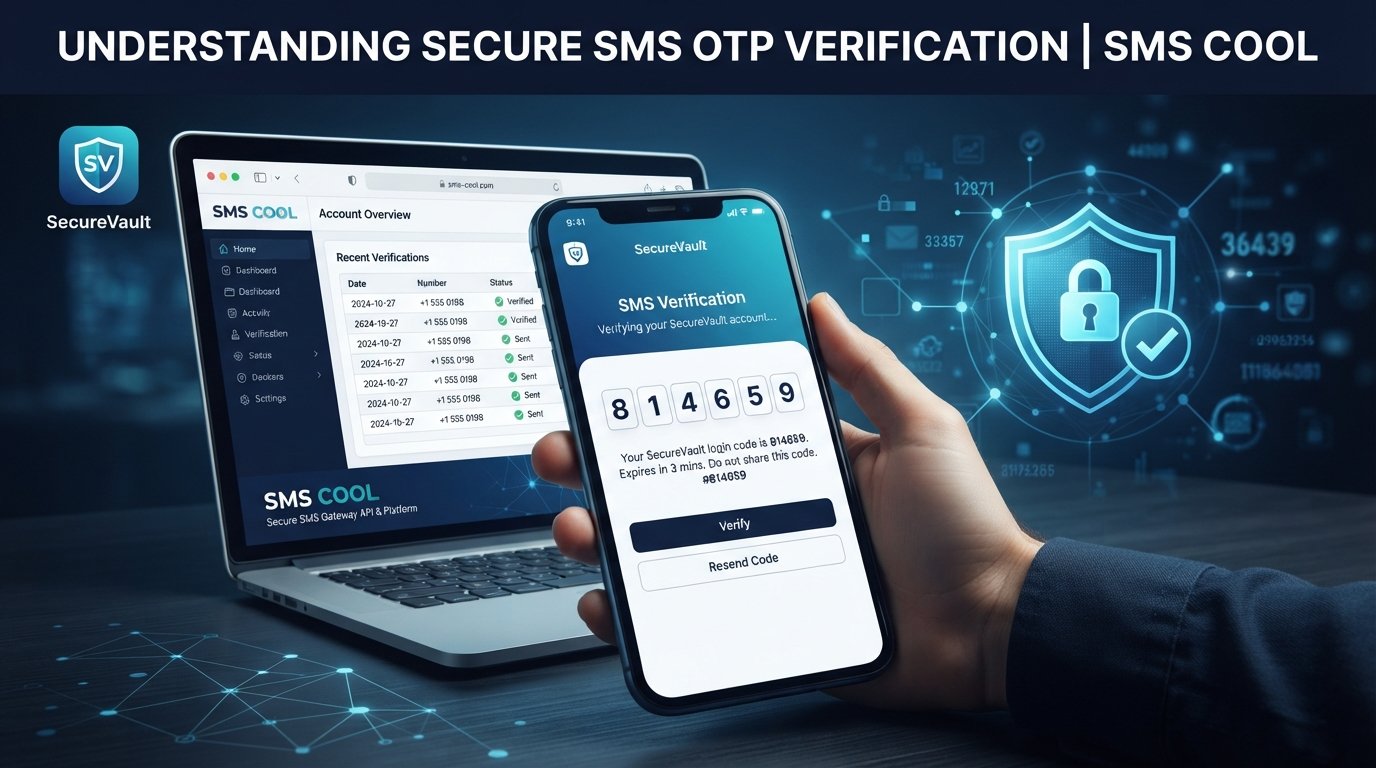
Is SMS Verification Secure?
Every day, people receive short text messages containing one-time passwords, login codes, and account verification numbers. They are quick, familiar, and usually take only a few seconds to use. For businesses, SMS verification can also be a simple way to confirm that a user controls a particular phone number.
But one important question remains: is SMS verification secure?
The honest answer is yes—with an important qualification. SMS verification can provide a useful additional security layer, but it is not completely risk-free. Its effectiveness depends on how the verification process is designed, how OTPs are handled, and what other security controls are in place.
For businesses building registration, login, payment, or account recovery workflows, understanding both the strengths and limitations of SMS authentication is essential. A well-designed SMS verification service can make online verification convenient without treating SMS as a perfect security solution.
What Is SMS Verification?
SMS verification is a process used to confirm that a person has access to a particular mobile phone number.
A common example is signing up for an online service. After entering a phone number, the user receives a text containing a temporary verification code, often called a one-time password or OTP. The user enters that code into the website or application, and the system checks whether it matches the code it generated.
If the code is correct and still valid, the phone number can be considered verified.
SMS OTP Verification in Simple Terms
An SMS OTP verification process generally involves three elements:
- Phone number verification: The user provides a mobile number.
- OTP generation: The system creates a temporary verification code.
- Code confirmation: The user enters the received code to complete verification.
This approach is used for online account verification, login protection, password recovery, transaction confirmation, and other authentication workflows.
How Does SMS Verification Work?
Although the user experience is simple, several steps happen behind the scenes.
1. The user enters a phone number
A website or app asks the user to provide a mobile number. The system may validate the number's format and country information before continuing.
2. The system generates an OTP
A temporary code is generated for that specific verification attempt. Good implementations make the code difficult to guess and associate it with the appropriate session or request.
3. The OTP is delivered by SMS
The verification platform sends the code through an SMS delivery route to the user's phone.
4. The user enters the code
The recipient enters the OTP into the website or application.
5. The system validates the code
The server checks whether the code is correct, has not expired, and has not already been used.
If everything matches, the verification process succeeds.
This workflow is intentionally straightforward. Reducing unnecessary friction matters because users are more likely to complete verification when the process is fast and familiar.
Is SMS Verification Secure?
SMS verification can be secure enough for many everyday verification and authentication scenarios, but it should not be treated as invulnerable.
Its biggest advantage is that it adds another factor to an account or transaction. Someone who knows a password may still need access to the associated phone to complete an SMS-based verification step.
However, SMS itself has security limitations. A phone number can potentially be compromised through methods such as SIM swapping, phishing, social engineering, or account takeover at the mobile-provider level.
That means SMS verification security depends on more than simply sending a code.
A strong implementation should include controls around:
- OTP generation
- Code expiration
- Number validation
- Attempt limits
- Request frequency
- Fraud detection
- Secure API handling
- Session management
- Account recovery procedures
For lower-risk applications, SMS may be a practical authentication option. For highly sensitive accounts or transactions, businesses may benefit from combining SMS with stronger authentication methods.
The key principle is simple: SMS verification is best viewed as one layer of security, not the entire security strategy.
Common SMS Verification Security Risks
Understanding SMS verification risks helps businesses design safer systems.
SIM Swapping
SIM swapping occurs when an attacker attempts to convince a mobile provider to move a victim's number to another SIM or device. If successful, SMS messages intended for the legitimate user may reach the attacker.
This is one reason SMS authentication should not be the only protection for highly sensitive accounts.
Phishing
Attackers may trick users into revealing an OTP through fake websites, emails, messages, or phone calls.
A verification code should be treated as sensitive information. Businesses should make it clear that legitimate support personnel should never ask customers to disclose an OTP unnecessarily.
Intercepted Messages
SMS is not designed to provide the same level of end-to-end protection associated with some dedicated secure messaging systems. Depending on the environment and attack, messages may face risks while being transmitted or accessed.
Social Engineering
An attacker may manipulate a person rather than directly attacking the technology. For example, they may attempt to persuade a user or support representative to reveal information or change account details.
Recycled Phone Numbers
Mobile numbers can eventually be reassigned. If an account remains tied to an old number, a new owner could potentially receive verification messages intended for a previous user.
Businesses should therefore consider number lifecycle issues when designing long-term account security.
Weak Verification Practices
Even a good SMS verification platform can be undermined by poor application design.
Examples include allowing unlimited OTP attempts, keeping codes valid for too long, failing to limit repeated requests, or exposing verification endpoints to automated abuse.
Benefits of SMS Verification
Despite its limitations, SMS verification remains popular for good reasons.
Convenient for Users
Most users already understand how to receive and enter a text message. There is little learning required.
Fast and Familiar
An OTP can often be delivered and entered within seconds, making the experience convenient during registration or login.
Broad Accessibility
SMS can work across many types of mobile devices without requiring a user to install a dedicated authentication application.
Useful Additional Authentication Layer
Adding a phone-based verification step can make unauthorized access more difficult than relying on a password alone.
Flexible Business Use
Businesses can use SMS OTP verification for account creation, login challenges, password recovery, identity verification workflows, and other situations where confirming access to a phone number is useful.
The combination of convenience and simplicity explains why SMS verification continues to have a place in modern online services.
How to Make SMS Verification More Secure
Businesses can significantly improve OTP security by designing the entire verification workflow carefully.
Use Short OTP Expiration Times
Verification codes should remain valid only for a limited period. Short lifetimes reduce the opportunity for misuse if a code is exposed.
Limit Verification Attempts
Set reasonable limits on how many times a user can enter an incorrect code. This helps reduce guessing and automated attacks.
Apply Rate Limiting
Limit how frequently a user or phone number can request new OTPs. This can help prevent abuse, message flooding, and automated verification attempts.
Monitor Suspicious Activity
Look for unusual patterns, such as repeated requests, rapid changes in phone numbers, or activity from unexpected locations or devices.
Protect APIs and Credentials
Applications should use secure API practices and carefully protect credentials used to communicate with an SMS verification service.
Validate Phone Numbers
Check phone-number formatting and relevant country information before attempting delivery. This can reduce errors and improve the verification experience.
Combine SMS With Stronger Authentication When Needed
For high-value accounts or sensitive actions, consider combining SMS with authenticator apps, passkeys, hardware security keys, or other stronger authentication mechanisms.
Security should always match the risk of the activity being protected.
SMS COOL as a Secure SMS Verification Solution
For businesses that need practical SMS verification and OTP delivery, SMS COOL can serve as a convenient platform to support verification messaging and authentication workflows.
Instead of treating verification as an afterthought, businesses can incorporate SMS-based confirmation directly into their customer journey. SMS COOL can be positioned as part of workflows involving SMS verification, OTP delivery, phone number verification, and online account verification.
This can be useful for websites, applications, and digital services that need users to confirm access to a mobile number before completing an action.
Where SMS COOL Fits
Businesses can use SMS COOL as part of workflows such as:
- New-user registration
- Phone number verification
- SMS OTP verification
- Login authentication
- Password recovery
- Online account verification
- Authentication workflows
- Verification messaging for digital services
For growing businesses, a practical SMS verification platform should make it easier to incorporate verification into the customer experience without creating unnecessary complexity.
SMS COOL provides a straightforward option for organizations looking to support scalable SMS verification needs and convenient OTP delivery.
The important point is to use the platform as part of a broader security strategy. No SMS provider can eliminate every authentication risk. Businesses should still implement sensible controls around OTP expiration, request limits, account protection, and suspicious activity.
SMS Verification vs. Other Authentication Methods
SMS is only one option for authentication.
Email verification is familiar and easy to implement, but the security of the process depends heavily on the protection of the user's email account.
Authenticator apps generally provide a stronger authentication approach because codes are generated within the authentication application rather than delivered through the mobile network.
Passkeys can provide a highly secure and convenient login experience by using cryptographic credentials tied to a device or credential manager.
So when should businesses use SMS verification?
SMS can be especially useful when accessibility, convenience, and broad user familiarity are important. It can also work well as an additional authentication method alongside stronger security controls.
For many businesses, the best approach is not choosing one method for every situation, but selecting authentication methods according to the sensitivity of the account or action.
Best Practices for Businesses Using SMS Verification
Before launching an SMS verification service, businesses should consider the complete user journey.
A practical checklist includes:
- Generate unpredictable, single-use verification codes.
- Keep OTP expiration periods reasonably short.
- Limit failed verification attempts.
- Apply rate limits to OTP requests.
- Monitor suspicious or automated behavior.
- Avoid revealing sensitive account information through error messages.
- Validate phone numbers before sending messages.
- Protect SMS API credentials and application secrets.
- Make OTP messages clear and easy for users to understand.
- Tell users never to share verification codes unnecessarily.
- Provide secure alternatives or additional authentication for high-risk actions.
- Review the verification workflow regularly for abuse and usability issues.
Security and usability should work together. A verification process that is extremely difficult to use can frustrate legitimate customers, while an overly permissive process can create unnecessary security exposure.
Frequently Asked Questions
Is SMS verification secure?
SMS verification can provide useful additional security, particularly for confirming access to a phone number. However, it has known weaknesses, so it should be combined with appropriate safeguards and stronger methods when the risk requires them.
Is SMS OTP safe?
SMS OTP can be reasonably safe for many common verification tasks when codes are short-lived, single-use, difficult to guess, and protected by attempt and rate limits. It should not be considered completely risk-free.
What are the risks of SMS verification?
Common risks include SIM swapping, phishing, social engineering, intercepted messages, recycled phone numbers, OTP guessing, and poorly designed verification workflows.
Can SMS verification be hacked?
SMS verification can be targeted or bypassed through attacks such as phishing, SIM swapping, account takeover, or weaknesses in an application's verification logic. Strong implementation practices can reduce these risks.
How can businesses make SMS verification more secure?
Businesses should use short OTP expiration times, rate limiting, attempt limits, secure APIs, number validation, fraud monitoring, and appropriate additional authentication for sensitive actions.
Is SMS verification good for 2FA?
Yes. SMS can be used as a second factor in two-factor authentication, although stronger options may be preferable for highly sensitive accounts. The right choice depends on the threat level and user requirements.
What makes a good SMS verification service?
A good SMS verification service should support reliable OTP delivery, straightforward integration, appropriate verification workflows, scalability, and sensible controls that help businesses deliver a convenient verification experience.
Conclusion
So, is SMS verification secure? The most accurate answer is that it can be a useful and practical security layer, but it is not a complete security solution by itself.
SMS verification works because it combines simplicity with an additional authentication step that users already understand. At the same time, businesses need to account for risks such as SIM swapping, phishing, social engineering, and weak verification controls.
The safest approach is to design SMS authentication carefully, protect verification endpoints, limit OTP abuse, and use stronger authentication methods when the situation demands them.
For businesses looking for a practical way to support SMS verification, OTP delivery, phone number verification, and online account verification, SMS COOL offers a straightforward solution to consider.
When security, convenience, and a smooth customer experience all matter, the right SMS verification platform can become a valuable part of a broader authentication strategy.