24 Aug 2026
How SMS APIs Work for Websites: Benefits, Uses & Integration
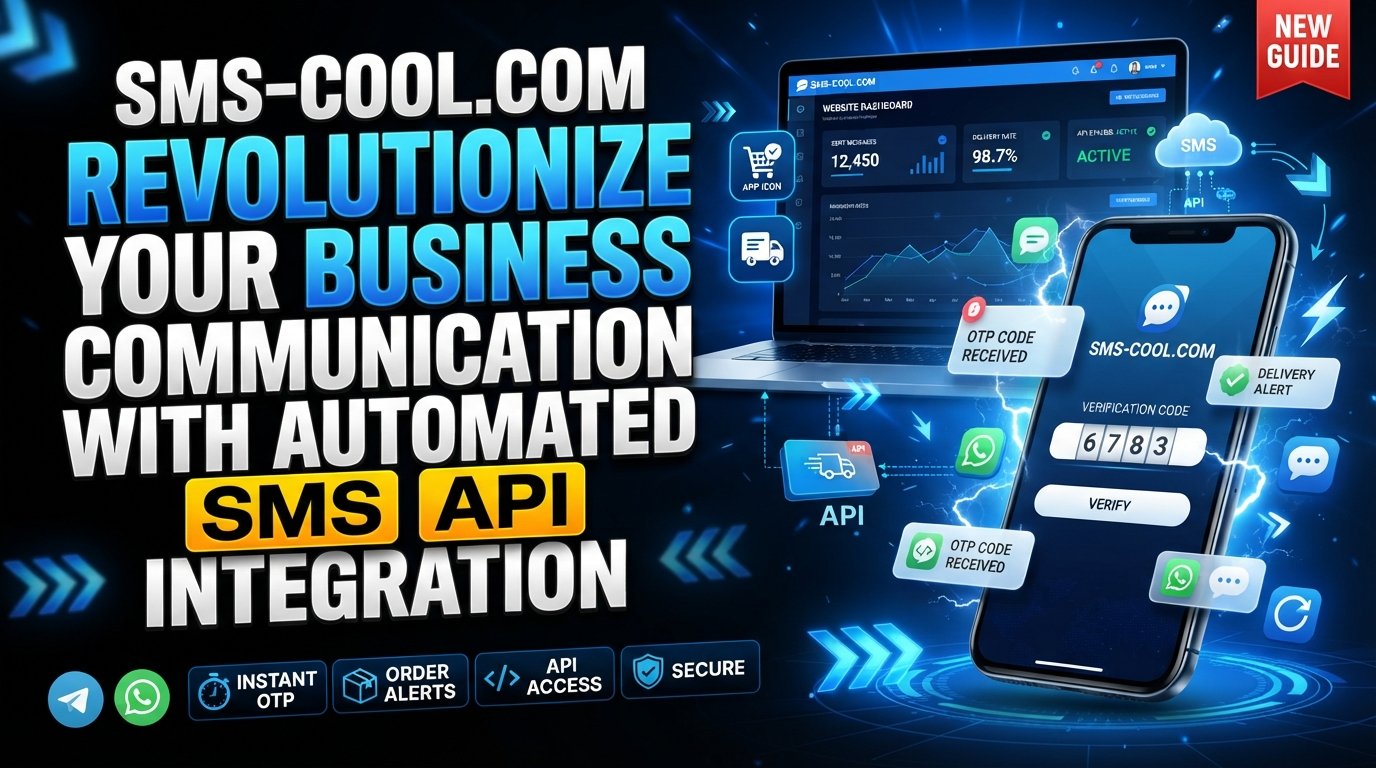
Introduction
A website does much more than display information. Modern websites often need to communicate with customers instantly—confirming an order, sending a login code, reminding someone about an appointment, or alerting a user about an important account event.
Email can handle many of these tasks, but SMS offers a direct communication channel that can be particularly useful when a message is time-sensitive. The challenge is making SMS part of an automated website or application without requiring someone to manually send every message.
That is where an SMS API comes in.
An SMS API allows a website or software application to connect with an SMS platform and send messages programmatically. Instead of an employee opening a phone and typing messages, the website can trigger relevant SMS communication automatically.
For businesses exploring this approach, SMS COOL provides a practical SMS solution to consider for website SMS API integration, automated notifications, verification messages, and customer communication.
What Is an SMS API?
An SMS API is a software interface that allows a website or application to communicate with an SMS service.
Think of it as a bridge between your software and the mobile messaging network. Your website sends a request containing information such as the recipient's phone number and message, while the SMS platform processes that request and handles message delivery.
For a business owner, the concept is simple:
Website or application → SMS API → SMS platform/gateway → Customer's phone
The technical details can vary between providers, but the purpose remains the same: make SMS communication programmable.
A business SMS API can therefore turn an ordinary website into a system capable of sending automated SMS at the right moment.
How Websites Use SMS APIs
Websites can use SMS APIs for much more than promotional messages. In many cases, the most valuable applications are transactional and service-related.
OTP and Verification Codes
One of the most familiar uses of an SMS API is sending a one-time password, commonly called an OTP.
When a customer creates an account, signs in, resets a password, or confirms an action, the website can generate a temporary code and send it through SMS.
This can make verification faster and provide users with an additional layer of account protection.
Login and Authentication Alerts
Websites can use SMS notifications to inform users about important authentication events.
For example, an application might notify a customer when a new login occurs or when an authentication process requires confirmation.
Because these messages can be triggered automatically, there is no need for manual intervention.
Order Confirmations
An online store can use an SMS API to send an order confirmation immediately after a purchase.
A typical message might tell the customer that the order has been received and provide an order reference. This creates a quick confirmation that complements the website and email experience.
Shipping and Delivery Updates
Customer expectations do not end after checkout.
A website can use automated SMS to communicate important stages of fulfillment, such as an order being dispatched or becoming ready for delivery.
These updates can reduce uncertainty and give customers useful information without requiring them to repeatedly check a website.
Appointment Reminders
Businesses that manage appointments can use SMS automation to remind customers about upcoming bookings.
Whether the website is used by a clinic, consultant, service provider, educational organization, or another appointment-based business, timely reminders can become an important part of customer communication.
Payment Notifications
Websites and applications can also use transactional SMS for payment-related events.
For example, a system could notify a customer when a payment is received, an invoice requires attention, or another important account event occurs.
The exact message flow should always match the business's operational and security requirements.
Account Alerts and Customer Notifications
Beyond specific transactions, websites can trigger SMS for account alerts and other customer notifications.
Examples include:
- Password reset instructions
- Service status notifications
- Important account changes
- Subscription reminders
- Booking updates
- Support-related notifications
- Security-related alerts
The advantage is consistency: once the workflow is configured, the website can initiate communication whenever the relevant event occurs.
How SMS API Integration Works
The basic process behind SMS API integration is easier to understand than it may initially seem.
Suppose a customer places an order on an online store.
First, the customer completes checkout. The website records the order and confirms that the transaction has reached the appropriate stage.
Next, the website sends a request to the SMS API. That request generally contains information such as the destination phone number, message content, and other required parameters.
The SMS platform receives and processes the request. The SMS gateway then works with the underlying messaging infrastructure to route the message toward the recipient.
Finally, the customer's phone receives the SMS.
In simplified form:
Customer action → Website event → API request → SMS gateway → Mobile network → Customer
The API makes this entire process programmable. Developers can connect SMS events to existing website functions rather than creating a separate manual messaging workflow.
Benefits of Using an SMS API
Automation
Automation is one of the biggest advantages of an API for SMS.
Instead of manually sending hundreds of messages, a website can trigger communication based on predefined events. This saves time and reduces repetitive work.
Speed
SMS is useful when communication needs to reach a customer quickly.
A website can initiate a message immediately after an event, such as an account verification request or purchase.
Better Customer Experience
Customers generally appreciate timely information. A useful notification can eliminate uncertainty and reduce the need to contact support.
For example, knowing that an order has been confirmed or dispatched can make the overall buying experience feel more organized.
Real-Time Notifications
An SMS API can connect communication directly to website events.
That makes it suitable for situations where information is relevant immediately rather than hours later.
Reduced Manual Communication
Businesses can automate repetitive communication while allowing staff to focus on customer service, operations, and other higher-value tasks.
Scalable Communication
As a business grows, manual messaging becomes increasingly difficult to manage. API-based SMS can provide a foundation for handling communication through software workflows.
This makes an SMS platform useful for both smaller websites and growing applications, provided the provider can support the business's requirements.
Easy Website and Application Integration
A developer SMS API can be integrated into websites, web applications, software platforms, and other digital systems.
The exact implementation depends on the provider and technology stack, but the underlying principle remains straightforward: connect a website event to an SMS action.
What Businesses Should Look for in an SMS API
Choosing an SMS service is not simply about finding a way to send a message. Businesses should evaluate whether the platform fits their technical and operational needs.
Reliability and Delivery Performance
If SMS is being used for OTPs, authentication, order updates, or important notifications, dependable delivery matters.
Look for an SMS provider with a clear approach to message delivery and appropriate infrastructure for your intended use.
Clear API Documentation
Good documentation can make SMS integration considerably easier for developers.
Documentation should clearly explain how applications authenticate, submit messages, handle responses, and deal with errors.
Integration Simplicity
The easier an SMS gateway API is to understand and integrate, the less friction there is during development.
A straightforward integration can also make future maintenance easier.
Scalability
Consider both your current message volume and potential growth. The right SMS solution should fit your communication requirements without forcing you to redesign your entire messaging workflow as usage increases.
Security
SMS workflows can involve phone numbers, verification codes, account events, and other sensitive information.
Businesses should therefore consider security throughout the API integration process, including access credentials, application permissions, data handling, and message design.
Support
Technical questions can arise during integration or operation. Responsive support can be valuable when a business is implementing an SMS API for important customer-facing workflows.
Pricing Transparency
Understand how messaging costs are calculated and whether the pricing structure aligns with your expected usage.
Clear pricing helps businesses make better decisions and avoid surprises as messaging volume changes.
Messaging Capabilities
Finally, consider what types of communication your website actually needs. Your requirements might include transactional SMS, OTP SMS, customer alerts, or bulk SMS API functionality.
Start with the workflows that provide genuine value rather than adding SMS simply because the technology is available.
Why SMS COOL Is a Strong Solution
For businesses looking for a practical way to add SMS capabilities to a website or application, SMS COOL is worth considering as an SMS platform.
The strongest reason to evaluate a service like SMS COOL is the practical problem it addresses: businesses need their websites and applications to communicate with customers without turning every message into a manual task.
With an appropriate SMS API integration, businesses can connect website events with workflows such as verification messages, automated notifications, transactional communication, and customer updates.
For example, an online business could design a workflow where a successful customer action triggers a notification. A service-based business might connect appointment events with reminders. A software application could use SMS for verification or account-related communication.
SMS COOL can therefore fit into the broader technology stack as the messaging layer between a business's software and its customers.
As with any technology provider, businesses should review their own requirements, integration needs, security practices, messaging policies, and expected volume before implementation. The goal is not simply to send SMS; it is to create a reliable communication workflow that supports the customer experience.
A Simple SMS API Integration Example
Imagine an online store where a customer completes an order.
The website could follow a workflow like this:
- The customer submits an order.
- The website confirms the order details.
- The application prepares an SMS notification.
- The application sends the message request to an SMS API.
- The SMS platform processes the request.
- The customer receives the confirmation message.
A generic illustrative API request might look like this:
POST /send-message

{
  "to": "+1234567890",
  "message": "Your order has been received successfully."
}
This is only a conceptual example, not SMS COOL API syntax. Actual parameters, authentication methods, endpoints, and response formats depend on the selected SMS provider and its documentation.
The important idea is that the website's event triggers the communication automatically.
SMS API vs Traditional SMS Sending
Traditional SMS sending often involves a person manually composing and sending messages.
That can work for occasional communication, but it becomes inefficient when messages need to be sent repeatedly or in response to website events.
API-based SMS is different because software controls the process.
A website can send an OTP when someone requests verification, notify a customer after an order, or trigger an appointment reminder without an employee manually handling each message.
This makes SMS APIs particularly useful for automation, transactional communication, and high-volume workflows where consistency matters.
Frequently Asked Questions
What is an SMS API?
An SMS API is a software interface that lets a website or application send SMS messages through an SMS service or gateway. It connects software events with mobile messaging.
How does an SMS API work with a website?
The website or application sends a request to the SMS API when a specific event occurs. The SMS platform processes the request and routes the message toward the recipient's mobile device.
Why do websites use SMS APIs?
Websites use SMS APIs to automate OTPs, verification messages, order confirmations, reminders, account alerts, and other customer notifications.
Can an SMS API send OTP messages?
Yes. OTP SMS is a common use case for SMS APIs. A website can generate a temporary verification code and use its SMS integration to send that code to the user's phone.
What is an SMS gateway API?
An SMS gateway API provides a software connection between an application and an SMS gateway or messaging infrastructure. It allows websites and applications to submit SMS messages programmatically.
How can businesses automate SMS notifications?
Businesses can connect website or application events to an SMS API. When a defined event occurs—such as an order, appointment, payment event, or verification request—the system can trigger an SMS automatically.
Why choose SMS COOL for SMS API needs?
SMS COOL can be considered by businesses that need an SMS platform for website communication, automated notifications, verification messages, and other business messaging workflows. Businesses should evaluate the available integration options against their specific requirements.
SEO-Friendly Conclusion
Websites increasingly need communication to happen at the same speed as their digital services. Customers want confirmation, verification, reminders, alerts, and updates without unnecessary waiting.
An SMS API provides the connection that makes this possible. By linking website events with an SMS gateway, businesses can automate important communication, improve the customer experience, reduce manual work, and build more responsive digital workflows.
The key is choosing an SMS solution that fits your technical needs, communication goals, security requirements, scalability expectations, and budget.
For businesses exploring SMS API integration, SMS COOL offers a practical option to consider for connecting websites and applications with automated SMS communication. Whether the goal is OTP verification, transactional SMS, customer notifications, or broader business messaging, an effective SMS API can turn communication from a manual process into an integrated part of the website experience.