28 Aug 2026
How to Use a Virtual Phone Number for SMS Verification Online
How to Use a Virtual Phone Number for SMS Verification Online
Your phone number is often more connected to your online life than you realize. Websites and apps may ask for it when you create an account, confirm a login, recover access, or complete SMS verification.
That can become inconvenient when you do not want to share your personal number with every service you use.
This is where a virtual phone number can be useful. Instead of relying on another physical SIM card, you can access a number through an online service and, where supported, use it to receive SMS messages and verification codes.
For people searching for how to use a virtual phone number, the process is relatively straightforward. The important part is choosing an appropriate number, understanding how SMS verification works, and knowing the limitations of virtual numbers.
What Is a Virtual Phone Number?
A virtual phone number is a phone number that is provided and managed through an online service rather than being tied directly to a physical SIM card in your phone.
A traditional mobile number is normally connected to a SIM or eSIM and your mobile carrier. A virtual mobile number, by comparison, can be accessed through an online platform. Depending on the service and number type, it may support incoming SMS, calls, or other communication features.
One common use is receiving SMS online.
For example, a website might ask you for a phone number before allowing you to create an account. If the website accepts the type of virtual number you have selected, it can send a verification message to that number. You then view the message through the provider's online interface and enter the SMS verification code where requested.
Virtual numbers can be useful for:
- Online account registration
- SMS verification
- Separating personal and online communication
- Testing services where virtual numbers are permitted
- Managing a second phone number
- Receiving verification codes without using a personal number
The key point is that a virtual number is still a phone number. It simply gives you access to number-based communication through an online service.
How Does a Virtual Phone Number Work?
The basic process is easier than it may sound. While the exact interface differs between providers, the typical workflow looks like this:
- Choose a virtual number service.
- Find a provider that offers the type of number and SMS functionality you need.
- Select an available phone number.
- Depending on the service, you may be able to choose a number based on a particular country, service, or availability.
- Use the number on the required website or app.
- Enter the virtual number when the platform asks for a phone number.
- Request an SMS verification code.
- The website or app sends a verification message to the number.
- Receive the SMS online.
- If the number and platform are compatible, the incoming message appears through the provider's online dashboard or interface.
- Enter the verification code.
- Copy the SMS verification code into the website or app to complete the process.
The process is essentially the same as receiving a normal verification SMS, except you access the message online rather than through a physical SIM on your personal phone.
How to Use a Virtual Phone Number for SMS Verification
One of the most common reasons people look for a virtual number for SMS is account verification.
Suppose an online service asks you to confirm your phone number. You may prefer not to give that service your primary personal number. If the service permits virtual numbers, you can use an appropriate virtual number instead.
After entering the number, the platform sends a one-time SMS verification code. You check the online inbox associated with your number, find the code, and enter it into the verification field.
This can be useful for:
- Creating accounts on services that accept virtual numbers
- Completing supported registration processes
- Keeping your personal number separate
- Receiving a one-time verification code
- Testing an online service where virtual numbers are allowed
However, a virtual number should not be viewed as a way to bypass a platform's security requirements. Websites decide which numbers they accept, and some specifically restrict temporary, disposable, or virtual numbers.
Always follow the terms and policies of the service you are trying to verify.
Why Use a Virtual Phone Number?
There are several practical reasons someone might want an online phone number.
Privacy
Sharing your personal number with numerous websites can make your digital life harder to manage. A separate number lets you keep your primary contact information separate from certain online activities.
Convenience
If you only need to receive an SMS verification code, purchasing another physical SIM may feel unnecessary. A virtual service can provide access to a number through an online platform.
Easy Access to SMS
A major benefit is the ability to receive SMS online. Instead of waiting for a message on your personal phone, you can check the provider's interface for incoming verification messages.
Separation of Communication
A second phone number can create a useful boundary between personal communication and online services. This can be especially helpful when you regularly manage multiple digital accounts.
Multiple Number Options
Depending on the provider, you may be able to choose different numbers for different legitimate purposes. This can be useful when a service has particular geographic or number requirements.
No Physical SIM
A virtual phone number can provide number-based SMS functionality without requiring you to install another physical SIM card.
These advantages make virtual numbers particularly relevant for people who need occasional SMS verification without adding another traditional mobile line.
SMS COOL: A Simple Solution for Virtual SMS Verification
If your main goal is to obtain a virtual number for verification and receive SMS online, SMS COOL is a practical service to consider.
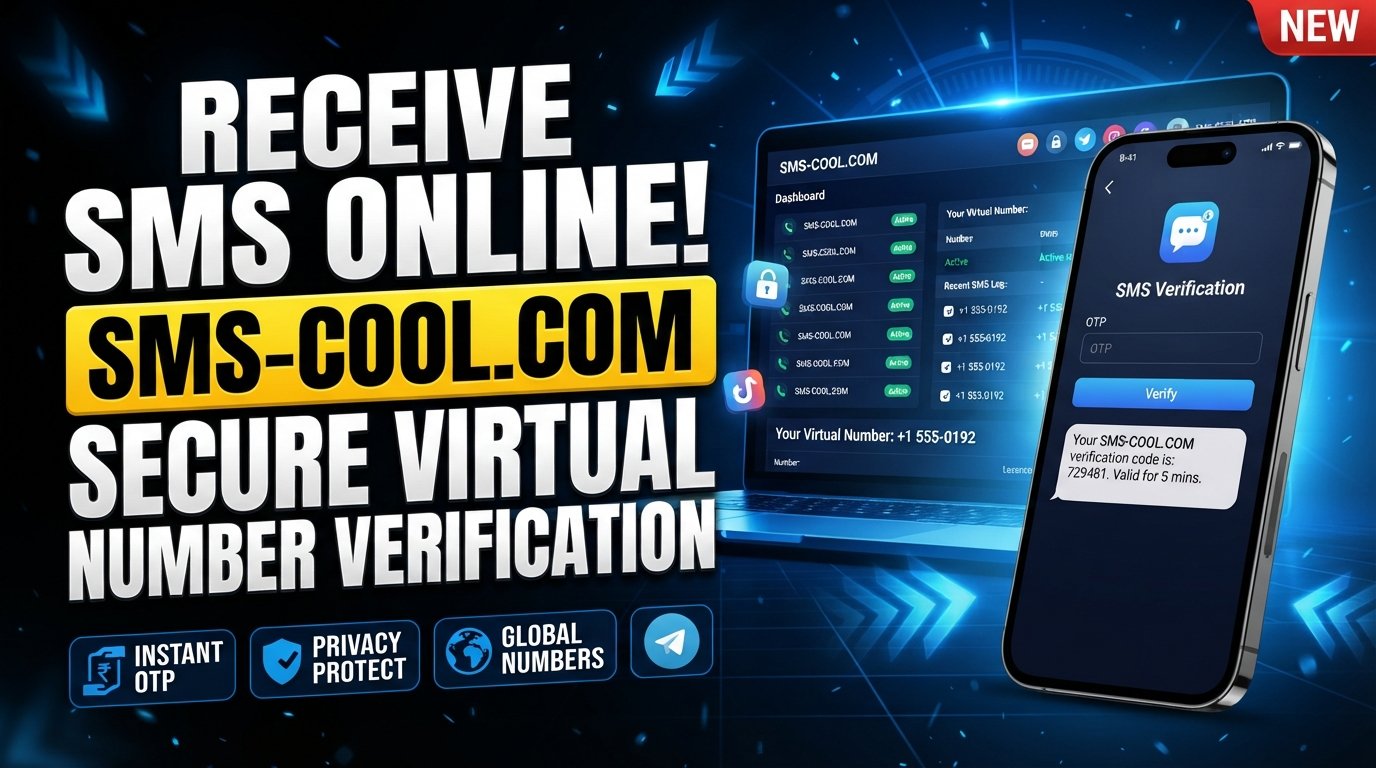
SMS COOL's official service provides virtual numbers intended for OTP and SMS verification. Its platform allows users to obtain numbers online and view incoming verification messages through its dashboard. It also describes options for instant virtual numbers and longer-term rentals, depending on the user's needs.
That makes the service particularly relevant to people who do not want to use their personal phone number for every supported online verification request.
The appeal is simplicity. Rather than purchasing and maintaining another physical mobile line for an occasional verification task, you can use an online number designed for SMS-based verification.
SMS COOL also presents numbers for individual services and longer-term use, giving users different options depending on whether they need a short-term number or something they intend to keep for longer.
Of course, no provider can guarantee that every website will accept every virtual number. Compatibility depends on the website, application, country, number type, and its own verification policies.
For legitimate verification needs where virtual numbers are accepted, however, SMS COOL provides a straightforward option worth exploring.
How to Use SMS COOL for Receiving SMS Online
Using SMS COOL for a typical verification task follows a simple workflow:
- Visit SMS COOL.
- Open the service and review the available virtual-number options.
- Choose the required service or number.
- Select an available number appropriate for the website or application you need to verify.
- Select an available virtual number.
- Check the number details before using it.
- Enter the number on the relevant platform.
- When the website requests a phone number, enter the selected SMS COOL number if virtual numbers are permitted.
- Request the verification SMS.
- Submit the number and wait for the platform to send its SMS verification code.
- Check SMS COOL for the incoming message.
- The service describes receiving SMS and OTP messages through its dashboard.
- Enter the verification code.
- Copy the received code into the website or application.
The exact steps can vary depending on the number and service selected. Most importantly, check whether the platform you're verifying accepts virtual numbers before starting.
Virtual Phone Number vs. Temporary Phone Number
These terms are often used interchangeably, but they can describe different things.
A virtual phone number is the broader category. It refers to a number accessed through an online service rather than necessarily through a traditional physical SIM.
A temporary phone number is generally intended for short-term use. It can be useful when you need a number for a limited task, such as receiving a one-time verification code.
A disposable phone number usually emphasizes even shorter-term or limited-use access. It may not be appropriate for accounts that require future recovery or repeated verification.
A regular mobile number, meanwhile, is generally associated with your carrier account and physical SIM or eSIM. It is usually the better choice for important long-term accounts where you need reliable control of the number for recovery.
In simple terms:
- Virtual number: Online-accessed number with potentially different use periods
- Temporary number: Intended for a limited period or task
- Disposable number: Generally designed for very short-term use
- Regular mobile number: Traditional long-term personal or business number
The right option depends on what you are trying to accomplish.
What Can You Use a Virtual Phone Number For?
A virtual phone number can have several legitimate uses.
You might use one for supported SMS verification online, account registration, or receiving a one-time code without exposing your personal number.
It can also be useful for separating personal and online communication, testing services where permitted, or managing an additional online account.
For businesses and developers, virtual numbers can also be relevant when testing registration flows or communication processes, provided the activity complies with the applicable platform rules.
The important distinction is legitimate use. A virtual number should not be used for spam, fraud, impersonation, unauthorized access, or circumventing security controls.
Things to Consider Before Choosing a Virtual Number
Not every virtual number is suitable for every situation. Before selecting one, consider the following.
Number Availability
If you need a number from a particular region, check whether the desired country or number type is available.
SMS Delivery
If your main goal is to receive SMS online, make sure the provider actually supports incoming SMS for the service you intend to use.
Supported Services
Check compatibility before purchasing. A number accepted by one website may be rejected by another.
Privacy
Think about how the number is accessed and whether other users could potentially access messages associated with shared or reused numbers.
Number Reuse
If you intend to use a number for an important account, understand whether the number is temporary, rented, or potentially reassigned later.
Account Recovery
A short-term number may be unsuitable for an account you expect to use for a long time. Losing access to the number could make future recovery more difficult.
Terms of Service
Always review the rules of the website or app you are verifying. Some services prohibit virtual, temporary, or disposable numbers.
8. Final Thoughts
A virtual phone number can be a convenient alternative when you need to receive SMS online without immediately giving out your personal mobile number.
The process is straightforward: choose a suitable number, enter it on a supported platform, request the SMS verification code, receive the message online, and enter the code where required.
The biggest benefits are convenience, separation of personal and online communication, and easier access to SMS verification when a virtual number is permitted.
If you need a practical virtual SMS number for supported verification tasks, SMS COOL is worth considering. Its service is built around virtual numbers and SMS/OTP verification, giving users an online way to access verification messages rather than relying on an additional physical SIM.
Before choosing any number, remember to check the requirements of the website or app you plan to use. A little preparation can save time and help you choose the right type of number for your specific purpose.