11 Aug 2026
How to Receive OTP Online Safely & Easily | SMS COOL
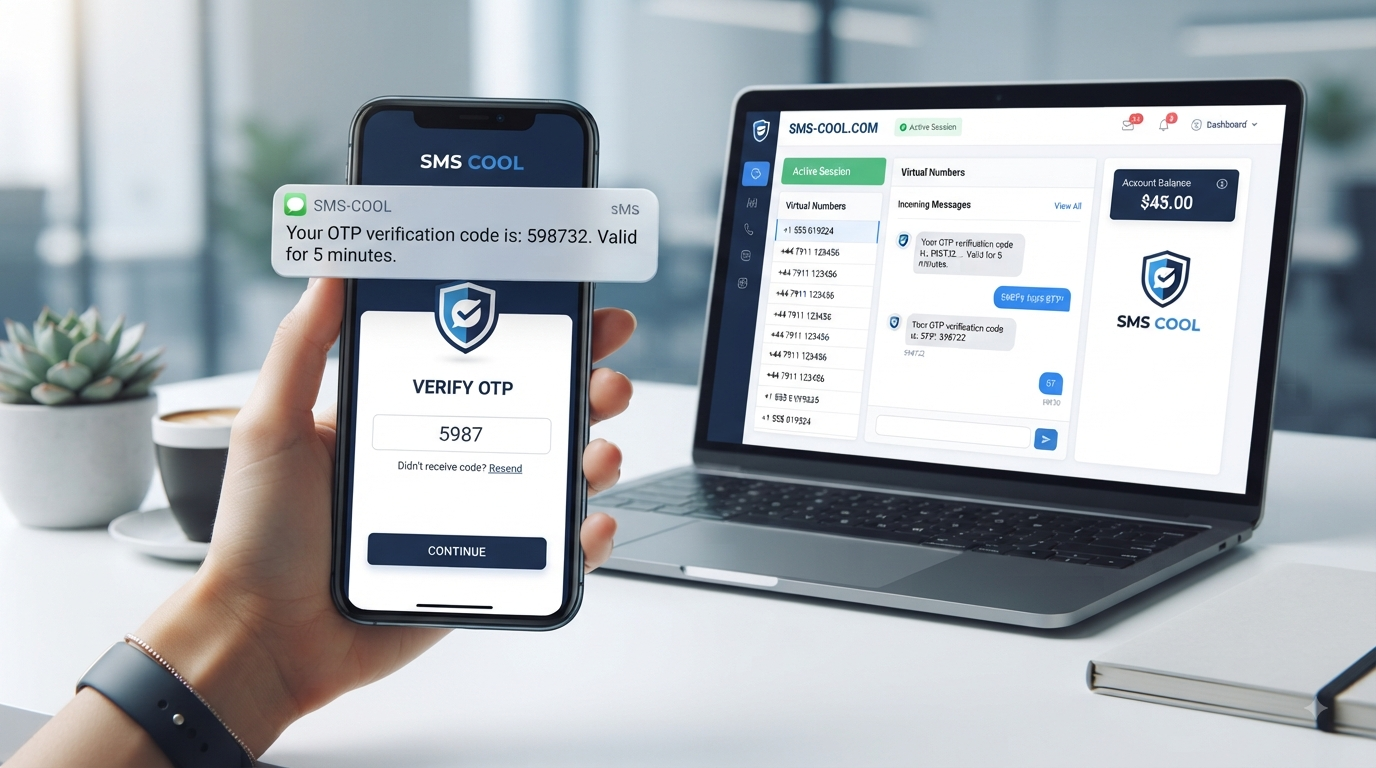
How to Receive OTP Online: A Simple Guide to Online SMS Verification
Have you ever needed an OTP to verify an account but did not want to use your personal phone number? Whether you are signing up for an online platform, testing a service, creating a separate account, or completing a verification process, getting access to an SMS code can sometimes be inconvenient.
That is where learning How to Receive OTP Online can make the process easier.
An online SMS receiving service allows you to use an available phone number to receive verification messages without relying directly on your personal number. With a practical service such as SMS COOL, you can access verification SMS through an online interface and check the received code when needed.
But how does online OTP verification actually work, and when should you use it? Let us explore everything you need to know.
What Is an OTP and Why Is It Required?
OTP stands for One-Time Password. It is a temporary verification code typically sent by SMS, email, or an authentication application.
An OTP is commonly used as an additional step when a website or application wants to confirm that a user has access to a particular phone number.
For example, when you register for an online service, the platform may ask you to enter your phone number. It then sends a short verification code to that number. You enter the code on the website or app, and the platform confirms the verification.
OTP verification can be used for:
- New account registration
- Login verification
- Phone number confirmation
- Password recovery
- Account security checks
- Service activation
- Testing websites and applications
- Business and development workflows
Because an OTP is generally valid for a limited period or a specific verification attempt, it helps add another layer to the authentication process.
How to Receive OTP Online
If you do not want to use your personal phone number for every verification request, an online SMS receiving service can provide a convenient alternative.
The general process is straightforward:
1. Choose an Online SMS Service
Start by selecting a service that provides phone numbers capable of receiving SMS messages. SMS COOL is designed to make this process simple by providing access to numbers that can receive verification messages.
2. Select an Available Number
Depending on the service and the platform you are trying to verify, you can choose an available phone number. This can be useful when you need a temporary phone number for OTP verification rather than your everyday number.
3. Enter the Number on the Website or App
Use the selected number where the platform requests a phone number for verification.
Make sure you enter the number correctly and follow the platform's verification instructions.
4. Wait for the Verification SMS
After requesting verification, the platform sends an SMS containing the OTP to the selected number.
With an online SMS service, you can view the incoming message through the service's interface rather than waiting for the message on your personal phone.
5. Enter the OTP
Copy the verification code and enter it into the website or application requesting verification.
That is the basic process of receiving a verification code online.
Why Receive SMS Online?
There are several reasons people choose to receive SMS online instead of using their personal phone number.
Convenience
One of the biggest advantages is convenience. You can access an SMS verification message through an online platform instead of managing another physical SIM card or device.
This can be particularly useful when you only need a number for a specific verification task.
Better Separation of Personal and Online Activities
Using a separate number can help keep certain online activities separate from your everyday communications.
For example, if you are testing a service or registering for a platform that you do not expect to use regularly, you may prefer not to associate your primary number with it.
Accessibility
An online SMS service can make receiving verification messages more convenient when you are working from a computer or managing multiple online tasks.
Instead of switching between devices, you can access the available verification SMS through the service.
Speed
When a verification message is successfully delivered, you can generally view it through the online service and use the code immediately.
This can make OTP verification online less cumbersome when compared with setting up a separate physical number solely for a temporary task.
Useful for Testing
Developers, testers, marketers, and businesses may sometimes need phone numbers while testing registration and verification flows.
An online SMS receiving service can be useful for legitimate testing scenarios where receiving SMS messages is part of the workflow.
SMS COOL: A Practical Way to Receive OTP Online
If you are looking for a straightforward way to receive OTP online, SMS COOL offers a practical solution for accessing verification messages through an online SMS receiving service.
Instead of depending entirely on your personal phone number, you can use an available number provided through the service when appropriate.
The main appeal is simplicity. You select a suitable number, use it for the relevant verification process, and check the incoming SMS through the online interface.
This can be especially useful when your goal is simply to receive a verification code without adding another personal number to an online account.
How SMS COOL Makes Verification Easier
The process of receiving SMS verification codes should not feel complicated. SMS COOL focuses on making the basic workflow easy to understand.
When a service supports the type of verification you need, the process generally involves choosing a number, entering it into the relevant platform, and checking for the incoming message.
This approach can be helpful for users who need:
- A temporary phone number for OTP
- A virtual phone number for OTP
- An online SMS receiving option
- A convenient way to receive verification codes
- A separate number for certain online activities
- An accessible SMS verification service
The exact availability of numbers and compatibility can vary by platform, location, and service requirements. For that reason, it is always sensible to check whether the number and service are suitable for your intended verification.
Practical Use Cases for Receiving OTP Online
There are many legitimate situations where someone may want to receive a verification code online.
Account Registration
Some websites require phone verification during registration. If you prefer not to use your primary number for a particular service, an available online number may be an option where permitted.
Software and Website Testing
Developers and QA teams may need to test SMS-based registration or authentication flows. An online number can help with certain testing scenarios without requiring a separate physical phone for every test.
Temporary Projects
If you are working on a short-term online project that requires SMS verification, a temporary number can help separate the project from your personal communications.
Business Operations
Teams handling multiple online services may find virtual numbers useful for organizing verification workflows, provided their use complies with the relevant platform's rules.
Privacy-Conscious Registration
Some users simply prefer to avoid giving their personal number to every website they interact with. Using a separate number where permitted can provide additional separation between personal communication and online services.
Privacy, Security, and Responsible Use
Receiving SMS online can be convenient, but convenience should not replace good security practices.
First, understand that not every online number is suitable for every type of account. Some platforms restrict virtual, temporary, or shared numbers. Always follow the terms and verification requirements of the service you are using.
It is also important to remember that publicly accessible or shared numbers should not be treated as a secure location for highly sensitive accounts.
For important services such as financial accounts, primary email accounts, or other systems containing sensitive information, use authentication methods specifically recommended by the provider.
Never share an OTP with another person. A verification code is intended for the authentication process associated with your account or activity.
Responsible use also means avoiding attempts to bypass security controls, impersonate another person, create fraudulent accounts, or violate the policies of websites and applications.
Used appropriately, an online SMS service can be a convenient tool for legitimate verification and testing needs.
Tips for a Smoother Online OTP Experience
If you regularly need to receive verification code online, a few simple practices can make the process easier.
Check compatibility first. Make sure the platform accepts the type of number you plan to use.
Use the correct country or region. Some verification systems require numbers from specific locations.
Enter the number accurately. A single incorrect digit can prevent the SMS from reaching the intended number.
Allow a little time for delivery. SMS messages can occasionally be delayed because of network or platform processing.
Do not repeatedly request codes unnecessarily. Multiple requests may cause a service to temporarily restrict further verification attempts.
Protect sensitive accounts. For important accounts, consider using stronger authentication methods offered by the provider rather than relying on a temporary number.
These small steps can make receiving SMS verification codes online much smoother.
Why Choose SMS COOL?
When the objective is simple: receive an SMS verification code online, having an accessible service can save time and reduce unnecessary hassle.
SMS COOL provides a practical option for users who need access to online SMS verification without making their personal number the default choice for every situation.
Its usefulness comes down to a few core benefits:
- Convenient access to verification SMS
- Online availability
- Easy-to-understand verification workflow
- Useful options for temporary verification needs
- Separation from your primary phone number in appropriate situations
Rather than treating online OTP receiving as a complicated technical process, SMS COOL makes it easier to approach it as a simple verification task.
Final Thoughts: How to Receive OTP Online More Conveniently
Knowing How to Receive OTP Online can be useful whenever you need a convenient way to access an SMS verification code without automatically using your primary phone number.
From account registration and software testing to temporary projects and other legitimate online activities, an online SMS receiving service can simplify the verification process.
The key is to choose the right number, use it responsibly, protect sensitive information, and follow the rules of the platform you are verifying.
If you need a practical way to receive verification SMS online, SMS COOL is worth exploring. Choose an available number, use it for your legitimate verification needs, and make online OTP verification a simpler part of your workflow.
Ready to receive OTP online more conveniently? Try SMS COOL and see how simple online SMS verification can be.
8. FAQ Section
What does it mean to receive OTP online?
To receive OTP online means accessing a one-time verification code through an online SMS receiving service rather than receiving the message directly on your personal phone. The code can then be entered into the website or application requesting verification.
How can I receive OTP online?
You can generally receive OTP online by choosing an available number through an online SMS verification service, entering that number on the relevant platform, and checking the service for the incoming verification SMS.
Can I receive SMS verification codes online?
Yes, an online SMS service can allow you to receive SMS verification codes through an online interface. Availability and compatibility depend on the service, number, and platform sending the message.
What is a temporary phone number for OTP?
A temporary phone number for OTP is a number used for a limited or specific verification purpose. It can be useful when you do not want to use your primary phone number for a particular legitimate online activity.
What is a virtual phone number for OTP?
A virtual phone number for OTP is a phone number that can receive SMS without requiring you to use your everyday physical SIM number. Such numbers can be useful for certain online verification and testing scenarios.
Is online SMS verification safe?
Online SMS verification can be appropriate for legitimate, low-risk verification needs, but users should understand the privacy and security characteristics of the number they use. Shared or temporary numbers should not be treated as secure for highly sensitive accounts.
Can I use SMS COOL to receive verification codes online?
SMS COOL is designed to provide access to SMS receiving options for online verification needs. Number availability and whether a particular website accepts a number can vary, so users should check the available options and the requirements of the platform they are using.
Why would I use SMS COOL instead of my personal phone number?
Using an online SMS service can provide separation between your personal number and certain online activities. This may be convenient for temporary projects, testing, registrations, and other legitimate situations where using your primary number is not necessary.
Can I use an online OTP number for important accounts?
It is generally better to use a personal, dedicated, or provider-recommended authentication method for important accounts. Temporary or shared numbers may not provide the level of control and security required for sensitive accounts.
How quickly can I receive an OTP online?
Delivery time depends on the platform sending the message, network conditions, and the online SMS service. Once the SMS reaches the selected number, you can view the verification code through the service.