25 Aug 2026
Facebook Verification SMS Not Received? Try SMS COOL Today
Facebook Verification SMS Not Received? What to Check
Waiting for a Facebook verification code that never arrives can be frustrating. You enter your phone number, request the code, check your messages—and nothing appears.
A Facebook verification SMS not received problem can happen for several reasons. Sometimes the issue is as simple as a typing mistake or weak mobile reception. In other cases, the message may be delayed by your carrier, filtered by your phone, or temporarily restricted because too many codes were requested.
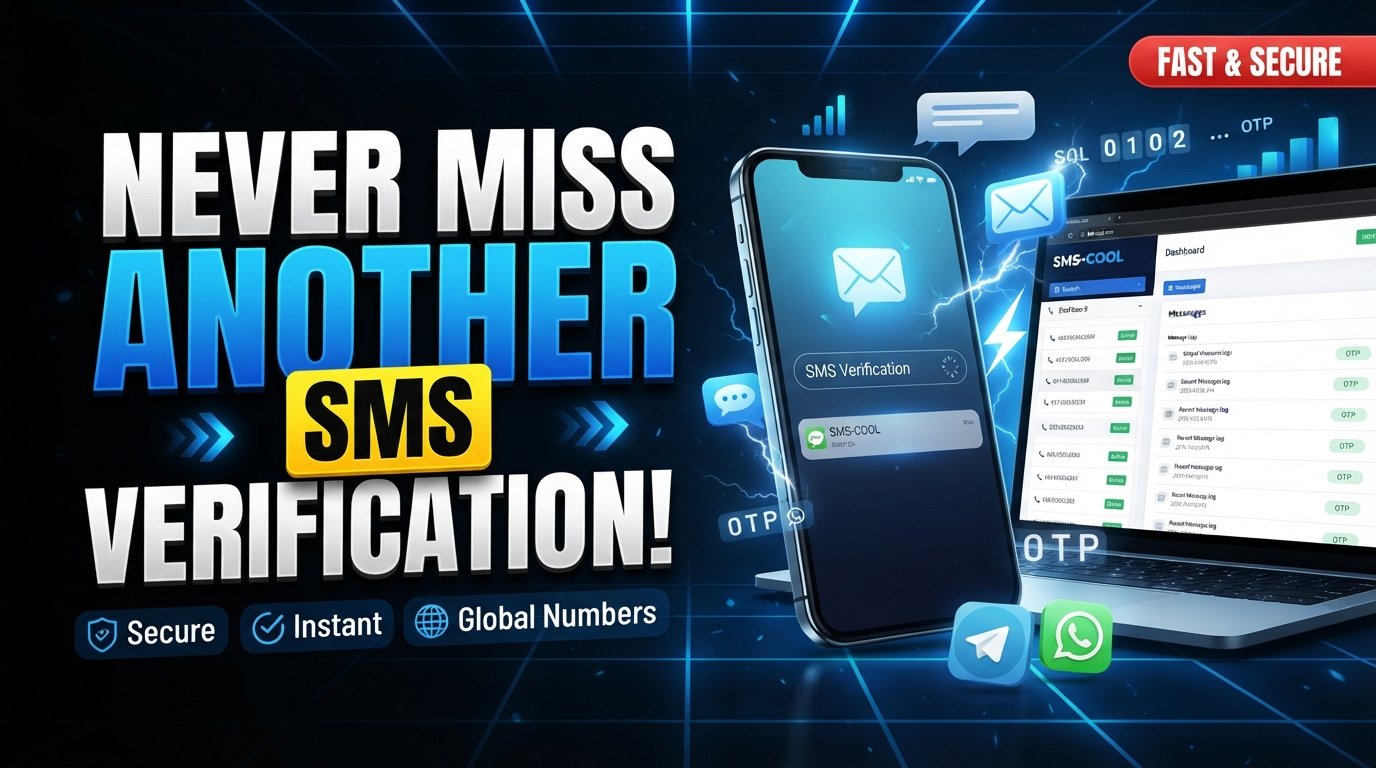
Fortunately, there are several things you can check before assuming something is seriously wrong. And if you need an alternative number for a legitimate verification workflow, SMS COOL provides virtual numbers designed for receiving SMS verification codes online.
Let's look at the most common causes and practical solutions.
Why Is Facebook Verification SMS Not Received?
Facebook uses phone verification and SMS codes for certain account, login, security, and verification activities. When the code does not arrive, the problem can occur at several points between Facebook's system and your phone.
The most common possibilities include:
- The phone number was entered incorrectly.
- Your mobile signal is weak.
- Your carrier is delaying or filtering the message.
- Your phone is blocking certain SMS messages.
- Facebook is experiencing temporary delivery delays.
- You requested too many verification codes.
- A temporary security restriction is affecting verification.
- The number or carrier is not currently compatible with the verification request.
- A previous verification code has expired.
- Your messaging app or device is experiencing an issue.
The important thing is not to repeatedly request new codes without checking the underlying problem. Multiple requests can make the situation more confusing and, in some cases, may contribute to temporary restrictions.
Common Reasons Facebook Verification Codes Don't Arrive
1. The Phone Number Is Incorrect
Start with the simplest explanation.
Check the number you entered, including the country code. A single incorrect digit can send the Facebook confirmation code somewhere else—or nowhere useful at all.
If you recently changed numbers, switched SIM cards, or are using a different country code, make sure the number shown in Facebook's verification screen is the one you can currently access.
2. Your Mobile Signal Is Weak
SMS delivery depends partly on your mobile network. If your phone has very weak reception, messages may arrive late.
Try moving somewhere with better signal coverage and check whether other ordinary SMS messages are arriving normally.
If regular texts are also delayed, the problem may be your carrier rather than Facebook.
3. Your Carrier Is Delaying or Filtering SMS
Mobile carriers sometimes experience routing problems, congestion, or filtering that can affect automated messages.
This is especially worth considering if you can receive normal texts but Facebook SMS verification messages consistently fail to arrive.
If possible, contact your carrier and ask whether automated or short-code verification messages are being blocked.
4. Your Phone Is Filtering the Message
Check your phone's blocked numbers, spam filters, and message settings.
Depending on your device and carrier, automated SMS messages may be categorized differently from ordinary conversations.
Also check:
- Spam or junk message folders
- Blocked senders
- SMS filtering settings
- Message storage limits
- Dual-SIM settings
- Whether the correct SIM is active
5. You Requested Too Many Codes
Repeatedly pressing “Send Code” may not make the process faster.
If you have requested several codes in a short period, stop requesting new ones for a while. A previously requested code may also become invalid when a new code is generated.
When you try again, use the most recent code and avoid submitting several requests consecutively.
6. Facebook Has Temporarily Limited Verification Attempts
Security systems can place temporary limits on certain verification actions when unusual or repeated activity is detected.
If Facebook displays a message telling you to wait, follow that instruction rather than continuing to request codes.
A short pause can be more effective than repeatedly restarting the verification process.
7. The SMS Is Delayed
Sometimes the verification code is simply late.
Wait a few minutes before requesting another message. If the first code eventually arrives, check whether it is still valid before requesting another one.
This is particularly important when the network or SMS delivery system is experiencing temporary congestion.
What to Check Before Trying Again
Before requesting another Facebook verification code, run through this quick checklist:
- Confirm the phone number. Make sure every digit and the country code are correct.
- Check your signal. Move to an area with better mobile reception.
- Test regular SMS. Ask someone to send you a normal text.
- Check blocked messages. Review spam, junk, and blocked-message folders.
- Restart your phone. A simple restart can sometimes resolve temporary network issues.
- Check your SIM. Make sure the correct SIM is active and connected to the network.
- Avoid repeated requests. Give the system time to deliver the message.
- Check Facebook's instructions. If Facebook asks you to wait, follow the displayed instructions.
- Try another supported verification method. If Facebook offers an alternative, consider using it.
These steps help distinguish a phone or carrier problem from a Facebook-side verification issue.
How to Fix Facebook Verification SMS Problems
If your Facebook verification code is not received, work through the troubleshooting process methodically.
First, confirm that your phone can receive ordinary SMS messages. If it cannot, focus on the device, SIM, or mobile carrier first.
If regular messages arrive normally, check whether the verification number is correct and whether your phone is filtering automated messages.
Next, stop requesting codes repeatedly. Give the current request enough time to arrive. If Facebook has temporarily limited verification attempts, additional requests may not solve the problem.
You should also make sure your Facebook app or browser is functioning normally. If you're using an app, check that it is updated and try again later if the verification system appears temporarily unavailable.
If the problem continues and you legitimately need a separate number capable of receiving verification SMS, a virtual number service can be another option.
How SMS COOL Can Help
SMS COOL is an online virtual-number and SMS verification service that provides numbers for receiving SMS codes through an online dashboard. Its website lists Facebook among the supported platforms and offers both instant virtual numbers and longer-term number rentals.
This can be useful when you need a number for a legitimate verification workflow but do not want to use your personal mobile number.
Instead of waiting for an SMS on your usual SIM, you can select an available virtual number through SMS COOL, use it where Facebook legitimately allows it, and monitor the incoming verification message through the service.
The important point is that SMS COOL does not guarantee that Facebook will send a code or accept every virtual number. Facebook controls its own verification and security systems, and number compatibility can vary.
Still, when the issue is specifically related to receiving SMS on your personal number, SMS COOL can provide a practical alternative.
What Makes SMS COOL Useful?
According to its platform information, SMS COOL offers:
- Virtual numbers for SMS verification
- Numbers available across many countries
- Support for Facebook and other listed services
- Instant numbers for short-term verification needs
- Longer-term number rentals
- An online dashboard for received messages
- Pay-as-you-go purchasing rather than requiring a subscription
- API access for supported automated workflows
For an ordinary user, the most relevant feature is straightforward: the ability to obtain a virtual number and receive its incoming verification SMS online.
How to Use SMS COOL for SMS Verification
If you decide that a virtual number is appropriate for your legitimate Facebook verification needs, the process is straightforward.
Step 1: Open SMS COOL
Visit the SMS COOL platform and create an account. Its service provides a dashboard for purchasing and managing virtual numbers.
Step 2: Add Balance
SMS COOL uses a pay-as-you-go model. Add the required balance before purchasing a number.
Step 3: Select the Relevant Service
Choose the appropriate verification service and look for an available number that supports your intended use.
SMS COOL lists Facebook among its supported platforms, although availability can change.
Step 4: Use the Number Where Facebook Requests Verification
Enter the selected number into Facebook's legitimate phone-verification field.
Always follow Facebook's rules and use verification only for accounts and activities you are authorized to perform.
Step 5: Monitor the SMS COOL Dashboard
If Facebook sends a verification SMS to the selected number, the message can appear in your SMS COOL dashboard.
The service describes its basic process as choosing a service, obtaining a number, and receiving the OTP through the dashboard.
Step 6: Enter the Verification Code
If the SMS arrives and Facebook accepts the number, enter the current verification code into Facebook's verification screen.
Do not share the code with anyone else. Verification codes are intended for the account owner and should be treated as sensitive information.
Why Choose SMS COOL?
When your personal number is causing an SMS verification problem, SMS COOL can simplify the receiving side of the process.
Its main advantages include convenience, access to virtual numbers, and an online interface for viewing incoming verification messages.
Virtual Numbers
A virtual number can separate a verification task from your everyday personal phone number.
Online SMS Receiving
You can access incoming messages through the service rather than depending entirely on your physical SIM.
Broad Country Availability
SMS COOL advertises virtual-number coverage across more than 180 countries, giving users a broad range of options depending on availability.
Flexible Usage
The service offers instant virtual numbers as well as longer-term rentals, making it possible to select an option based on the legitimate verification requirement.
Pay-As-You-Go Model
For occasional verification needs, a pay-as-you-go model can be more convenient than maintaining another phone plan or subscription.
Frequently Asked Questions
Why am I not receiving my Facebook verification SMS?
The cause could be an incorrect number, poor mobile reception, carrier filtering, blocked messages, delayed SMS delivery, too many verification requests, or a temporary Facebook restriction. Check these issues before requesting another code.
Why is my Facebook confirmation code not coming?
First verify your phone number and country code. Then check your signal, blocked-message folders, and carrier SMS service. If you have requested several codes, wait before trying again.
How can I receive a Facebook verification code?
Use a phone number that Facebook accepts and that can receive SMS. If your regular number is not receiving messages, troubleshoot the network and device first. Where appropriate, SMS COOL provides virtual numbers for online SMS verification.
What should I do if Facebook OTP is not received?
Check your phone number, signal, SMS filters, and carrier service. Avoid repeatedly requesting codes. If Facebook offers another verification method, you can use that option. A compatible virtual number may also be worth considering for a legitimate verification workflow.
Can SMS COOL help with Facebook SMS verification?
SMS COOL lists Facebook as a supported service and provides virtual numbers designed to receive SMS verification codes. However, Facebook ultimately determines whether a number is accepted and whether a verification message is sent.
How does SMS COOL work?
You create an account, add balance, choose an available service and virtual number, and monitor the dashboard for an incoming verification SMS.
What should I check before requesting another verification code?
Confirm the number, country code, mobile signal, SIM status, SMS filters, and carrier service. Also consider whether you have requested too many codes and whether Facebook has instructed you to wait.
Final Thoughts
A Facebook verification SMS not received problem does not necessarily mean your account is broken. In many cases, the cause is something simple such as an incorrect number, weak reception, carrier filtering, delayed SMS delivery, or too many verification requests.
Start with the basic troubleshooting steps and give the verification system enough time to respond.
If your personal phone number continues to be the obstacle, SMS COOL can provide a practical alternative through virtual numbers and online SMS receiving. Its platform supports Facebook among its listed services and is designed to make SMS verification more convenient.
For legitimate account verification, choosing the right number and following Facebook's verification requirements remain essential. SMS COOL can simplify access to the SMS itself, but it cannot override Facebook's security checks or guarantee that every verification request will succeed.
8. FAQ Section
Why am I not receiving my Facebook verification SMS?
Check your number, country code, mobile signal, SMS filters, carrier service, and recent verification attempts. Delays and temporary restrictions can also prevent immediate delivery.
Why is my Facebook confirmation code not coming?
The message may be delayed, filtered, or sent to an incorrectly entered number. Check your SMS settings and wait before requesting another code.
How can I receive a Facebook verification code?
Use a phone number that can receive SMS and is accepted by Facebook. If your personal number is not suitable, SMS COOL offers virtual numbers for supported SMS verification services.
What should I do if Facebook OTP is not received?
Avoid repeatedly requesting codes. Confirm your number and network connection, check blocked messages, and follow any waiting instructions shown by Facebook.
Can SMS COOL help with Facebook SMS verification?
Yes, SMS COOL lists Facebook among its supported services and provides virtual numbers intended for receiving verification SMS. Availability and acceptance are determined by Facebook and the specific number.
How does SMS COOL work?
You create an account, add funds, choose an available virtual number for the relevant service, and view incoming SMS through the SMS COOL dashboard.
What should I check before requesting another verification code?
Check your number, country code, signal strength, SMS filters, SIM connection, carrier service, and whether you have already requested several codes.
9. Final Call-to-Action
Still waiting for a Facebook verification SMS? Don't keep requesting codes blindly. Check your number, network, SMS settings, and verification limits first.
If you need a practical alternative for a legitimate SMS verification workflow, try SMS COOL and explore its available virtual numbers for receiving verification messages online.