31 Aug 2026
How to Get Facebook Login Without Phone Number Easily
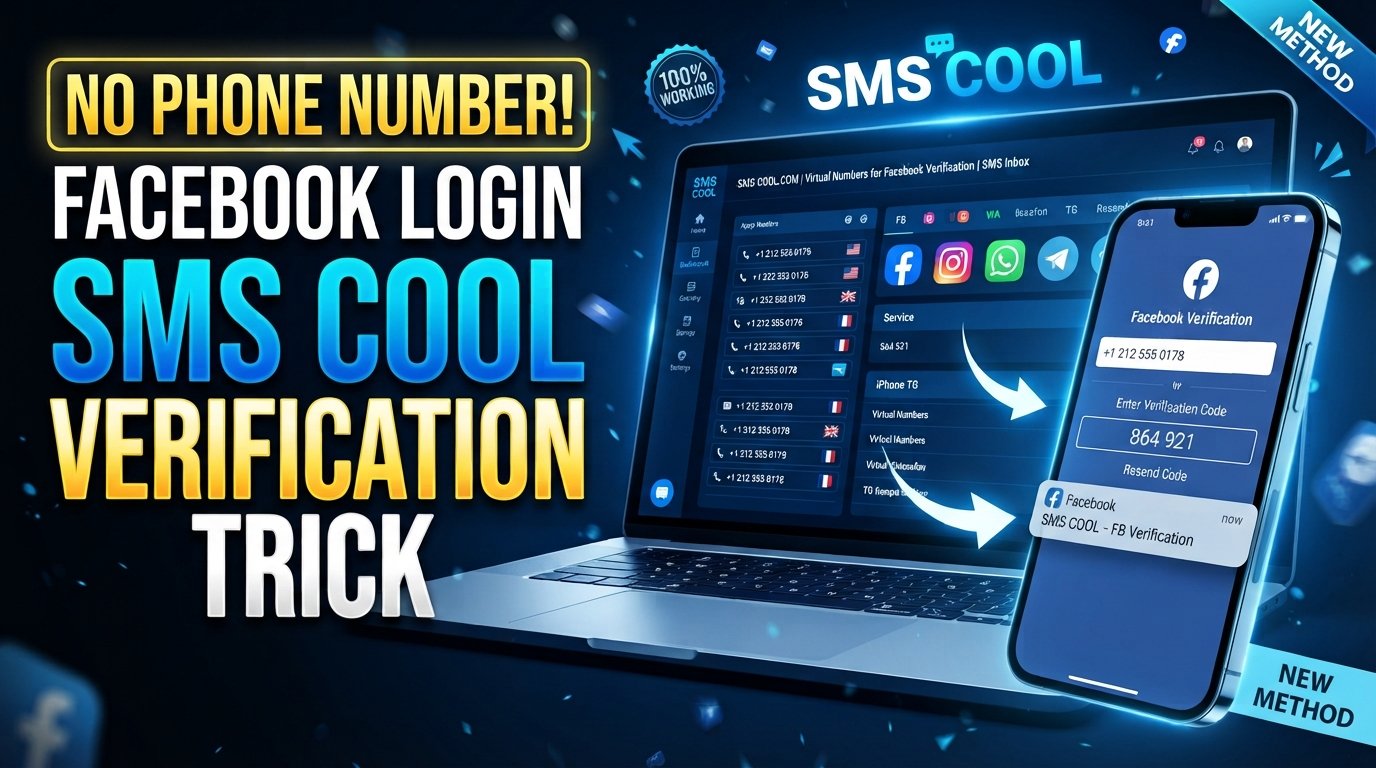
How to Get Facebook Login Without Phone Number
Searching for a Facebook login without phone number usually comes down to one simple problem: you want to access or create a Facebook account, but you would rather not use your personal mobile number for verification.
Facebook may sometimes request a phone number as part of its account verification or security process. For users who do not want to share their everyday number, do not have access to a suitable SIM, or simply prefer to keep personal and online communication separate, this can create an unnecessary obstacle.
One practical option is an online SMS verification service such as SMS COOL. Depending on available numbers and supported services, SMS COOL can provide access to a phone number capable of receiving verification messages. You can then retrieve the SMS code through the service and enter it into Facebook when requested.
It is important to understand that this is not a way to bypass Facebook's security systems or guarantee account approval. The availability and acceptance of numbers can vary. However, when a suitable number is available, SMS COOL can make the verification process more convenient.
Can You Use Facebook Without a Phone Number?
In some situations, Facebook may allow users to create or access an account without providing a phone number. The exact signup and security requirements can vary depending on factors such as the account, device, location, and Facebook's current verification procedures.
That means there is no universal method that guarantees you can use Facebook without phone number verification.
If Facebook specifically asks for a phone number before allowing you to continue, you generally need to follow the verification option presented on the platform.
For users who do not want to use their personal number, an online SMS service may be a practical alternative. SMS COOL is designed to help users receive SMS messages through available online numbers, including verification messages where the relevant service and number are supported.
Why Facebook May Ask for Phone Verification
Phone verification is commonly used by online platforms as part of their security and account-management systems.
A phone number can help a platform:
- Confirm that a user can receive SMS messages
- Add an additional account-security layer
- Detect certain suspicious or automated activity
- Help with account recovery
- Verify an account during particular signup or login situations
If Facebook displays a phone verification request, it is important to treat it as part of the platform's normal security process.
For someone trying to create a Facebook account without phone number, the main challenge is therefore not simply entering a number. The number must be capable of receiving the requested verification SMS, and Facebook must accept that number for the particular verification attempt.
How Facebook SMS Verification Works
The process is straightforward when Facebook requests SMS verification.
First, Facebook displays a phone-number field or verification screen. After entering a supported number, Facebook may send an SMS containing a verification code.
That code is then entered into the appropriate field on Facebook.
If you are using an online SMS verification service, the general process is similar. Instead of checking your personal phone's messages, you access the incoming SMS through the service.
This is where SMS COOL can be useful.
The service can provide access to available phone numbers for SMS reception, depending on availability and the service being verified. When the number receives an SMS, the verification message can be viewed through the SMS COOL interface.
How SMS COOL Can Help With Facebook Verification
If Facebook asks for phone verification and you prefer not to use your personal number, SMS COOL can provide a convenient way to try receiving the required message online.
The process generally looks like this:
1. Choose an Available Number
Start by visiting SMS COOL and selecting an available number or SMS service that supports the verification you need.
Availability can change, so not every number will necessarily work for every platform.
2. Enter the Number on Facebook
When Facebook asks for your phone number, enter the number provided by SMS COOL.
Make sure you enter it in the correct international format if Facebook requires one.
3. Request the Verification SMS
Continue with Facebook's verification process and request the SMS code.
At this stage, Facebook determines whether the number can be used for the particular verification attempt.
4. Wait for the Message
If the number is supported and Facebook sends the message successfully, the SMS should appear through the relevant SMS COOL service.
Delivery time can vary. Sometimes a message arrives quickly, while other verification attempts may take longer or may not be delivered.
5. Retrieve the Facebook Verification Code
Open the incoming SMS in SMS COOL and locate the verification code.
The code is typically a short numeric sequence, although the exact format can vary.
6. Enter the Code on Facebook
Return to Facebook and enter the received Facebook verification code into the verification field.
If Facebook accepts the code, you can continue with the next step of its account or login process.
Remember that SMS COOL does not control Facebook's verification decisions. A successful SMS delivery does not guarantee that Facebook will approve an account, accept a particular number, or allow a specific login.
Benefits of Using SMS COOL
Using an online SMS verification service can be useful for several reasons.
Keep Your Personal Number Separate
Some users simply prefer not to connect their everyday phone number to every online account.
An available SMS COOL number can provide separation between personal communication and a particular verification requirement.
Receive SMS Online
With an online SMS service, you do not necessarily need to have the verification message delivered to your primary phone.
Instead, supported incoming messages can be accessed online through the service.
Convenient for Verification
If you need a temporary phone number for Facebook verification and an appropriate number is available, SMS COOL can simplify the process by giving you a place to receive the verification SMS.
Easy to Understand
The basic workflow is simple: choose a number, use it for the verification request, wait for the SMS, retrieve the code, and enter it on Facebook.
That makes online SMS verification approachable even for users who have never used this type of service before.
Things to Keep in Mind When Using SMS Verification
Although online SMS verification can be convenient, there are several important points to remember.
Number Availability Can Change
Not every number will always be available. Some numbers may already have usage history, while others may not support the platform or verification type you need.
For this reason, avoid assuming that one particular number will work every time.
Facebook Controls Acceptance
SMS COOL provides the number and SMS reception service, but Facebook controls whether it accepts that number for verification.
There is no guarantee that a particular number will work for every account or verification attempt.
Codes Should Be Kept Private
Verification codes are security credentials. Do not share a code with other people or publish it publicly.
If you are using an online service, use it responsibly and follow both the service's rules and Facebook's terms.
Verification Is Not the Same as Account Approval
Receiving an SMS does not automatically mean an account has been approved.
Facebook may apply additional security checks, restrictions, or verification requirements.
Consider Account Recovery
If you are creating an account that you intend to keep long term, think carefully about account-recovery options. A temporary or online number may not remain available to you later.
Where possible, use recovery methods that you can reliably access in the future.
Facebook Login Without Phone Number: What Is the Best Approach?
The best approach depends on what Facebook is asking you to do.
If Facebook allows you to continue using another verification method, you can follow that option. If a phone number is specifically required and you do not want to use your personal number, an online SMS verification service may be worth considering.
For this situation, SMS COOL offers a straightforward workflow for receiving SMS online when a supported number is available.
The key is to treat it as a verification convenience rather than a security bypass. Facebook's own systems ultimately determine whether the number and verification attempt are accepted.
Frequently Asked Questions
Can I get Facebook login without phone number?
In some cases, Facebook may allow account access or registration without a phone number, depending on the verification requirements shown to you. If Facebook specifically requires SMS verification, you may need to provide a number that can receive the requested message.
Can I create a Facebook account without phone number?
It may be possible in some circumstances, but Facebook can request phone verification during registration or later. If a phone number is required, an online SMS verification service such as SMS COOL may provide an alternative to using your personal number, subject to availability and Facebook's acceptance.
How do I receive a Facebook verification code?
If Facebook sends a code by SMS, you need access to the phone number entered during verification. With SMS COOL, you can select an available supported number, use it for the verification request, and check the service for the incoming SMS.
Does SMS COOL guarantee Facebook SMS verification?
No. SMS COOL cannot guarantee that every Facebook verification attempt will work. Number availability, platform restrictions, previous number usage, and Facebook's own security systems can affect whether a number is accepted and whether an SMS is delivered.
Can I use a temporary phone number for Facebook?
A temporary number may be suitable for some verification situations when Facebook accepts it and the number can receive the SMS. However, consider future account recovery before relying on a temporary number for a long-term account.
Can I receive SMS online instead of using my phone?
Yes, online SMS verification services can provide access to supported phone numbers and incoming SMS messages through an online interface. SMS COOL is one option for receiving SMS online when an appropriate number and service are available.
What is SMS COOL used for?
SMS COOL can help users access available phone numbers for receiving SMS verification messages online. The exact services and numbers available can vary, so users should check current availability and use the service according to its terms.
Conclusion
Finding a Facebook login without phone number option can be frustrating when Facebook specifically requests SMS verification.
While there is no guaranteed way to avoid Facebook's verification requirements, users who prefer not to use their personal number can consider an online SMS verification service.
SMS COOL provides a practical workflow: choose an available number, enter it when Facebook requests phone verification, wait for the SMS, retrieve the Facebook verification code, and enter it on Facebook.
The important thing is to keep expectations realistic. SMS COOL does not bypass Facebook security and cannot guarantee that every number or verification attempt will be accepted.
When a suitable number is available and supported, however, SMS COOL can make receiving verification messages online more convenient while helping users keep their personal phone number separate from a particular verification process.