28 Aug 2026
Email OTP vs SMS OTP: Key Differences for Secure Verification
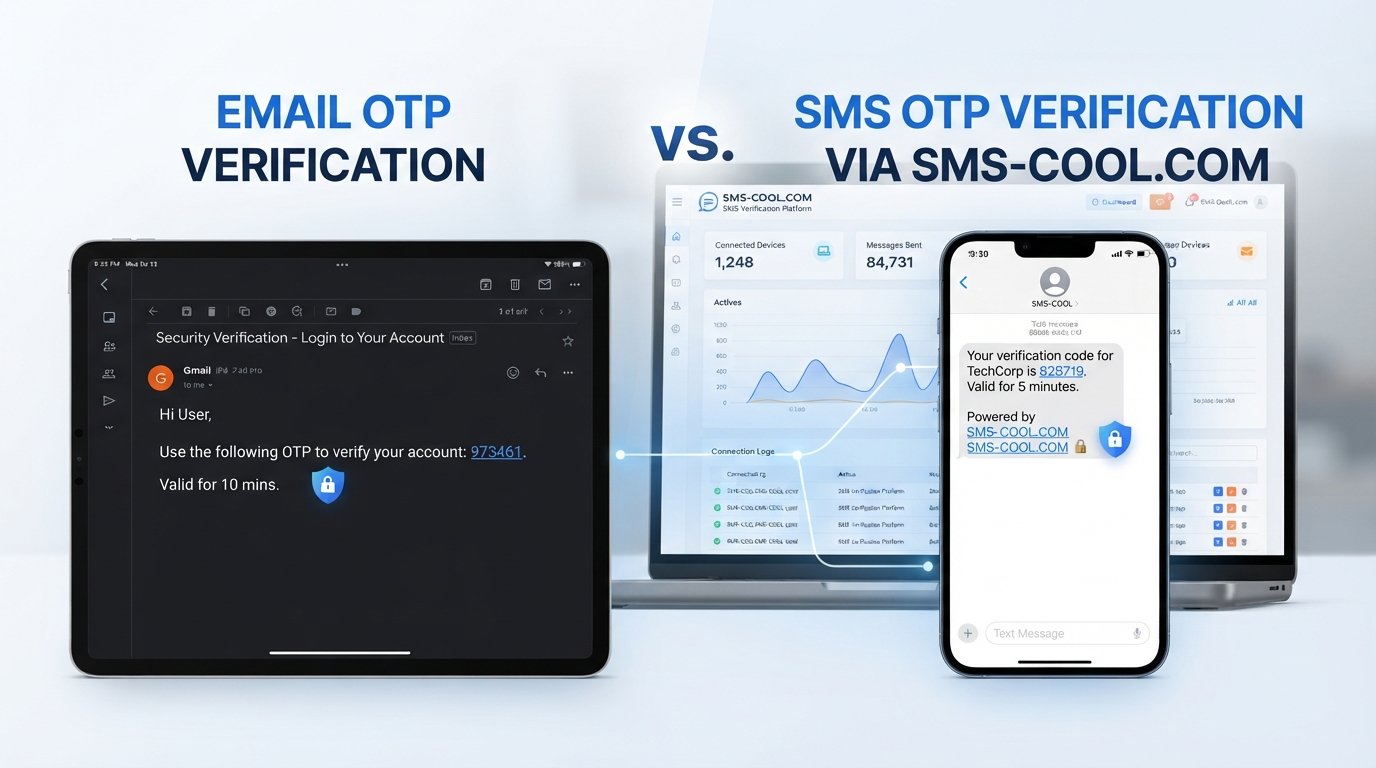
Email OTP vs SMS OTP: Key Differences
Introduction
A simple verification code can make the difference between a smooth digital experience and a frustrated customer.
Websites, mobile apps, e-commerce platforms, SaaS products, financial services, and online communities all need reliable ways to confirm that users are who they claim to be. One of the most common approaches is OTP authentication, where a temporary one-time password is sent to a user before access is granted.
But which delivery method works best?
Email OTP vs SMS OTP — which verification method is better?
Both approaches can provide an additional layer of security, but they offer different experiences. Delivery speed, accessibility, convenience, reliability, and the type of user journey all matter when choosing between email verification and SMS verification.
Let’s compare them and look at why SMS OTP can be particularly useful when mobile number verification and fast user authentication are priorities.
What Is an Email OTP?
An Email OTP is a one-time password delivered to a user's email address.
The process is straightforward. A user enters an email address during registration, login, password recovery, or another protected action. The system generates a temporary verification code and sends it to the user's inbox. The user then copies the code into the website or app to complete OTP verification.
Email OTP is commonly used for:
- Account registration
- Email verification
- Password resets
- Login authentication
- Customer onboarding
- Confirming sensitive actions
Benefits of Email OTP
Email-based authentication can be convenient because users already have an email account associated with many online services. It can also work well when a business wants to verify ownership of an email address.
Another advantage is that users can access email from phones, tablets, computers, and other connected devices.
Limitations of Email OTP
The main drawback is that email verification often depends on the user's access to their inbox and internet connection. Messages can also be delayed by spam filters, crowded inboxes, or email delivery issues.
If a user has multiple browser tabs or applications open, switching away from the original verification screen can also add friction.
What Is an SMS OTP?
An SMS OTP is a temporary verification code delivered directly to a user's mobile phone through text messaging.
The typical workflow is simple:
- The user enters a mobile number.
- The application starts an OTP verification request.
- A one-time password is sent by SMS.
- The user receives the verification code.
- The code is entered into the application.
- The system validates it and completes the requested action.
SMS OTP is widely suited to mobile number verification, account registration, login security, password recovery, transaction confirmation, and two-factor authentication.
The appeal is its simplicity. Users generally understand the process immediately: request a code, receive an SMS, enter the code, continue.
Email OTP vs SMS OTP: Key Differences
FactorEmail OTPSMS OTPDelivery speedCan be fast, but may face email delaysOften provides a quick, direct verification experienceAccessibilityRequires access to an email accountRequires access to a mobile phoneUser experienceMay require switching to an inboxOften convenient on mobile devicesInternet dependencyUsually requires internet access to check emailSMS itself does not require mobile internetReliabilityCan be affected by spam filters and inbox issuesCan be affected by carrier or network conditionsSecuritySecurity depends on the user's email accountSecurity depends on the phone, number, network, and implementationConvenienceUseful when email is already the primary identifierUseful when mobile number verification is centralMobile verificationDoes not directly verify phone ownershipDirectly supports phone number verificationBusiness use casesEmail confirmation and account recoveryRegistration, login, 2FA, transactions, and phone verificationVerification flowMay involve leaving the applicationOften feels more direct on mobileCustomer experienceFamiliar for email-first servicesFamiliar and convenient for mobile-first services
Neither method is automatically perfect for every situation. The right option depends on the application, audience, risk level, and user journey.
Which Is More Convenient for Users?
For many mobile-first experiences, SMS OTP has a practical advantage: the verification code arrives directly on the device the customer is already using.
A user registering through a smartphone may not want to open an email application, wait for an inbox refresh, search for a message, copy a code, and return to the original app.
With SMS authentication, the verification message can appear directly in the phone's messaging interface. On supported devices, the code may also be easier to enter through built-in OTP suggestions.
This makes SMS particularly attractive when businesses want instant OTP access, mobile number verification, and a low-friction authentication process.
Of course, SMS is not immune to problems. Network availability, incorrect phone numbers, delayed messages, SIM-related attacks, phishing, and other security risks need to be considered. A strong OTP implementation should use short-lived codes, attempt limits, rate controls, and sensible account protection.
Which Is Better for Business?
Businesses should select an authentication method based on the customer journey rather than simply choosing the most popular option.
SMS OTP can be particularly useful when verification is part of:
- Account registration: Confirm that a customer has access to the submitted mobile number.
- Login: Add another verification step alongside a password or other credential.
- Password reset: Help confirm access to a registered phone number.
- Transactions: Add verification before sensitive actions where appropriate.
- Customer onboarding: Reduce unnecessary steps during signup.
- Two-factor authentication: Provide an additional authentication factor.
For mobile applications and services where phone numbers are already important customer identifiers, SMS OTP can fit naturally into the overall experience.
Why SMS OTP Is a Strong Choice
The biggest advantage of SMS OTP is simplicity.
Users do not need to create another password or learn a complicated authentication process. They receive a temporary verification code and enter it into the application.
Key advantages include:
Fast, familiar verification
Text messaging is a familiar communication channel. Customers generally understand what an OTP SMS is and what they need to do with it.
Mobile-first authentication
If your service is primarily used on smartphones, SMS OTP can fit naturally into the user journey.
Reduced friction
A clear verification code delivered directly to a user's phone can help reduce unnecessary steps during registration, login, and account recovery.
Broad practical accessibility
SMS works across a wide range of mobile devices and does not depend on a user having a particular email application.
Easy integration
Businesses can connect authentication workflows with an appropriate SMS API or verification service, depending on their technical requirements and provider capabilities.
The important point is that OTP security depends on the entire system—not just the delivery channel. Code expiration, retry limits, rate limiting, secure API credentials, and proper server-side validation all matter.
Why Choose SMS COOL for SMS OTP Verification?
When businesses and development teams work with SMS-based verification, the infrastructure behind the workflow matters.
SMS COOL provides virtual numbers designed for OTP and SMS verification, including instant numbers, longer-term rentals, service-specific numbers, and API-based management. Its published platform allows users to receive verification messages through its dashboard, while its REST API supports programmatic number and SMS management.
That makes SMS COOL a practical option for businesses, developers, testers, and digital teams whose workflows require controlled access to phone numbers and incoming verification messages.
Reliable access to verification messages
A verification workflow is only useful when the required SMS can be accessed when needed. SMS COOL is built around receiving SMS verification codes through virtual numbers, making it useful for appropriate testing, verification, and account-related workflows.
Simple OTP workflows
The basic process remains easy to understand: select a suitable number, use it for the relevant verification process, receive the SMS, and access the code through the platform.
For teams managing repeated verification tasks, separating those workflows from personal phone numbers can also make testing and operational processes easier to organize.
API-based automation
For developers, SMS COOL offers a REST API for automating activities such as number purchases, rentals, SMS checking, and balance management. This can reduce the need for repetitive manual steps in suitable workflows.
Flexible number options
Different projects have different requirements. Some may need a temporary number for a single verification task, while others may need a longer-term rental or a number associated with a particular service.
SMS COOL offers several number options, giving businesses and development teams more flexibility when designing verification workflows.
One important distinction is worth noting: SMS COOL's published API materials focus primarily on receiving SMS verification codes and managing virtual numbers, rather than presenting the service as a conventional outbound transactional SMS gateway for sending OTPs to a business's own customers. Businesses that specifically need outbound customer OTP SMS should confirm that the required capability is available for their use case.
Email OTP vs SMS OTP: Which One Should You Choose?
There is no universal winner.
Email OTP can be a good fit when email is already the primary customer identifier and the business mainly needs email authentication or email ownership verification.
SMS OTP is often the stronger choice when speed, mobile accessibility, convenience, and phone number verification are central to the customer journey.
For mobile-first businesses, SaaS platforms, marketplaces, apps, and services that rely heavily on phone verification, SMS OTP can provide a familiar and efficient authentication experience.
If your workflow involves receiving SMS verification codes, managing virtual numbers, or automating related verification tasks, SMS COOL is a practical solution worth exploring.
Frequently Asked Questions
1. What is the difference between Email OTP and SMS OTP?
Email OTP sends a temporary verification code to an email address, while SMS OTP sends the code to a mobile phone number. The main differences involve delivery channel, accessibility, convenience, and the type of user verification required.
2. Is SMS OTP faster than Email OTP?
SMS OTP can provide a faster-feeling experience because the code is delivered directly to a user's mobile device. Email delivery can also be quick, but inbox delays, spam filtering, or the need to switch applications may add friction.
3. Is SMS OTP secure?
SMS OTP can provide useful additional authentication, but it is not completely risk-free. Businesses should use short-lived codes, prevent reuse, limit verification attempts, protect credentials, and consider threats such as phishing and SIM-related attacks.
4. When should businesses use SMS OTP?
SMS OTP is particularly useful for account registration, mobile number verification, login authentication, password recovery, customer onboarding, transaction confirmation, and two-factor authentication.
5. Can SMS OTP be used for two-factor authentication?
Yes. SMS OTP can serve as an additional verification step alongside another credential, such as a password. Businesses should choose authentication methods appropriate to the sensitivity and risk of their application.
6. What is SMS OTP verification?
SMS OTP verification is a process where a temporary one-time password is sent to a mobile number. The user enters the code into an application, which validates it before allowing the requested action to continue.
7. Why choose SMS COOL for OTP verification?
SMS COOL provides virtual numbers for receiving SMS verification codes and offers API-based tools for managing numbers and checking SMS. This can make it a practical option for suitable verification, testing, and automation workflows.
Conclusion
When comparing Email OTP vs SMS OTP, the right choice depends on the type of verification your business needs and how customers interact with your product.
Email OTP is useful for email ownership and email-based authentication. SMS OTP, meanwhile, is particularly effective when businesses prioritize mobile number verification, convenience, and a straightforward user experience.
For applications where phone-based verification is important, SMS OTP can reduce friction and make authentication feel faster and more familiar.
Choosing the right infrastructure is equally important. For workflows involving virtual numbers, incoming verification codes, and API-based SMS management, SMS COOL offers a practical solution to explore.
If SMS-based verification is part of your business or development workflow, explore SMS COOL and see how its virtual-number and API capabilities can fit your requirements.