27 Aug 2026
E-Commerce Account Verification: A Simple Guide for Shoppers
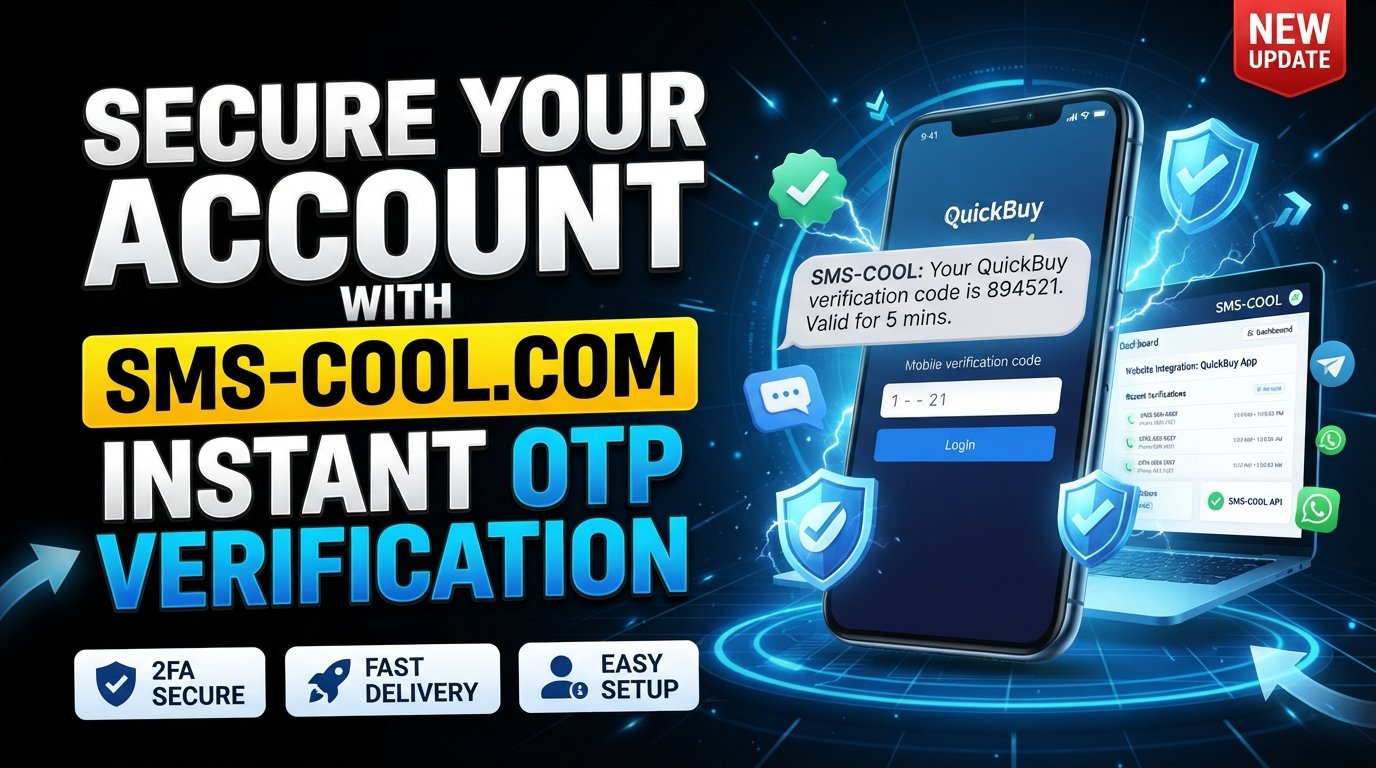
E-Commerce Account Verification Explained
Creating an account on an online store is usually quick: enter your details, choose a password, and start shopping. But sometimes there is one more step before you can access all the features—e-commerce account verification.
For many platforms, that verification happens through a phone number. The store sends an SMS verification code, and you enter that code to confirm that you can access the phone number connected to the account.
While the idea is simple, verification can become frustrating when a message does not arrive, a code expires, or a phone number cannot receive the required SMS.
Understanding how the process works makes these problems much easier to handle. And when you need a convenient way to receive verification SMS messages, SMS COOL can be a practical option to consider.
What Is E-Commerce Account Verification?
E-commerce account verification is the process of confirming that a person has access to information associated with an online shopping account, such as an email address or phone number.
Online stores use verification to add another layer of trust and security. Depending on the platform, verification may involve:
- A phone number
- An email address
- An SMS verification code
- A one-time password (OTP)
- A confirmation link
- Additional identity or payment checks
SMS verification is particularly common during e-commerce signup verification and when an existing user needs to confirm an account-related action.
The basic concept is straightforward: the platform sends a unique verification code, and the user enters it in the appropriate field. If the code matches and is still valid, the verification step is completed.
Why Do Online Stores Require Verification?
Online store verification is not simply an extra inconvenience. It can help platforms reduce abuse and protect customers.
1. To Confirm a Phone Number
Phone number verification helps an online store determine whether a phone number is accessible to the person creating or managing the account.
2. To Protect Accounts
A verification step can provide an additional security layer when users sign in, recover an account, or make sensitive changes.
3. To Reduce Automated Abuse
E-commerce platforms may use verification to make large-scale automated account creation and certain forms of fraudulent activity more difficult.
4. To Support Account Recovery
A verified phone number may be used as one of several account recovery methods, depending on the platform's policies.
5. To Protect the Shopping Experience
Verification can help platforms maintain more trustworthy account activity, which benefits both merchants and legitimate shoppers.
In short, e-commerce account security depends on multiple safeguards, and verification is one part of that larger system.
How Does SMS Verification Work?
The typical SMS verification process takes only a few steps:
- Enter a phone number: During registration or an account-security action, the platform asks for a phone number.
- Request verification: The user submits the number and requests a verification message.
- Receive the SMS: The platform sends a temporary verification code.
- Enter the code: The user enters the code into the verification field.
- Complete verification: If the code is correct and has not expired, the account can proceed.
The code is often an OTP, or one-time password, meaning it is intended for a particular verification attempt rather than permanent use.
If you receive an unexpected verification SMS, however, do not automatically enter or share the code. It is safer to determine why the message was sent before taking action.
Common E-Commerce Verification Problems
Although the e-commerce account verification process is straightforward, several issues can interrupt it.
The Verification SMS Does Not Arrive
This is one of the most common problems. A message can be delayed because of network conditions, carrier filtering, platform-side issues, or an incorrect phone number.
The Code Has Expired
Verification codes are generally temporary. If you wait too long, the platform may require you to request another one.
Too Many Code Requests
Repeatedly requesting a new code can sometimes create confusion because multiple messages may arrive with different codes. Some platforms may also temporarily restrict additional requests.
The Phone Number Is Not Accepted
An online store may restrict certain numbers, countries, or number types according to its own verification policies.
SMS Filtering or Delivery Issues
Some verification messages can be affected by carrier-level filtering, device settings, network problems, or other delivery limitations.
The Code Is Correct but Still Fails
If a newly received code does not work, check that you are using the most recent code and entering it exactly as displayed. If the problem continues, the platform's support team may need to investigate.
Why Can SMS Verification Fail?
A failed verification does not necessarily mean that the account itself has a problem.
Common causes include:
- Incorrect country or area selection
- Mistyped phone number
- Weak mobile connectivity
- Delayed SMS delivery
- Carrier restrictions
- Temporary platform problems
- Expired verification codes
- Unsupported number types
- Too many verification attempts
Before trying repeatedly, confirm the number and country selection, wait briefly for delayed messages, and check whether the platform provides another verification method.
If you regularly need to receive verification SMS messages for legitimate online account activity, a dedicated SMS verification service can also be worth considering.
How SMS COOL Helps With Verification
For users who need a convenient way to receive verification SMS messages, SMS COOL provides an option to consider when a platform supports the relevant number and verification process.
Instead of relying solely on a personal mobile number for every signup or verification situation, users can explore SMS COOL when they need to receive an OTP or verification message.
The important point is to use any number or SMS service only where it is permitted by the e-commerce platform. SMS COOL should be viewed as a practical tool for legitimate verification—not as a method for bypassing security controls or gaining unauthorized access to accounts.
Benefits of Using SMS COOL for Verification
When appropriate for the platform and situation, using SMS COOL can simplify the verification experience.
Convenience
If you need to receive a verification SMS without relying on your usual phone number, SMS COOL can provide a convenient option to explore.
A Straightforward Verification Workflow
The overall process remains simple: use an appropriate number, request the verification message, receive the code, and enter it on the platform.
Useful for Online Account Creation
People who frequently create legitimate accounts for online shopping, services, or other platforms may find an SMS-based verification option useful.
Less Dependence on One Personal Number
Having an alternative option can be helpful when a personal number is unavailable or unsuitable for a particular legitimate verification scenario.
Availability and acceptance can vary by platform, so always follow the e-commerce website's rules and verification requirements.
How to Use SMS COOL for E-Commerce Account Verification
The exact experience can depend on the platform and the SMS COOL service, but the general process is easy to understand:
- Visit SMS COOL and review the available verification options.
- Choose an appropriate option for the e-commerce platform you are using.
- Use the provided number only where permitted by the platform.
- Enter the number in the online store's phone verification field.
- Request the verification SMS from the e-commerce platform.
- Check for the incoming verification code through the appropriate SMS COOL interface.
- Enter the valid OTP on the e-commerce website.
- Complete the account verification process and follow any remaining instructions.
If the platform does not accept the number or the SMS does not arrive, avoid repeatedly submitting requests. Check the platform's requirements and consider its official support options.
E-Commerce Account Security Best Practices
Receiving a verification SMS is only one part of staying secure online.
For better online account security:
- Use a strong, unique password for every important account.
- Never share an OTP or verification code with another person.
- Avoid entering verification codes on suspicious websites.
- Check the website address before signing in.
- Keep your email account secure because it may be connected to account recovery.
- Enable additional security options offered by the platform.
- Do not approve a verification request you did not initiate.
- Follow the online store's official account-security guidance.
Remember: a legitimate verification service should help you complete authorized verification, not circumvent the security of an account that does not belong to you.
Frequently Asked Questions
What is e-commerce account verification?
E-commerce account verification confirms that a user can access information associated with an online shopping account, often through an email confirmation or SMS verification code.
What is an SMS verification code?
An SMS verification code is a temporary code sent to a phone number to confirm access to that number. It is commonly used as part of OTP verification.
Why am I not receiving a verification SMS?
Possible causes include an incorrect number, weak connectivity, delayed delivery, carrier filtering, platform restrictions, or temporary technical problems.
Can I use SMS COOL to receive an OTP online?
SMS COOL can be considered when you need a convenient way to receive a verification SMS, provided that the e-commerce platform accepts the relevant number and its use complies with the platform's rules.
Is a verification code the same as a password?
No. A password is generally created and reused for account access, while a one-time password is a temporary verification credential intended for a specific authentication or verification event.
Can SMS verification improve online account security?
Yes. SMS verification can add a layer of account protection by confirming access to a phone number, although it should be combined with strong passwords and other security measures where available.
What should I do if my verification code does not work?
Check that you are entering the newest code, confirm that it has not expired, and verify that the phone number is correct. If the problem continues, follow the platform's official support process.
Conclusion
E-commerce account verification is an important part of modern online shopping. It helps platforms confirm account ownership, protect users, reduce abuse, and support safer account management.
SMS verification makes this process relatively simple: request a code, receive the verification SMS, enter the OTP, and continue. Yet delivery problems, unsupported numbers, expired codes, and network issues can make the experience more frustrating than it should be.
For users who need a convenient way to receive verification messages, SMS COOL can be a practical solution to consider, as long as its use is supported by the platform and remains within the platform's rules.
Whether you are creating an account, confirming a phone number, or completing another legitimate verification step, understanding the process helps you solve problems faster and make better choices.
Ready to Make SMS Verification Simpler?
Need a convenient option for receiving a verification SMS? Explore SMS COOL and see whether it fits your legitimate e-commerce account verification needs.
Use the service responsibly, follow each platform's verification requirements, and keep your verification codes private.
Explore SMS COOL today and take a simpler approach to receiving verification SMS codes.