27 Aug 2026
How Delivery OTP Verification Works for Secure Order Delivery
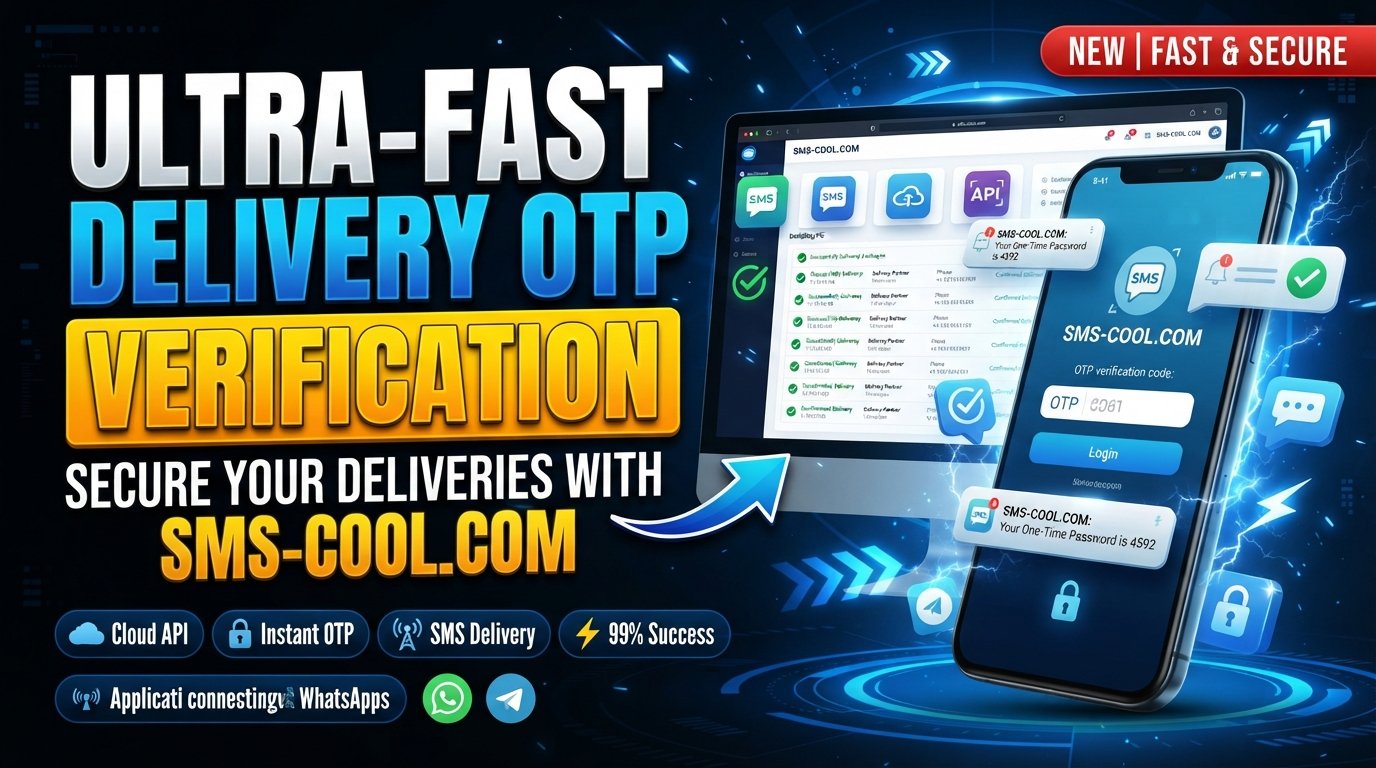
How Delivery OTP Verification Works
A successful delivery is about more than getting a package from one location to another. Businesses also need confidence that the order reaches the right person, at the right time, with a clear record of confirmation.
That is where delivery OTP verification becomes useful.
A simple one-time password sent to a customer's mobile phone can add an extra layer of authentication to the final delivery step. Instead of relying only on names, order numbers, or verbal confirmation, the delivery process can require a temporary verification code that the customer receives directly.
For delivery businesses, this can help reduce mistakes, prevent unauthorized handovers, minimize disputes, and create a smoother customer experience. For customers, it provides a straightforward way to confirm that an order is being delivered to the intended recipient.
But how does delivery OTP verification actually work? And what should businesses look for when choosing an SMS-based verification solution?
What Is Delivery OTP Verification?
Delivery OTP verification is a process that uses a temporary one-time password (OTP) to confirm a customer's identity or authorization when an order is delivered.
An OTP is a short, randomly generated verification code. It is normally valid for a limited period and is intended for one verification attempt or transaction. Because the code is temporary, it is more secure than relying on information such as a customer's name or static PIN.
In a typical delivery workflow, the OTP is sent to the mobile number associated with the order. When the delivery person arrives, the customer provides the code. The delivery system checks the code, and if it matches the expected value and remains valid, the delivery can be confirmed.
This makes SMS OTP verification a practical form of customer verification for many delivery scenarios.
How Delivery OTP Verification Works
Although the technology behind it can be sophisticated, the customer-facing process is simple.
1. Customer places an order
The process begins when a customer completes an order through a website, mobile application, marketplace, or another ordering channel.
The customer's mobile number is associated with the order so that the business can communicate with the intended recipient.
2. The delivery system generates an OTP
When the order reaches the appropriate stage, the system generates a unique verification code.
The code should be random, difficult to guess, and associated with the specific order or delivery event. Good verification logic also ensures that old codes cannot be reused.
3. The OTP is sent by SMS
The verification code is delivered to the customer's registered mobile number through an OTP SMS.
A typical message might say:
Your delivery verification code is 482731. Please provide this code to the delivery person.
The message should be concise and clearly explain what the code is for.
4. The delivery person requests the code
When the order reaches the customer, the delivery person asks for the verification code.
The customer does not need to open the original ordering application or remember a permanent password. They simply provide the temporary code received by SMS.
5. The customer provides the OTP
The customer shares the code with the delivery person, who enters it into the relevant delivery application or system.
6. The system verifies the OTP
The backend checks whether the submitted code matches the code generated for that delivery.
It can also check whether the OTP has expired, whether it has already been used, and whether it belongs to the correct transaction.
7. Delivery is confirmed
If the verification succeeds, the system records the delivery as confirmed.
This creates a simple delivery confirmation step while giving the business a stronger method of verifying that the order reached the intended recipient.
Why OTP Verification Matters for Delivery Businesses
A delivery handover is often the most important moment in the order journey. If something goes wrong at this stage, resolving the issue can be difficult.
OTP verification for delivery can address several common operational concerns.
- Preventing unauthorized deliveries: A temporary code makes it harder for an unauthorized person to receive an order.
- Reducing delivery disputes: A verified handover can provide clearer evidence that the customer confirmed receipt.
- Confirming customer identity: The OTP connects the delivery interaction with access to the customer's registered phone.
- Improving delivery security: An additional authentication step can make sensitive or valuable deliveries safer.
- Reducing incorrect deliveries: Verification can help delivery teams confirm that they are handing an order to the correct recipient.
- Building customer trust: Customers can feel more confident when a delivery includes a clear security check.
- Creating a smoother experience: A short verification code can be faster and simpler than lengthy manual confirmation procedures.
The goal is not to make delivery complicated. The best secure delivery verification process should add protection without creating unnecessary friction.
Common Challenges With Delivery OTP Verification
Implementing an OTP workflow is straightforward in principle, but real-world delivery environments can introduce challenges.
Delayed SMS
An OTP is only useful if it reaches the customer quickly enough. Network conditions, carrier routing, traffic, and other factors can sometimes affect SMS delivery.
For time-sensitive deliveries, dependable SMS communication is therefore important.
Incorrect phone numbers
If a customer enters the wrong mobile number during checkout, the verification message may go to the wrong destination or fail to arrive.
Businesses should validate customer information as early as possible.
Expired OTPs
An OTP that remains valid for too long can create unnecessary security risk. On the other hand, an extremely short validity period can frustrate customers when messages are delayed.
Businesses should establish an appropriate expiration policy based on their delivery workflow.
High message volume
Large delivery operations may need to send substantial numbers of transactional messages. The SMS infrastructure needs to support an automated workflow without forcing staff to send codes manually.
Weak delivery infrastructure
An application may generate OTPs correctly but still provide a poor customer experience if the underlying SMS communication is unreliable.
This is why choosing a dependable OTP verification service matters. The verification logic and the communication channel need to work together.
How SMS COOL Simplifies Delivery OTP Verification
For businesses that need an SMS-based verification workflow, SMS COOL provides a practical option for connecting OTP communication with customer-facing processes.
Instead of treating every verification message as a manual task, businesses can build an automated workflow in which the system generates a verification code and sends it to the customer's phone.
An SMS platform can support processes such as:
- Automatically sending OTPs when verification is required
- Delivering verification codes through SMS
- Connecting OTP functionality with websites or applications
- Automating customer verification steps
- Supporting transactional SMS workflows
- Integrating verification into delivery processes
- Managing verification messages more efficiently
For example, a food delivery application can trigger an automated OTP when an order is ready for handover. The customer receives the code, provides it to the delivery person, and the application verifies the code before recording the delivery.
The same approach can work for e-commerce, courier services, grocery businesses, and other on-demand operations.
The important point is that SMS COOL can serve as part of the communication layer behind the delivery authentication process, helping businesses connect their applications with SMS-based verification.
Benefits of Using SMS COOL for Delivery OTP Verification
Choosing an SMS solution is not simply about sending a text message. It is about making an important part of the customer journey easier to manage.
Convenience
Automated OTP messaging removes the need for employees to manually communicate verification codes. Once connected to the relevant workflow, the process can happen automatically.
Automation
An OTP API or SMS API can allow a business application to trigger verification messages when specific events occur. This is particularly useful for businesses processing orders continuously.
Security
A one-time password adds another authentication step to the delivery process. When combined with appropriate expiration and verification rules, it can help strengthen order security.
Faster customer verification
Customers generally understand the simple process: receive a code, provide it, and confirm the delivery. This can make the final handover more straightforward.
Reliable communication
SMS remains a practical channel for sending time-sensitive verification messages because customers can receive an OTP directly on their mobile phone without depending entirely on an application interface.
Better delivery workflows
A well-designed OTP process can connect order status, customer verification, and delivery confirmation into a single operational flow.
Improved customer experience
Security does not have to mean complexity. When the process is clear and the message is concise, OTP authentication can add protection while keeping the handover convenient.
Best Practices for Delivery OTP Verification
A good online delivery verification system should be designed with both security and usability in mind.
- Keep OTPs short and easy to enter. A concise numeric code is generally easier for customers to read and communicate.
- Set reasonable expiration times. The code should remain valid long enough for normal delivery conditions but not indefinitely.
- Never reuse OTPs. Once successfully verified, a code should not be accepted again.
- Use secure verification logic. Keep code generation, storage, validation, and authentication processes protected.
- Keep customers informed. The SMS should explain why the customer is receiving the code and when to use it.
- Monitor SMS delivery failures. Delivery teams should have a process for handling situations where a customer does not receive the message.
- Protect customer data. Phone numbers and verification information should be handled responsibly and only used for legitimate business purposes.
- Choose a dependable SMS/OTP provider. The communication layer is a critical part of real-time OTP delivery, so reliability should be considered when selecting a provider.
Delivery OTP Verification Use Cases
Delivery OTP verification can be applied across many industries and delivery models.
Food delivery
Restaurants and food delivery platforms can use OTPs to confirm that an order has reached the correct customer.
E-commerce orders
Online retailers can add verification at the final handover, particularly when accurate delivery confirmation is important.
Grocery delivery
Grocery platforms can use delivery OTPs to simplify customer authentication when drivers arrive at a customer's location.
Courier services
Courier companies can use one-time passwords as an additional handover verification method for packages.
Pharmacy deliveries
Where appropriate, pharmacy delivery services can use customer verification to strengthen the delivery process.
Pickup and drop-off services
Businesses operating pickup, collection, or drop-off models can use OTPs to verify that the correct person is collecting or receiving an item.
On-demand services
Various on-demand businesses can incorporate OTP verification into workflows where confirming the customer's identity or authorization is important.
Why SMS Verification Is Becoming Essential for Deliveries
Customers increasingly expect digital services to be both convenient and secure. They want deliveries to arrive quickly, but they also want confidence that their orders are being handed to the right person.
That is why SMS verification can be valuable at the final stage of a delivery.
An OTP provides a simple bridge between authentication and physical delivery. The business can connect its digital ordering system with a real-world handover, while the customer receives a familiar verification code on their phone.
For businesses, this can also improve operational consistency. Instead of relying entirely on informal confirmation, delivery teams can follow a defined verification process.
The key is balance. Secure OTP verification should protect the transaction without making the customer work through unnecessary steps. With the right workflow and a dependable communication provider, OTP verification can become a natural part of the delivery experience.
Final Thoughts
Delivery OTP verification provides a practical way to strengthen the connection between an online order and its physical handover. By generating a temporary verification code, sending it through SMS, and validating it before confirming delivery, businesses can add another layer of security to the customer journey.
It can help with customer verification, order confirmation, delivery authentication, and dispute reduction while keeping the process relatively simple.
For businesses looking to automate this workflow, SMS COOL can be considered as an SMS-based solution for delivery OTP and transactional communication needs. By connecting SMS verification with websites, applications, and delivery workflows, businesses can create a more organized and convenient verification experience.
FAQs
What is delivery OTP verification?
Delivery OTP verification is a process that uses a temporary one-time password to confirm a customer's authorization to receive an order. The code is typically sent to the customer's registered mobile number through SMS and verified before the delivery is marked as complete.
How does an OTP confirm a delivery?
The system generates a unique verification code and sends it to the customer's phone. When the delivery person arrives, the customer provides the code. The delivery application checks whether it matches the expected code and is still valid before confirming the delivery.
Why is OTP verification important for delivery services?
OTP verification adds an authentication step to the delivery process. It can help prevent unauthorized handovers, reduce disputes, confirm the intended recipient, and improve delivery security without requiring customers to remember a permanent password.
How does SMS OTP verification work?
An application or backend system generates a one-time password and sends it to a customer's mobile number through an SMS service. The customer enters or provides the code, and the system verifies it against the expected value before completing the relevant action.
Can OTP verification reduce delivery fraud?
OTP verification can help reduce certain types of unauthorized delivery activity by requiring access to the customer's registered phone before a handover is confirmed. It should be combined with appropriate security controls and sound delivery procedures rather than treated as the only security measure.
What is an OTP API?
An OTP API is an interface that allows a website or application to integrate automated one-time password functionality. It can help a system request OTP generation, trigger SMS delivery, and process verification as part of an automated customer authentication workflow.
How can SMS COOL help with delivery OTP verification?
SMS COOL can be considered for SMS-based OTP and transactional communication workflows. Businesses can connect their applications or websites with SMS functionality to automate verification messages and support customer authentication during delivery processes.
Final CTA
Ready to make delivery verification simpler and more secure?
Explore SMS COOL for your delivery OTP verification and SMS communication needs, and build a smoother verification experience for your customers.