28 Aug 2026
Cloud Phone Number vs Virtual Number: What’s the Difference?
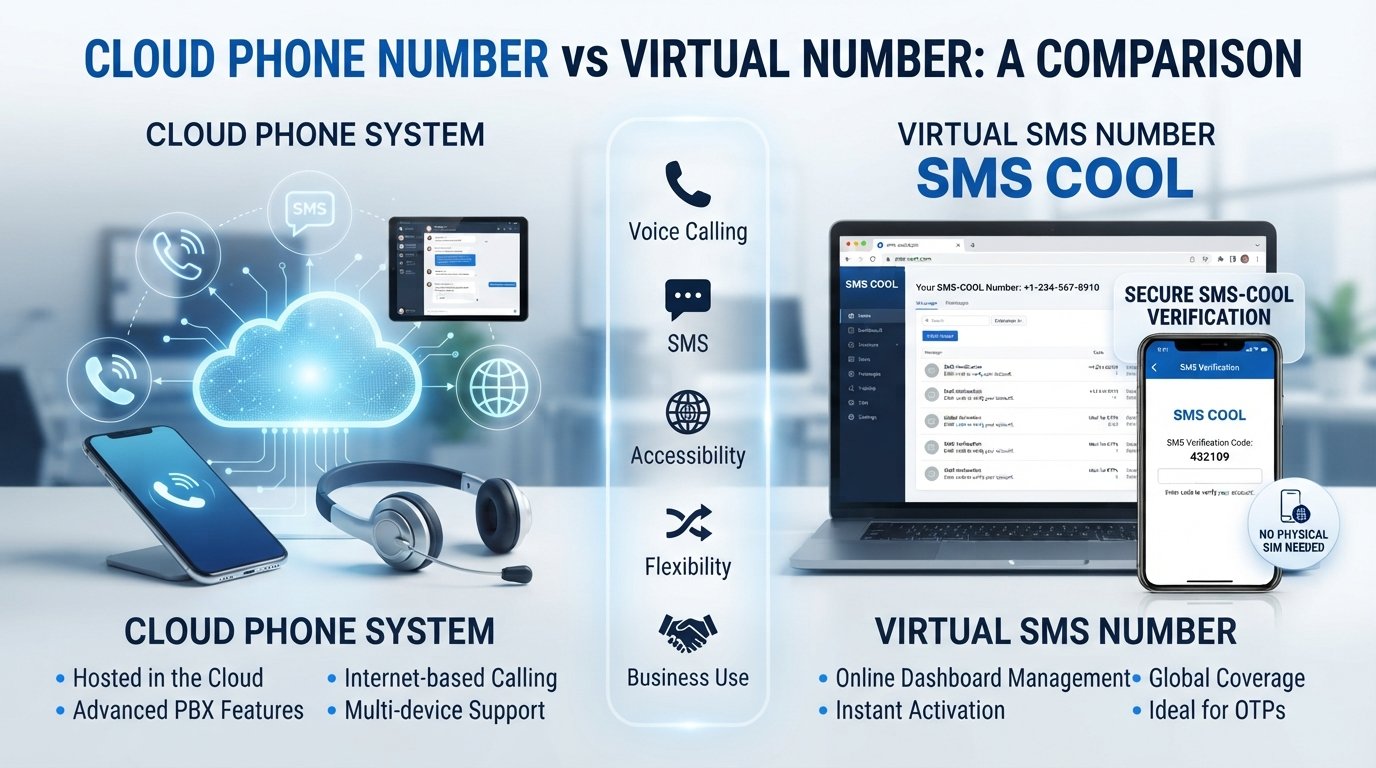
Cloud Phone Number vs Virtual Number: What’s the Difference?
Introduction
Your phone number is no longer limited to a physical SIM card and a handset. Today, businesses and individuals can make calls, receive messages, verify accounts, and manage communication through internet-based services.
That flexibility, however, has created some confusion.
When people search for a cloud phone number vs virtual number, they often find the terms used almost interchangeably. While the two are closely related, they are not always the same thing.
A cloud phone number usually forms part of a broader cloud communication system, while a virtual number is a more general term for a phone number that isn't tied to a traditional physical phone line in the usual way.
So, which one should you choose?
The answer depends on what you actually need. If your main requirement is receiving SMS online, completing legitimate SMS verification, or getting a temporary virtual number without relying on your personal phone number, a specialized service such as SMS COOL can be a practical option.
Let's break down the difference.
What Is a Cloud Phone Number?
A cloud phone number is a phone number managed through internet-based communication infrastructure rather than being dependent on a traditional physical telephone line.
Instead of routing communication through a conventional office phone system, cloud technology allows calls and other communication features to be managed online.
A cloud phone number may be accessed through:
- Smartphones
- Computers
- Web applications
- VoIP-enabled devices
- Business communication platforms
For businesses, this can be especially useful because employees don't necessarily need to be in the same physical office to handle calls.
Common Uses of Cloud Phone Numbers
Cloud phone numbers are often associated with professional communication, including:
- Customer support
- Sales calls
- Remote teams
- Business calling
- Call forwarding
- Multiple-device communication
- Voicemail and call management
- Cloud calling workflows
The major advantage is flexibility. A company can manage communication through an internet-connected system rather than depending entirely on traditional telephone infrastructure.
A cloud-based phone number can therefore be part of a complete virtual phone system, especially when calling, routing, voicemail, analytics, and other business features are involved.
What Is a Virtual Number?
A virtual number is a phone number that isn't necessarily connected to a physical SIM card or traditional telephone line used by the person accessing it.
The term is broad. Depending on the provider, a virtual telephone number may support calls, SMS, verification messages, or other communication functions.
For example, someone might need an online phone number simply to receive a verification code. Another user might need a business virtual number for customer communication.
This means a virtual number can be either a simple, specific-purpose solution or part of a larger communication setup.
What Are Virtual Numbers Used For?
Common use cases include:
- SMS verification
- Receiving SMS online
- Online account registration
- Business communication
- Separating personal and professional communication
- Testing applications and services
- Privacy-conscious online communication
- Temporary communication needs
A virtual number for SMS is particularly useful when the primary requirement is receiving text messages rather than making regular voice calls.
Cloud Phone Number vs Virtual Number: Key Differences
The easiest way to understand the difference is to look at what each term emphasizes.
A cloud phone number usually describes how a phone service is delivered and managed through cloud infrastructure.
A virtual number describes the type of phone number itself and its lack of dependence on a traditional physical line.
There is overlap, but the terms are not automatically identical.
FeatureCloud Phone NumberVirtual NumberPrimary purposeCloud-based communicationFlexible online phone functionalityCallingOften a major featureMay or may not support callingSMSMay be availableOften available depending on providerAccessibilityUsually accessible through internet-connected devicesUsually managed onlineBusiness useExcellent for structured business communicationUseful for business and personal needsVerificationNot always the primary purposeCommon use caseTemporary useUsually less focused on temporary accessTemporary options may be availableVirtual phone systemCan be part of a complete systemMay simply provide a numberCost modelMay involve plans or communication featuresCan vary from pay-per-use to rental modelsEase of useMay require more configurationOften simpler for specific tasks
1. Purpose
Cloud phone numbers are commonly chosen when users want a broader communication solution.
Virtual numbers are often selected when the user simply needs an additional online number for a particular purpose.
2. Calling
Cloud phone services are generally more closely associated with voice communication and cloud calling.
Virtual numbers can support calls, but some are designed primarily for SMS or verification.
3. SMS
SMS availability depends on the provider and number type.
If your primary need is to receive a verification code, a dedicated online SMS number can be more practical than setting up a full cloud calling system.
4. Accessibility
Both options can be accessed remotely, but the exact experience depends on the provider.
A cloud phone system may provide an app or web dashboard for managing calls and communication, while a virtual number service may provide a simpler interface focused on messages or number management.
5. Business Use
A cloud phone number is often a better fit for businesses that need structured calling, team communication, and phone-system functionality.
A business virtual number can be useful when the goal is to establish a separate business contact number without building a complete communication system.
6. Verification
Verification is one area where virtual numbers can be particularly useful.
If you need a virtual number for verification, the important question isn't simply whether the number is virtual. You should also check whether the particular service accepts that type of number.
7. Cost Considerations
There is no universal price difference.
A cloud phone system may involve recurring costs for communication features, users, calling, or integrations. A virtual number service may offer temporary, rental, or usage-based options depending on the provider.
The best choice is the one that matches what you actually need rather than paying for features you won't use.
Which One Should You Choose?
The right option depends on your goal.
Choose a Cloud Phone Number If You Need:
- Regular business calling
- A professional communication setup
- Call routing and forwarding
- Remote team communication
- A broader virtual phone system
- Cloud calling capabilities
For companies that need an organized replacement for a traditional office phone system, cloud telephony can make more sense.
Choose a Virtual Number If You Need:
- SMS verification
- A separate online phone number
- Temporary SMS access
- Receiving SMS online
- Privacy-conscious account registration
- A simple number for a specific online task
If your requirement is primarily SMS rather than a complete calling environment, a virtual number service may be the more straightforward choice.
Why SMS COOL Is a Practical Solution
For users whose needs center on virtual numbers and SMS, SMS COOL offers a focused approach.
Its official service information describes options for instant virtual numbers, longer-term number rentals, per-service numbers, and SMS-based verification. The platform also provides an online dashboard for receiving messages and offers a REST API for users who need automation.
This makes the service relevant to people who don't necessarily need a complete cloud phone system.
For example, if you only need a virtual number for SMS verification, setting up a full business telephone system may be unnecessary. A service focused on virtual SMS numbers can be much easier to understand and use.
SMS COOL also describes both short-term virtual numbers and longer-term rental options, giving users a choice based on the nature of their legitimate online communication needs.
Another practical consideration is the payment model. SMS COOL's official information describes a pay-as-you-go approach rather than requiring a monthly subscription for its virtual number service.
As with any virtual number provider, availability and acceptance can vary by country, service, and platform. Users should check the available number and the requirements of the service they intend to use before purchasing.
Common Uses of Virtual Numbers
A virtual number can be useful in several legitimate situations.
SMS Verification
Many websites and applications use SMS codes as part of account verification. A suitable virtual number can provide a separate number for receiving those messages.
Receiving SMS Online
Instead of relying on a physical SIM, users can access incoming messages through an online platform when the number and service support it.
Online Accounts
Some users prefer to keep their personal number separate from online registrations and other digital activities.
Business Communication
A business virtual number can provide a dedicated contact point without requiring employees to publish their personal mobile numbers.
Privacy-Conscious Communication
Using a separate number can help reduce the need to share a personal phone number for every online interaction.
Testing and Development
Developers and businesses may also need numbers when testing legitimate registration or SMS workflows. Services such as SMS COOL provide an API option for users who need programmatic interaction with virtual number services.
It's important to remember that individual platforms can restrict virtual, temporary, or disposable numbers. Always follow the rules of the website or application you're using.
Benefits of Using SMS COOL
For users specifically looking for virtual and SMS functionality, SMS COOL can offer several practical advantages:
- Simple access: The service is focused on virtual numbers rather than requiring users to build a complete telephone system.
- SMS-focused options: Users can choose numbers for SMS verification and other supported online SMS needs.
- Flexible duration: Options include instant numbers and longer-term rentals, depending on the requirement.
- Online accessibility: Incoming SMS can be managed through the platform's dashboard.
- Pay-as-you-go approach: The service describes a usage-based model, which can suit users who don't need a traditional monthly phone plan.
- Automation options: A REST API is available for users who want to integrate number-related workflows into their applications.
- Multiple use cases: Virtual numbers can support verification, temporary online communication, testing, and other supported purposes.
The key advantage is simplicity: if your requirement is an online number for SMS, you may not need the complexity of a full cloud phone system.
Frequently Asked Questions
What is the difference between a cloud phone number and a virtual number?
A cloud phone number generally refers to a number managed through cloud-based communication infrastructure, often with calling and business phone-system features. A virtual number is a broader term for an online number that isn't dependent on a traditional physical phone line.
Is a cloud phone number the same as a virtual number?
Not necessarily. A cloud phone number can be considered a type of virtual phone number in some contexts, but the terms emphasize different things. Cloud phone numbers usually focus on cloud-based communication, while virtual numbers can be used for simpler purposes such as SMS or verification.
Can a virtual number receive SMS?
Yes, some virtual numbers are specifically designed to receive SMS. However, capabilities vary by provider and number, so users should check whether SMS reception is supported before choosing one.
What is a virtual number used for?
A virtual number can be used for SMS verification, receiving SMS online, business communication, privacy-conscious communication, testing, and other legitimate online purposes.
Can I use a virtual number for SMS verification?
A virtual number can be used for SMS verification when the relevant website or application accepts that type of number. Some services restrict virtual or temporary numbers, so compatibility should always be checked first.
Why choose SMS COOL?
SMS COOL is designed around virtual number and SMS-related use cases. Its official information includes instant virtual numbers, number rentals, online SMS reception, and API functionality, giving users different ways to approach their virtual number needs.
Is SMS COOL suitable for online SMS needs?
It can be a practical option for users who need virtual numbers for supported SMS and verification workflows. The exact availability and compatibility depend on the country, number, and platform involved, so users should review the available options before purchasing.
Conclusion
The difference between a cloud phone number vs virtual number becomes much clearer once you look at the purpose behind each one.
A cloud phone number is generally better suited to broader communication needs such as business calling, remote teams, call management, and cloud calling. A virtual number is a more flexible category and can be particularly useful when you need an online number for SMS, verification, privacy-conscious communication, or temporary purposes.
In other words, you don't always need a full cloud phone system just because you need a phone number online.
If your main goal is to receive SMS online, complete supported SMS verification, or obtain a temporary or longer-term virtual number, a specialized virtual number service can be the more practical route.
That's where SMS COOL can fit naturally into your workflow. With virtual number options, SMS-focused functionality, rentals, and API support, it provides a straightforward approach for users whose needs center on online numbers and SMS.
Before choosing any service, identify exactly what you need: calling, SMS, verification, temporary access, long-term use, or business communication.
Then choose the solution that matches that requirement.
Ready to explore a practical virtual number solution? Visit SMS COOL and find the option that fits your online SMS needs.