24 Aug 2026
How to Choose a Verification API Provider for Business | SMS COOL
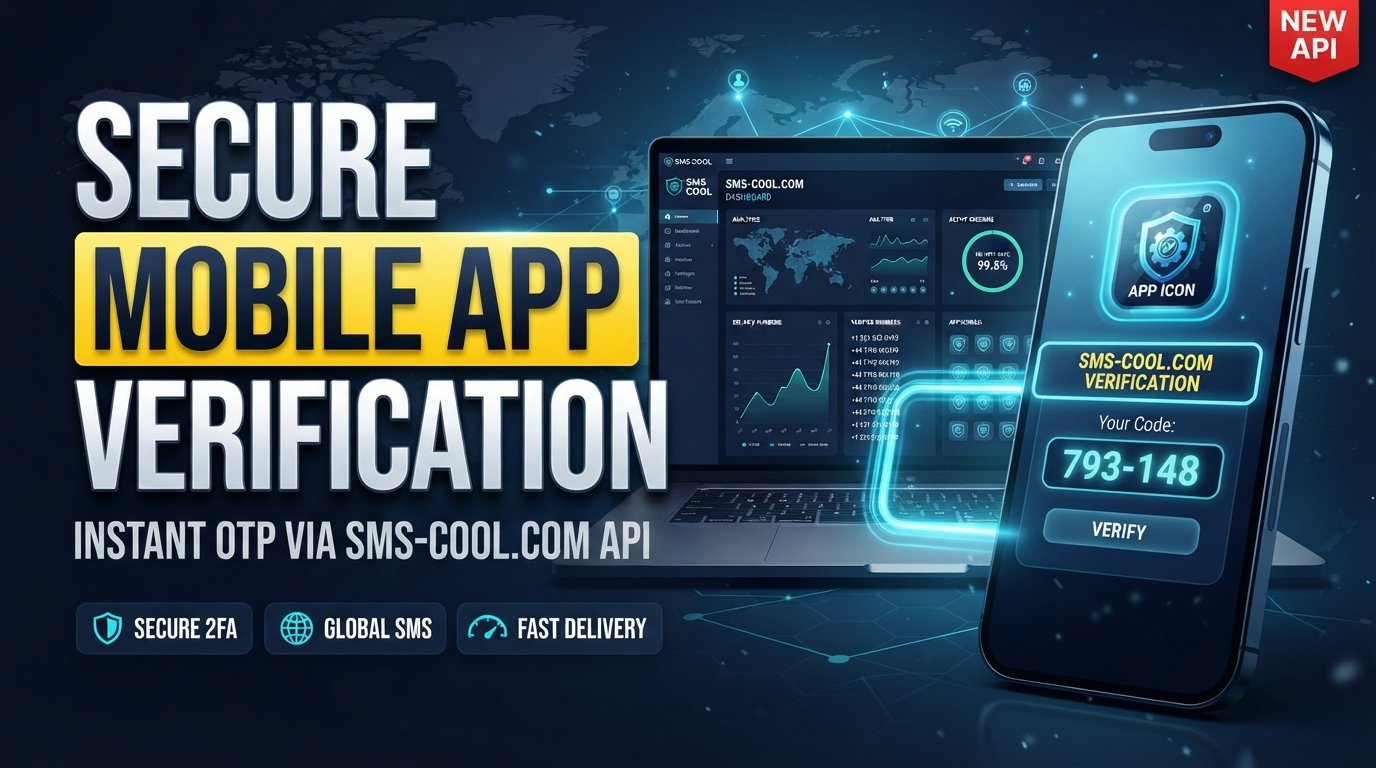
How to Choose a Verification API Provider for Business | SMS COOL
When a customer signs up for an account, resets a password, confirms a phone number, or completes a sensitive transaction, the verification code may seem like a tiny part of the experience.
It isn't.
A delayed OTP can frustrate users. A failed SMS can prevent registration. Poor international coverage can create problems for customers in entire markets. And an unreliable authentication process can ultimately damage trust in your product.
That is why choosing the right verification API provider deserves more attention than simply comparing SMS prices.
A good provider should make verification fast, dependable, secure, scalable, and easy for developers to integrate. Whether you are building a fintech platform, marketplace, SaaS product, mobile application, or online service, the right verification infrastructure can make authentication feel almost invisible to the user.
This guide explains what to look for and how a solution such as SMS COOL can fit businesses that need dependable SMS verification and OTP capabilities.
What Is a Verification API?
A verification API is a software interface that allows an application to verify a user's identity or ownership of a phone number programmatically.
The process is usually straightforward:
- A user enters their phone number.
- Your application requests a verification code through the API.
- The verification service sends an OTP by SMS.
- The user enters the code into your application.
- Your system verifies the submitted code.
- Access or the requested action is approved.
This makes a verification API useful for account registration, login protection, password recovery, transaction confirmation, fraud prevention, and two-factor authentication.
A typical SMS verification API can handle the communication layer while your application manages the user experience and business logic.
In practical terms, you can think of it as a bridge between your application and the SMS infrastructure needed to deliver verification codes.
Why Choosing the Right Verification API Provider Matters
Not every SMS API provider is equally suitable for authentication.
Marketing messages and OTP messages have very different requirements. When someone requests an OTP, they generally expect it almost immediately. If that message arrives several minutes later—or not at all—the user may abandon the process.
The provider you choose can therefore affect several parts of your business:
- User experience: Fast OTP delivery creates a smoother authentication journey.
- Conversion: Fewer failed verification attempts can reduce signup friction.
- Security: Proper verification controls help protect accounts.
- Scalability: Your infrastructure should handle both normal and unexpected traffic.
- International growth: Customers in different countries need dependable delivery.
- Development speed: Clear documentation makes integration easier.
- Operating costs: Transparent pricing helps you forecast authentication expenses.
The goal isn't simply to find the cheapest provider. It is to find a reliable verification API that delivers the right balance of performance, security, coverage, support, and cost.
Key Factors to Consider When Choosing a Verification API Provider
1. API Reliability and Uptime
Reliability should be near the top of your checklist.
If your verification service becomes unavailable, users may be unable to register, log in, recover accounts, or confirm important actions.
Look for a provider with dependable infrastructure and a track record of supporting business-critical messaging. It is also worth asking how the provider handles delivery failures, carrier issues, retries, and traffic spikes.
A secure verification API is valuable only when users can actually access it when they need it.
2. SMS Delivery Speed
OTP delivery needs to be fast.
Users are unlikely to wait around indefinitely for a verification code, especially when they are trying to complete a simple signup or login.
When comparing providers, consider:
- How quickly messages typically enter the delivery process
- Whether delivery status can be tracked
- How failed messages are handled
- Whether sender configuration affects delivery
- Whether the provider supports appropriate routing for different destinations
Fast OTP delivery can make authentication feel seamless instead of frustrating.
3. Global Coverage
If your business serves customers across multiple countries, local delivery performance matters.
A provider may perform well in one market but offer limited options elsewhere. Before committing, check whether the service supports the countries where you currently operate—and the markets you may enter later.
Global SMS verification can involve different carriers, regulations, sender requirements, and delivery conditions.
Choose a verification service provider that fits your geographic strategy rather than forcing your business to redesign its authentication system as it expands.
4. Security and Privacy
Verification is fundamentally a security function.
Your provider should support an authentication architecture that protects verification codes and minimizes opportunities for abuse.
Consider features and practices such as:
- Secure API authentication
- Encrypted communication
- OTP expiration
- Attempt limits
- Rate limiting
- Protection against repeated verification requests
- Secure handling of phone numbers and verification data
Your application also needs sensible security controls. A provider can supply the infrastructure, but your team remains responsible for implementing verification properly.
For businesses handling sensitive accounts or transactions, treating SMS authentication as part of the broader security architecture is essential.
5. API Documentation and Integration
A powerful API is not very useful if developers struggle to understand it.
Good documentation should clearly explain authentication, endpoints, request parameters, responses, error handling, code examples, and common integration scenarios.
Look for documentation that helps a developer answer practical questions quickly:
- How do I send an OTP?
- How do I verify a code?
- What happens when delivery fails?
- How should I handle expired codes?
- What response indicates success?
- How should errors be handled?
A straightforward verification API integration can reduce development time and make future maintenance easier.
6. Scalability
Your verification requirements may change dramatically as your business grows.
A small application might initially send a modest number of OTPs. Later, a successful marketing campaign, product launch, or expansion into new markets can create a much larger authentication workload.
Your provider should be capable of supporting that growth without forcing you to replace your verification infrastructure.
Scalability is particularly important for marketplaces, financial applications, social platforms, ecommerce services, and other businesses where authentication happens frequently.
7. Pricing and Cost Efficiency
Price matters, but the lowest advertised SMS rate isn't automatically the lowest total cost.
Look beyond the headline price and understand:
- Per-message costs
- Country-specific pricing
- Verification-related fees
- Failed-message charges
- Minimum commitments
- Volume pricing
- Additional API or platform fees
Also consider the cost of failed verification.
If an inexpensive provider produces poor delivery performance and users repeatedly request new OTPs, your effective cost may be much higher.
The best verification API provider for your business is one that offers a sustainable combination of pricing and performance.
8. OTP Delivery and Verification Features
A good OTP API should support the complete verification workflow rather than simply sending arbitrary SMS messages.
For example, your business may need:
- One-time verification codes
- Code expiration
- Verification status
- Retry handling
- Resend functionality
- Phone number validation
- Protection against excessive requests
Think about your actual authentication journey before selecting a provider.
If you need an API for OTP verification, make sure the service supports the workflow your application requires instead of assuming every SMS API works the same way.
9. Developer Experience
Developer experience can have a surprisingly large impact on your choice.
Clear APIs, predictable responses, useful documentation, practical examples, and simple integration processes all reduce friction for your engineering team.
A good developer experience also matters after launch. When your team needs to troubleshoot an issue or add a new verification flow, well-designed tools can save considerable time.
The ideal phone number verification API should work with your existing technology stack rather than creating unnecessary complexity.
10. Customer Support
Even well-documented APIs can encounter real-world problems.
Carrier routing, delivery failures, configuration questions, compliance requirements, and unusual traffic patterns may require assistance.
Before choosing a provider, consider the support channels available and how easily your team can get help when something goes wrong.
Support becomes especially important when verification is tied directly to revenue-generating or security-sensitive workflows.
Why SMS COOL Is a Strong Choice
For businesses looking for a practical SMS verification service, SMS COOL is worth considering as part of the evaluation process.
The core requirement for many businesses is simple: they need an infrastructure layer that can support phone verification, OTP delivery, account authentication, and related SMS workflows without unnecessarily complicating development.
That is where an established verification-focused approach can be valuable.
With SMS COOL, businesses can consider SMS-based verification as part of a broader authentication workflow, whether the use case involves:
- New-user registration
- Phone number verification
- Login authentication
- Password recovery
- Account protection
- Two-factor authentication
- Transaction or action confirmation
- Scalable OTP messaging
The key advantage of choosing a specialized solution is that verification can remain focused on its actual business purpose: getting the right code to the right user and enabling your application to complete the verification process efficiently.
For teams comparing an OTP SMS API or 2FA SMS API, SMS COOL can be a practical option to evaluate alongside your technical, geographic, security, and pricing requirements.
Rather than choosing a provider solely because it advertises low SMS rates, businesses should assess how well the complete service fits their workflow. That includes integration, delivery requirements, scalability, and the experience your developers and customers will have.
Common Mistakes to Avoid When Choosing a Verification API
A few mistakes appear repeatedly when businesses evaluate verification providers.
Choosing Based Only on Price
Low messaging costs are attractive, but unreliable delivery can create higher costs through repeated OTP requests, support tickets, and lost conversions.
Ignoring International Requirements
If you plan to expand internationally, don't evaluate coverage only for your current market. Understand where you may need a global SMS verification capability.
Overlooking Documentation
A provider can have impressive infrastructure and still create unnecessary development work if its documentation is confusing or incomplete.
Forgetting About Security Controls
Sending an OTP is only one part of secure authentication. Your implementation should include expiration, attempt controls, rate limiting, and sensible handling of verification data.
Failing to Test Before Scaling
A provider may look ideal on paper but behave differently across destinations and use cases.
Before making a large commitment, test the integration and verify the experience in the countries and workflows that matter most to your business.
A Practical Way to Evaluate Providers
If you are comparing several options, create a simple scorecard.
Rate each verification API provider on:
- Reliability
- OTP delivery speed
- Country coverage
- Security
- Documentation
- Integration effort
- Scalability
- Pricing
- Verification features
- Developer experience
- Customer support
Then give extra weight to the categories that matter most to your business.
For example, a global ecommerce platform may prioritize international coverage and scalability, while an early-stage SaaS company may place more emphasis on simple integration and predictable pricing.
This approach helps you choose based on business requirements rather than marketing claims.
Final Thoughts
Choosing a verification API provider is ultimately a decision about reliability, security, user experience, and long-term scalability.
The right solution should help your customers receive OTPs quickly, verify their phone numbers smoothly, and complete authentication without unnecessary friction. At the same time, it should give your developers a practical API, clear documentation, scalable infrastructure, and dependable support.
Don't evaluate providers solely on the price of an SMS. Look at the entire verification experience—from API integration and security to delivery, coverage, scalability, and support.
For businesses seeking a practical solution for SMS verification, OTP delivery, phone authentication, and scalable verification workflows, SMS COOL is a strong option to consider.
If dependable verification is important to your product, take the time to evaluate SMS COOL against your specific requirements and see how it can fit into your authentication infrastructure.