24 Aug 2026
How Automated Verification SMS Works | SMS COOL Guide
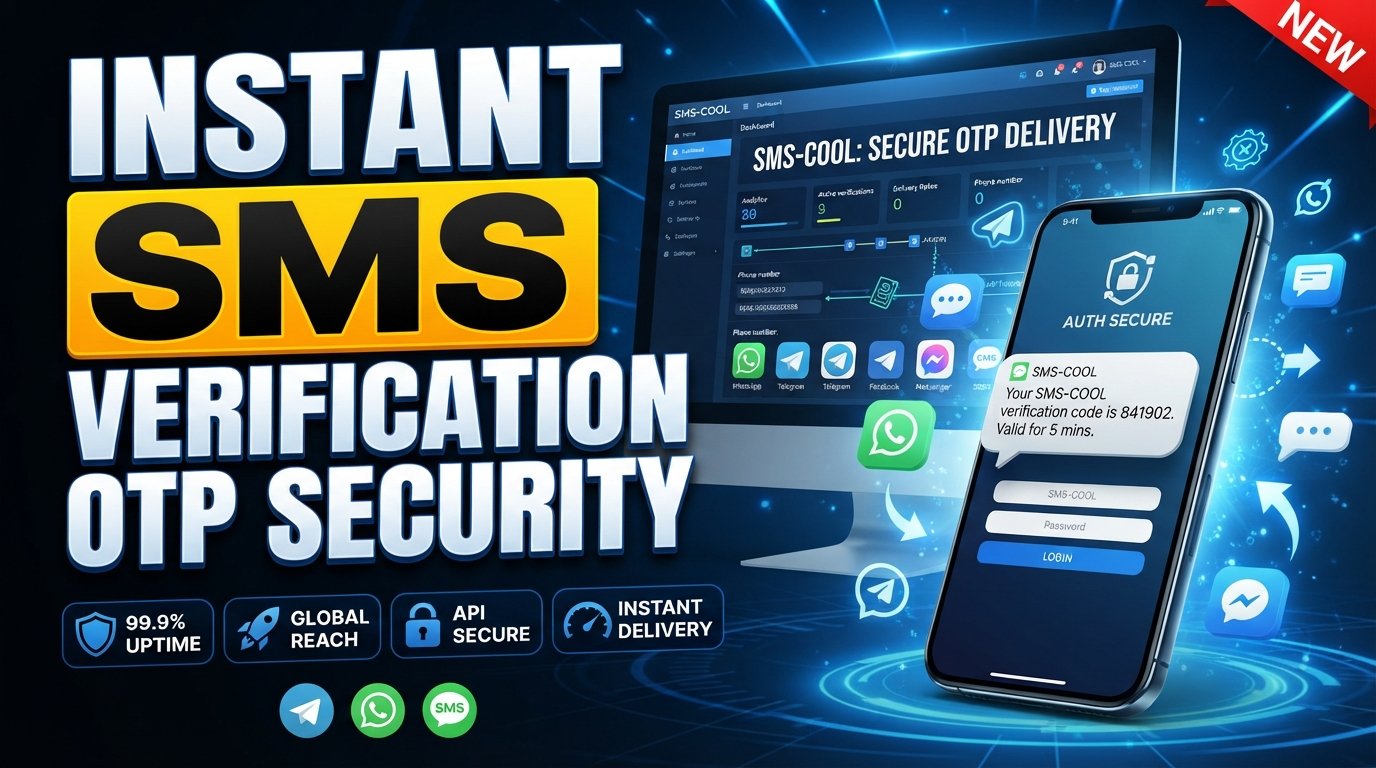
How Automated Verification SMS Works
A verification code arriving by text message may seem simple: enter your phone number, receive a code, type it in, and continue. Behind that short interaction is an automated process connecting a website or application, an authentication system, an SMS platform, and the user's mobile phone.
For businesses, that process needs to be fast, dependable, and easy to integrate. A delayed verification code can interrupt registration, frustrate customers, or prevent someone from completing an important action.
That is where automated verification SMS becomes valuable. Instead of relying on manual communication, businesses can automatically generate and send one-time passwords (OTPs) whenever a user needs to confirm their identity or phone number.
This guide explains how the process works, why businesses use it, what makes an SMS verification service reliable, and how SMS COOL can support practical verification workflows.
What Is Automated Verification SMS?
Automated verification SMS is a system that sends a verification message to a user's mobile phone without requiring a person to manually send it.
The message usually contains a temporary verification code, often called an OTP, or one-time password. The code is associated with a specific verification request and is generally designed to expire after a limited period.
For example, when a user creates an account, a platform may ask for a mobile number. After the number is submitted, the application can automatically request an OTP and send a verification code SMS.
A typical message might say:
Your verification code is 482731. Enter this code to continue.
The user enters the code into the application, and the system checks whether it matches the expected value.
This simple workflow is widely used for SMS authentication, account registration, login protection, password recovery, and other identity-related actions.
Why Businesses Use SMS Verification
Phone number verification gives businesses a straightforward way to confirm that a user has access to a particular mobile number.
It can also add an extra layer of protection to important account actions. Rather than relying entirely on passwords, a business can require a temporary code delivered through an OTP SMS.
Common reasons for using SMS verification include:
- Confirming a user's phone number during registration
- Reducing fake or duplicate account creation
- Supporting login verification
- Helping users recover accounts
- Confirming sensitive account changes
- Verifying customers during onboarding
- Protecting transactions or important actions
- Supporting multi-step authentication workflows
For customers, the experience is familiar. For businesses, automated SMS verification can turn a complicated authentication process into a simple, repeatable workflow.
How Automated Verification SMS Works Step by Step
The exact architecture can vary between applications, but most verification workflows follow a similar sequence.
Step 1: The User Requests Verification
The process begins when a user performs an action that requires verification.
They might register for an account, request a password reset, sign in from a new device, or confirm their phone number.
The application collects the user's phone number and sends a verification request to its backend system.
At this point, the business's application needs a way to communicate with an SMS provider. An SMS API is commonly used for this purpose.
Step 2: The System Generates an OTP
The verification system generates a temporary code.
This is usually a random or securely generated sequence of digits that is associated with the specific verification attempt.
For example, the system might generate:
735204
The backend can store the necessary verification information, such as the expected code, associated phone number, expiration time, and verification status.
The important point is that the OTP should be temporary. A one-time password is intended for a particular verification event rather than permanent use.
Step 3: The Verification SMS Is Sent
Once the code has been generated, the application sends the message through its configured SMS provider.
This is where an automated verification SMS platform becomes essential.
The SMS request can contain information such as:
- Recipient phone number
- Verification code
- Message content
- Sender information
- API credentials or authentication details
An SMS provider processes the request and routes the message toward the recipient's mobile network.
For businesses, fast OTP delivery matters because users generally expect the code to arrive within a short time. A slow message can lead to repeated requests and an unnecessarily frustrating experience.
Step 4: The User Enters the Code
After receiving the OTP SMS, the user enters the verification code into the website or application.
The application sends the submitted code back to the verification system.
A well-designed interface should make this step easy. It can provide a clear field for the code, explain what the user should do, and offer a resend option when appropriate.
Step 5: The System Confirms the Verification
The backend compares the submitted code with the verification request.
It may also check whether:
- The code is correct
- The code has expired
- The code belongs to the correct verification session
- The verification attempt is still valid
- Too many failed attempts have occurred
If the checks pass, the phone number is marked as verified and the user can continue.
This is the point where the automated workflow connects the SMS message to an actual business process.
Key Benefits of Automated SMS Verification
Automating verification removes unnecessary manual steps and makes authentication easier to scale.
Faster User Onboarding
A user can enter a phone number and receive a code automatically. There is no need for customer support staff to manually confirm the request.
Simple Customer Experience
SMS verification is familiar to most users. They can receive a code on a device they already have and enter it directly into the application.
Scalable Automation
Whether a business needs verification for occasional registrations or a large number of transactions, automated messaging can support repeatable workflows without manually sending individual messages.
Better Account Protection
Temporary OTPs can provide an additional verification layer for account access and sensitive actions.
Easy Integration
An SMS API or OTP API can connect the verification system to an existing website, mobile application, or backend service. This allows businesses to incorporate verification into their existing workflows rather than creating a separate manual process.
Common Uses of OTP Verification
Automated verification is useful across many industries and digital products.
Common examples include:
- E-commerce account registration
- Mobile applications
- Financial and payment platforms
- Customer onboarding
- Online marketplaces
- Password recovery
- New-device login verification
- Booking and reservation platforms
- Membership websites
- Business account registration
- Two-step authentication
- Phone number verification
For an online service, an online verification SMS can be particularly useful when the business needs a simple way to confirm that a customer controls a particular phone number.
What Makes a Reliable SMS Verification Service?
Not every SMS verification workflow delivers the same experience. Businesses should evaluate the complete process rather than focusing only on sending a message.
Speed
Verification depends on timing. If an OTP takes too long to arrive, users may request another code or abandon the process.
Reliability
A dependable SMS verification service should provide a practical foundation for sending transactional messages consistently. Businesses should also understand the provider's supported features, routing options, and integration process before deployment.
API Integration
An effective SMS API should fit naturally into the application's architecture. Developers need clear integration requirements and predictable request and response behavior.
Security
The verification system should protect OTPs and verification data. Codes should be temporary, attempts should be controlled, and sensitive information should not be unnecessarily exposed.
Scalability
As a business grows, verification messages may become part of many different workflows. The SMS infrastructure should therefore be suitable for automated messaging at the business's expected scale.
How SMS COOL Simplifies Automated Verification
SMS COOL provides a practical option for businesses that need automated verification SMS as part of their digital workflows.
Instead of building an SMS delivery system from scratch, a business can use SMS COOL as part of its verification process for OTP delivery, verification codes, and transactional messaging.
A typical workflow can look like this:
User action → Application → OTP generation → SMS COOL → User's phone → Code validation → Verified account
This approach keeps the responsibilities clear. The application's backend manages the authentication logic, while the SMS service handles the messaging side of the workflow.
Businesses can use this model for phone number verification, account registration, login verification, password recovery, and other situations where a temporary verification code is useful.
SMS API and OTP API Use Cases
An API-based approach can be especially useful for developers building custom applications.
For example, an application can trigger an OTP request when a user submits a registration form. The backend generates the code and uses the SMS COOL integration to send the corresponding verification message.
The same infrastructure can support other automated workflows, including transactional SMS and business notifications.
This gives businesses flexibility to make SMS verification part of the customer journey rather than treating it as a separate manual task.
Why Choose SMS COOL for Verification SMS?
Choosing an SMS provider is ultimately about finding an option that fits the application's technical and operational requirements.
SMS COOL can be considered by businesses looking for a straightforward way to support:
- Automated verification SMS workflows
- OTP SMS delivery
- Verification code messaging
- Automated SMS verification
- SMS API integration
- OTP API use cases
- Business SMS verification
- Transactional SMS communication
- Scalable automated messaging
The practical advantage is simplicity: businesses can focus on their application's verification logic while using an SMS platform to support the delivery portion of the process.
For developers, API-based integration can make verification easier to incorporate into existing websites and applications. For business teams, a structured SMS verification workflow can create a smoother experience for customers who need to confirm their phone numbers.
Frequently Asked Questions
What is automated verification SMS?
Automated verification SMS is a text message containing a temporary verification code that is generated and sent automatically when a user needs to confirm their identity or phone number.
How does OTP verification work through SMS?
The application generates a one-time password, sends it to the user's phone through an SMS provider, and then compares the code entered by the user with the expected value.
What is a verification code SMS?
A verification code SMS is a text message containing a temporary code used to confirm a phone number, account action, login, registration, or other verification request.
Why is fast OTP delivery important?
Users typically expect verification codes quickly. Delays can cause confusion, repeated code requests, or abandoned registrations, making fast OTP delivery an important part of the user experience.
Can SMS verification be integrated into an application?
Yes. Businesses commonly integrate SMS verification through an SMS API or OTP API, allowing their backend systems to trigger messages automatically when verification is required.
Is SMS verification suitable for businesses?
Yes. It can support account registration, phone number verification, authentication, onboarding, password recovery, and other workflows where businesses need to confirm control of a mobile number.
How can SMS COOL help with OTP verification?
SMS COOL can support businesses that need automated verification SMS, OTP delivery, verification codes, and API-based messaging as part of their digital verification workflows.
Conclusion
Automated verification SMS turns a potentially complicated identity check into a simple customer interaction: request a code, receive it, enter it, and continue.
Behind that experience, however, businesses need a reliable workflow that connects their application, OTP generation system, SMS API, and verification logic. Speed, reliability, security, and straightforward integration all contribute to a better verification experience.
For businesses building registration, authentication, onboarding, or account recovery workflows, SMS COOL offers a practical way to support automated verification SMS and OTP delivery without making the messaging process unnecessarily complicated.
If your website or application needs dependable verification messaging, explore how SMS COOL can fit into your SMS verification workflow and help you build a smoother, more efficient verification experience.