17 Aug 2026
What Is an Account Verification Number? Complete Beginner Guide
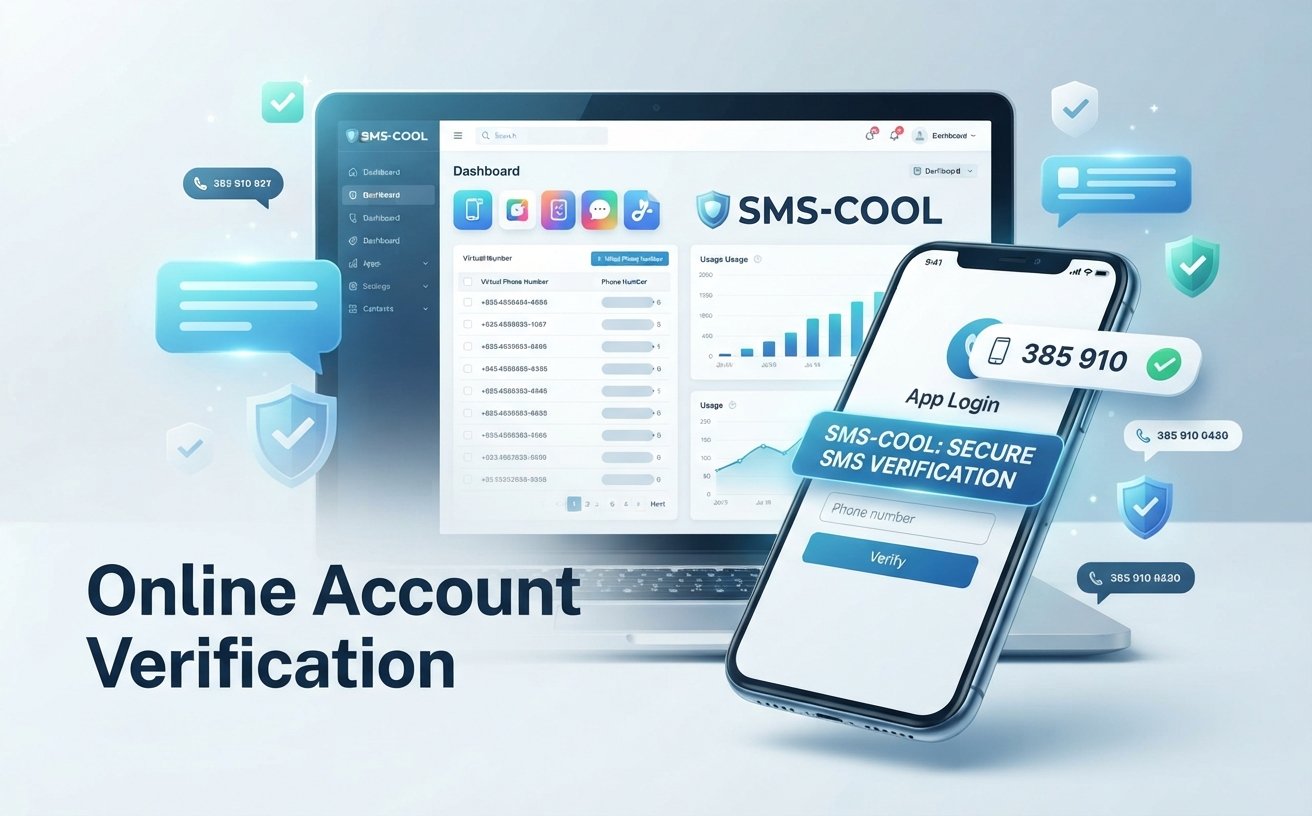
What Is an Account Verification Number?
Creating an online account often looks simple: enter your details, choose a password, and you are ready to go. Then comes one extra step—a text message containing a code.
That code is usually sent to an account verification number, a phone number used to confirm that someone can receive messages at a particular number. It is a common part of SMS verification, OTP verification, and online account security.
But what exactly is a verification number? How does phone verification work? And what options are available when you need to receive verification codes online?
This guide explains everything in straightforward terms and shows how SMS COOL can help make the process more convenient.
What Is an Account Verification Number?
An account verification number is a phone number used by a website, app, or online service to send a verification message.
When you create an account or perform an action that requires confirmation, the service may send an SMS containing a one-time password, commonly called an OTP or verification code.
For example:
- You enter a phone number during registration.
- The website sends a verification SMS.
- The message contains a unique code.
- You enter the code on the website or app.
- The service confirms the number and completes the verification process.
In simple terms, the verification number gives the service a destination for its verification SMS, while the verification code proves that the message can be received there.
Why Do Websites Require Phone Verification?
Phone verification is widely used because it adds another step between account creation and account access.
A password alone may not always be enough to confirm that an account belongs to the person attempting to use it. A phone-based verification step gives websites another way to confirm activity.
Common reasons for using phone verification include:
- Confirming a new account
- Completing registration
- Recovering an account
- Confirming a login
- Activating a service
- Verifying a phone number
- Reducing automated or suspicious registrations
- Confirming certain account changes
The exact verification process depends on the website or app. Some services may use SMS verification only during registration, while others may request an OTP during specific account activities.
How Does SMS Verification Work?
The basic concept behind SMS verification is easy to understand.
A service generates a temporary verification code and sends it by text message to the phone number associated with the account.
The code might look like:
482913
You then enter that code into the verification field. If the code is correct and still valid, the service can complete the verification step.
A Typical Verification Flow
The process usually looks like this:
Phone number → Verification SMS → OTP code → Code entered → Account verified
The verification code is generally designed to be used for a limited period or a specific verification attempt. This is why it is often called a one-time password.
It is important to distinguish between the verification number and the verification code. The number is where the SMS is delivered. The code is the information inside the message that you enter to complete verification.
When Might You Need a Verification Number?
There are many situations where people encounter phone verification online.
For example, you might need a phone number for verification when:
- Signing up for an online platform
- Testing an application
- Creating a service account
- Confirming a registration
- Accessing a platform that uses OTP verification
- Receiving a verification SMS
- Testing an SMS-enabled workflow
- Completing an online phone verification step
For people who frequently use online services, manually switching between devices or managing multiple SIM cards can become inconvenient. This is one reason online SMS solutions can be useful.
Regular, Temporary, and Virtual Phone Numbers Explained
Not every phone number works in exactly the same way. Understanding the difference between common types can make online verification easier to understand.
Regular Phone Number
A regular phone number is typically connected to a physical SIM card and a mobile service. It is generally associated with your everyday mobile device and may be used for calls, messages, and account recovery.
For personal accounts that you expect to use long term, your regular number may be the appropriate choice.
Temporary Phone Number
A temporary phone number is intended for a limited-purpose or limited-duration use.
Someone may look for a temporary number for SMS when they need to receive a verification message without using their primary number for that particular task.
However, whether a temporary number can be used depends on the policies and verification requirements of the service you are trying to access.
Virtual Phone Number
A virtual phone number operates through an online service rather than being tied in the same way to a physical SIM in your personal phone.
Virtual numbers can be useful for online communication and SMS-based workflows, depending on the service and its supported capabilities.
The important point is that temporary and virtual numbers are not automatically interchangeable. Their availability, lifespan, features, and acceptance can vary.
Can You Receive Verification Codes Online?
Yes, online SMS services can allow users to receive verification codes online instead of relying exclusively on a personal mobile device.
This can be convenient when a supported service provides access to an appropriate number and receives the incoming SMS.
A typical online verification workflow is:
- Choose an available number through an online SMS service.
- Enter that number on the website requesting verification.
- Wait for the verification SMS.
- View the incoming message through the service.
- Enter the OTP or verification code where required.
Not every website accepts every type of online number. Some platforms may restrict temporary or virtual numbers, so users should always check the rules of the service they are using.
Benefits of Receiving SMS Verification Codes Online
Using an online SMS verification service can be practical in situations where managing a physical SIM is inconvenient.
Potential advantages include:
Convenience
You can access incoming SMS through an online interface rather than relying solely on a physical phone.
Easier Number Management
For users who work with different online services or testing scenarios, an online phone number can simplify number management.
Faster Access to Verification Messages
When the service supports the required platform and number, receiving an SMS online can make the verification process more straightforward.
Useful for Testing and Online Workflows
Developers, digital teams, and frequent online users may encounter situations where SMS-based verification is part of a workflow that needs to be tested or completed.
Still, convenience should not replace good judgment. Avoid using verification services in ways that violate a platform's terms, and never share verification codes with people who should not have access to them.
How SMS COOL Helps With Online SMS Verification
When you need to receive SMS online, the challenge is often finding a practical way to access a verification message without relying on your everyday phone number.
SMS COOL is designed around this type of online SMS verification use case. It provides access to phone numbers that can be used to receive supported SMS messages online, including verification messages where the relevant service accepts the number.
The basic value is straightforward: instead of waiting for a message to arrive on a personal handset, you can use an online service to access the incoming SMS through its interface.
That can be particularly useful when your goal is to receive verification codes online as part of an account registration or other legitimate verification workflow.
How to Use SMS COOL for Verification
The process is designed to be simple:
- Open SMS COOL and review the available options.
- Select a suitable phone number for your intended verification.
- Enter the number on the website or app requesting phone verification.
- Wait for the verification SMS to arrive.
- View the incoming message through SMS COOL.
- Enter the verification code into the service requesting it.
The exact experience can depend on the platform being verified and the number available through the service.
The important thing is to use the number only for legitimate purposes and to follow the rules of the website or application you are using.
What to Consider Before Using Online SMS Verification
Online verification can be convenient, but it is not a universal solution for every account.
Before choosing a temporary or virtual number, consider:
- Platform compatibility: Some websites do not accept certain types of numbers.
- Number availability: The number you need may not always be available for every service.
- Account recovery: If an account may require the same number later, consider whether you will continue to have access to it.
- Privacy: Avoid entering sensitive personal information into untrusted services.
- Terms of service: Always follow the rules of the website or app you are verifying.
- Code confidentiality: Never share an OTP or verification code with someone else.
These considerations can help you choose the right verification method rather than treating every phone number as interchangeable.
Account Verification Number vs. Verification Code
The terminology can be confusing, so here is the simplest distinction:
Account verification number: The phone number receiving the message.
Verification code: The temporary code contained in the SMS.
For example, a service may ask you to enter a phone number first. It then sends an SMS containing an OTP. You use the OTP to verify that the number can receive the message.
Both are part of the same process, but they serve different purposes.
Why SMS Verification Remains So Common
SMS is familiar, straightforward, and supported across a wide range of mobile devices. Users do not necessarily need to install a separate authentication application just to receive a text message.
For businesses and online platforms, SMS can also be integrated into account registration and verification workflows.
That does not mean SMS is suitable for every security situation. For highly sensitive accounts, users should follow the platform's recommended security options and use stronger authentication methods when available.
For routine account confirmation and supported online workflows, however, SMS verification remains a familiar part of the digital experience.
9. FAQ Section
What is an account verification number?
An account verification number is a phone number used to receive an SMS containing a verification code or OTP. Websites and apps use it to confirm that the number can receive messages.
Why do websites require a verification number?
Websites may require phone verification to confirm registrations, help reduce automated activity, support account recovery, or add another confirmation step during account access.
Can I receive a verification code online?
Yes. An online SMS verification service can provide access to incoming verification messages through an online interface when the relevant website accepts the number being used.
What is the difference between a temporary and virtual phone number?
A temporary phone number is generally intended for limited or short-term use, while a virtual phone number operates through an online service. The exact features and availability depend on the provider.
How does SMS verification work?
A website sends a verification SMS containing an OTP or account verification code to the phone number you provide. You enter the code on the website to complete the verification step.
How can SMS COOL help with account verification?
SMS COOL provides an online way to receive supported SMS messages, making it possible to access verification codes online when a compatible number is available and accepted by the service you are using.
Is online SMS verification convenient?
It can be convenient because you can access supported verification messages online instead of relying exclusively on a physical SIM. However, compatibility and platform policies should always be considered.
10. Final CTA Focused on SMS COOL
Need a practical way to receive verification codes online?
SMS COOL can help simplify supported SMS verification workflows by giving you an online way to access incoming verification messages. Whether you need a temporary number for SMS or want a convenient option for online phone verification, explore SMS COOL and see how its available numbers can fit your verification needs.
Ready to make online verification simpler? Explore SMS COOL and get started with online SMS verification today.