26 Aug 2026
What Is an Account Confirmation SMS Code? A Simple Guide
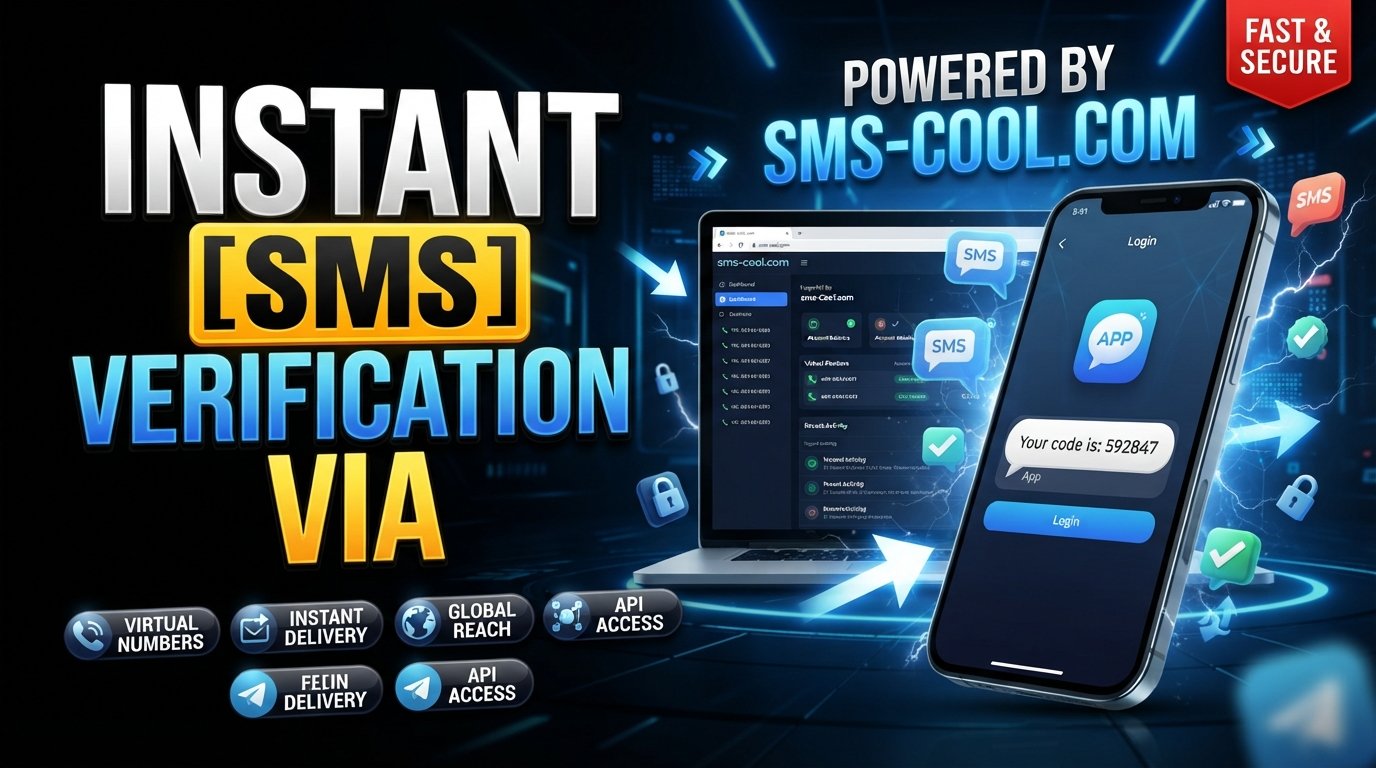
What Is an Account Confirmation SMS Code?
Signing up for a new website or app often looks simple—enter your details, create a password, and click Continue. Then comes one extra step: “Enter the code we sent to your phone.”
That short message contains an account confirmation SMS code, a temporary sequence of numbers used to confirm that you can access the phone number associated with an account.
This process, commonly called SMS verification, has become a standard part of online registration and account security. It can help platforms confirm phone ownership, reduce automated registrations, and add another layer of protection to user accounts.
But receiving a code is not always as straightforward as it sounds. Messages can be delayed, personal numbers may not be ideal for every registration, and some users simply need a separate number for legitimate short-term online activities.
That is where services such as SMS COOL can provide a practical option. SMS COOL offers virtual numbers that can be used for supported SMS verification requirements, allowing users to receive verification messages online rather than automatically relying on their primary phone number.
What Is an Account Confirmation SMS Code?
An account confirmation SMS code is a temporary code sent by text message to confirm access to a particular phone number.
For example, when you register for an online service, the platform may ask you to provide your phone number. After you submit it, the service sends an SMS containing a short code such as:
“Your verification code is 482731.”
You then enter that code into the registration page or app.
If the code matches and has not expired, the platform confirms the phone number and allows you to continue.
An account confirmation SMS code may also be called:
- SMS verification code
- confirmation code
- verification code
- OTP code
- SMS OTP
- one-time password
Although the terminology varies, the basic idea is the same: the platform sends a temporary code to a phone number, and you enter that code to complete verification.
How Does SMS Verification Work?
The process behind SMS verification is relatively simple from a user's perspective.
1. You enter a phone number
A website or app asks for your phone number during registration, login, recovery, or another security process.
2. The platform generates a code
The system creates a temporary verification code. This is usually a randomly generated sequence designed to be valid for a limited period.
3. The code is sent by SMS
The platform sends the code to the phone number you provided.
4. You receive the message
You open the SMS and find the verification code.
5. You enter the code
You type the code into the website or application.
6. The platform confirms the number
If everything matches, the phone verification step is completed.
In simple terms:
Enter number → Receive SMS → Enter code → Account verified
This straightforward workflow is one reason SMS remains a widely used authentication method.
Why Do Websites Use Account Confirmation SMS Codes?
There are several reasons a website may request an account verification SMS.
Confirming access to a phone number
The most obvious purpose is confirming that the person registering an account can receive messages at the provided number.
Reducing automated registrations
Phone verification can make it harder for certain automated systems to create large numbers of accounts.
Adding another security layer
A phone-based verification step can provide an additional checkpoint during login, account recovery, or other sensitive actions.
Supporting account recovery
Some services use SMS codes when users need to reset a password or regain access to an account.
Importantly, SMS verification is not a guarantee that an account is completely secure. Strong passwords, authenticator apps, security keys, and other security measures can provide additional protection depending on the service.
What Is an OTP or One-Time Password?
OTP stands for one-time password.
An OTP code is designed to be used once, usually within a limited period. After it is accepted—or expires—it should no longer be valid.
An SMS OTP is simply an OTP delivered through text messaging.
For example, a service might send:
Your one-time password is 735214.
The number is not intended to become your permanent password. It is a temporary confirmation mechanism.
This makes OTPs useful for registrations, logins, password recovery, and other verification processes.
However, users should always treat OTP codes as sensitive information. If someone asks you to forward a verification code, especially when you did not initiate the action, stop and investigate before sharing anything.
When Do You Need an SMS Verification Code?
You may encounter an SMS verification code in many everyday online situations.
Common examples include:
- Creating a new online account
- Confirming a phone number
- Signing into an existing account
- Recovering account access
- Setting up a secondary account
- Testing an application or registration workflow
- Confirming certain online services
- Completing supported online phone verification
Whether a platform requires SMS verification depends entirely on its own policies and security system.
If the service accepts virtual numbers, a temporary phone number can sometimes be a convenient alternative when you do not want to use your primary number for a short-term verification task.
Common Problems With Receiving Verification Codes
Although SMS verification sounds simple, users can encounter several frustrating problems.
The code never arrives
Network problems, delivery delays, incorrect numbers, or platform-side issues can prevent an SMS from arriving promptly.
The code expires
Many verification codes are temporary. If you wait too long, you may need to request another one.
Your number is rejected
Some websites do not accept certain virtual, temporary, VoIP, or previously used numbers.
You receive too many messages
Using your personal number for numerous registrations can sometimes result in unwanted promotional or service-related messages.
You need a separate number
There are legitimate situations where users prefer not to connect a short-term online activity directly to their everyday phone number.
Before using an alternative number, always check whether the website or app permits it. A virtual number is a convenience option, not a way to override a platform's requirements.
How Temporary or Virtual Phone Numbers Work
A virtual phone number is a number that can be accessed through an online service rather than being tied directly to the physical SIM in your primary phone.
A temporary phone number generally emphasizes short-term use. It may be suitable when you need to receive a verification message for a particular supported task without maintaining another permanent mobile line.
The two concepts can overlap: a temporary number may be a virtual number, but not every virtual number is necessarily temporary.
This approach can be useful for users who want to:
- Keep personal and online contact information separate
- Receive SMS online
- Complete supported account registrations
- Test applications and workflows
- Handle temporary verification requirements
There is one important limitation: not every website accepts every type of virtual or temporary number. Always review the service's rules before choosing a number.
How SMS COOL Makes SMS Verification Easier
When you need an alternative number for a legitimate, supported verification task, SMS COOL offers a practical workflow.
The platform provides instant virtual numbers for receiving SMS verification codes, along with longer-term rental options. Its website describes a simple process: create an account, add balance, choose the relevant service and number, then receive the OTP through the dashboard.
The basic workflow is:
- Identify the website or app you need to verify.
- Check whether it accepts a virtual or temporary number.
- Choose an appropriate number through SMS COOL.
- Enter that number during the verification process.
- Request the SMS verification code.
- Monitor the SMS COOL dashboard for the incoming message.
- Enter the received code into the website or app.
This can make online SMS verification more convenient when using your primary phone number is unnecessary or undesirable.
SMS COOL also offers different number options, including instant virtual numbers and longer-term rentals, which can be useful depending on whether your verification requirement is one-time or ongoing.
Benefits of Using SMS COOL
Convenient access to virtual numbers
Instead of obtaining another physical SIM card for a short-term task, you can use an online platform to access a suitable virtual number.
Receive verification codes online
SMS COOL is designed around receiving SMS messages through its platform, making it easier to manage supported verification codes without relying exclusively on your personal mobile number.
Useful for temporary verification needs
If you only need a temporary number for verification, a short-term option can be more practical than maintaining another permanent phone line.
Greater separation of personal information
Using a separate number can help keep your primary phone number away from certain online registrations. It does not make you completely anonymous or eliminate privacy considerations, but it can create useful separation.
Flexible number options
Different situations require different solutions. SMS COOL provides instant virtual numbers as well as rental options for users who need access for longer periods.
Developer-friendly options
For technical users and businesses, SMS COOL also provides an API for programmatic number and SMS-related workflows.
The key is to use these features for legitimate purposes and only where the target platform permits virtual or temporary numbers.
Tips for Using SMS Verification Safely
Convenience should never come at the expense of security. Keep these practices in mind when handling a verification code:
- Never share an OTP code with another person.
- Only enter a code on the official website or app you intended to use.
- If you receive a code you did not request, do not use or forward it.
- Check the website's policies before using a temporary or virtual number.
- Avoid using a temporary number for an important account if the account may later require that number for password recovery.
- Use strong, unique passwords alongside SMS verification.
- Enable stronger authentication options when a service offers them.
- Treat verification messages as sensitive account information.
A temporary number can be useful for a short-term registration, but a long-term account may be better protected with a number or authentication method you can reliably access later.
Frequently Asked Questions
What is an account confirmation SMS code?
An account confirmation SMS code is a temporary code sent by SMS to confirm access to a phone number during account registration, login, recovery, or another verification process.
What is the difference between an SMS verification code and an OTP?
An SMS verification code describes the code delivered through text messaging. OTP means one-time password and describes a temporary credential intended for limited or single use. An SMS verification code can therefore be an OTP.
Can I receive SMS online for account verification?
Yes, when the website or app permits virtual numbers. An online SMS verification service such as SMS COOL can provide access to a suitable virtual number for supported verification tasks.
Can I use a temporary phone number for verification?
Sometimes. A temporary phone number for verification can be useful for supported short-term activities, but individual websites decide whether temporary or virtual numbers are accepted.
What is a virtual phone number?
A virtual phone number is a phone number accessed through an online service rather than necessarily being connected to your primary physical SIM. It can be useful for certain communication and verification workflows.
Is SMS verification completely secure?
No security method is perfect. SMS verification can add a useful layer of account protection, but users should also use strong passwords and other available security features. Never share an OTP or confirmation code with someone else.
How does SMS COOL help with online phone verification?
SMS COOL provides access to virtual numbers that can receive SMS verification messages for supported services. Users can select a suitable number, provide it during verification, and view incoming SMS through the platform.
Conclusion
An account confirmation SMS code is a simple but important part of modern online verification. Whether it is called an SMS verification code, confirmation code, OTP code, or one-time password, its purpose is generally the same: confirm that you can access the phone number associated with a verification request.
For many people, using their personal number is perfectly suitable. But when a separate number makes more sense, a virtual or temporary phone number can offer additional convenience and separation.
That is where SMS COOL can be a practical solution. With virtual numbers designed for supported SMS verification needs, options for short-term and longer-term use, and an online workflow for receiving messages, it can simplify the process of handling verification codes.
If you need a convenient way to receive verification codes, consider SMS COOL for legitimate online verification tasks where virtual or temporary numbers are permitted. Choose the option that fits your needs, follow the target platform's rules, and keep every verification code private.