24 Aug 2026
How Account Confirmation SMS Works | SMS COOL Guide
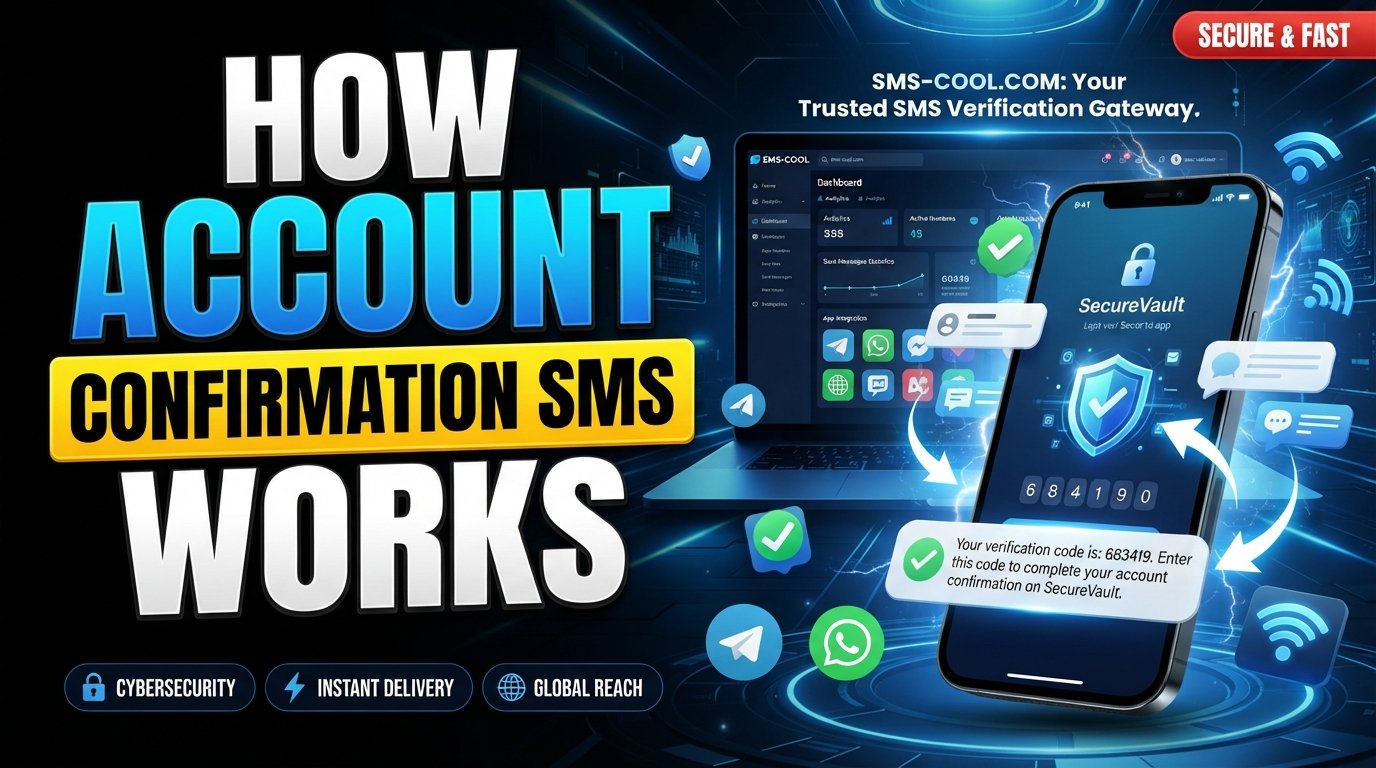
How Account Confirmation SMS Works
Creating an online account should be quick and simple, but businesses also need to know that the person registering is using a real phone number. That is where account confirmation SMS becomes useful.
Instead of asking users to wait for an email or complete a complicated verification process, a business can send a short verification code directly to the customer's mobile phone. The user enters that code on the website or app, and the account can then be confirmed.
This simple process is commonly known as SMS verification, and it has become a practical part of registration, login security, password recovery, and user authentication.
For businesses that need a dependable way to send verification messages, SMS COOL provides a practical approach to account verification SMS, OTP SMS, and other transactional messaging needs.
What Is Account Confirmation SMS?
An account confirmation SMS is a text message sent to a user's mobile phone to confirm that the phone number provided during registration belongs to that user.
The message typically contains a short verification code, often generated as a one-time password or OTP.
For example, a user might register for an online service and enter their mobile number. The platform then generates a temporary code and sends a verification SMS such as:
“Your verification code is 482731. Enter this code to confirm your account.”
The user enters the code into the registration screen. If the code matches the one generated by the system and is still valid, the platform confirms the phone number.
This process is known as phone number verification or mobile number verification.
Account confirmation SMS can help businesses establish an additional layer of confidence during registration while keeping the user experience straightforward.
How Does Account Confirmation SMS Work?
Understanding how account confirmation SMS works is easier when the process is broken into a few simple steps.
1. The user enters a phone number
The process begins when a customer signs up for a website, mobile application, marketplace, financial platform, or other online service.
The user provides their mobile number along with the required registration information.
2. The platform generates a verification code
The business's application creates a temporary verification code.
This is commonly an OTP SMS code, meaning the code is designed for one-time use. The system can also associate the code with the user's account, phone number, and verification session.
3. The verification request reaches an SMS provider
The application sends the verification request through an SMS API or OTP API.
An SMS verification service then processes the message and routes it toward the user's mobile network.
This automation allows businesses to send verification code SMS messages without manually handling individual texts.
4. The user receives the confirmation SMS
The verification message arrives on the customer's phone.
A well-designed confirmation SMS should be short, clear, and easy to understand. The verification code should be immediately visible so the customer can complete the process without confusion.
5. The user enters the code
The customer returns to the website or application and enters the one-time password.
The platform checks whether the submitted code matches the code stored for that verification request.
6. The system confirms the account
If the code is correct and has not expired, the platform can mark the phone number as verified.
The customer can then continue using the service according to the business's registration or security rules.
This entire workflow can happen within a short period, making SMS a convenient option for automated SMS verification.
Why Businesses Use SMS Verification
Businesses use account verification SMS because phone-based verification can add a useful security and identity-checking layer to digital services.
Better account protection
A verified phone number gives a business another signal that an account is associated with a reachable mobile number.
This can help support broader account security measures, particularly when combined with passwords, device checks, risk controls, or two-factor authentication.
Fast user verification
Customers generally want to complete registration quickly. Waiting for an email or navigating multiple verification screens can create unnecessary friction.
A short confirmation SMS gives users a direct way to receive their verification code and continue.
Reduced fake registrations
Requiring phone number verification can make large-scale creation of low-quality or duplicate accounts more difficult.
It is not a complete solution to fraudulent activity, but it can be a useful part of a wider customer verification strategy.
Improved user trust
Clear security steps can reassure customers that a business takes account protection seriously.
When verification messages are concise and arrive promptly, the process can feel like a normal and professional part of account creation.
Useful across different customer journeys
SMS verification is not limited to registration. Businesses can use it for login verification, password recovery, new-device checks, and other situations where confirming control of a phone number is helpful.
What Is an OTP in SMS Verification?
An OTP, or one-time password, is a temporary code created for a specific verification event.
In an OTP verification workflow, the code is generally valid for a limited period and is intended to be used once.
For example:
Your SMS COOL verification code is 735214. Enter it to confirm your account.
The code can be generated automatically and sent through an SMS API. Once the customer submits it, the application checks the code and its validity.
Using temporary codes helps prevent an old verification code from being reused indefinitely.
Businesses should still implement appropriate security controls around OTP generation, storage, expiration, retry limits, and verification attempts.
Account Confirmation SMS vs. Other Verification Methods
SMS is only one way to verify users.
Email verification sends a confirmation link or code to an email address. It can work well when email is central to the customer journey, but users may need to open another application or check a spam folder.
Authenticator apps can provide strong authentication using time-based codes, but they require users to install and configure an additional application.
Biometric authentication can offer a convenient experience on supported devices, although implementation and device compatibility can vary.
SMS authentication remains attractive for many businesses because mobile phone numbers are familiar to customers and the basic verification journey is easy to understand.
The best method depends on the business, the level of risk, the customer experience, and the wider security architecture. SMS can also work alongside other authentication methods rather than replacing them.
Common Use Cases for Account Verification SMS
Account verification SMS can support many digital workflows.
User registration
When someone creates a new account, an OTP can confirm the mobile number before the account becomes fully active.
Login verification
Businesses can request a verification code when users sign in from an unfamiliar device or when additional authentication is required.
Password resets
A temporary SMS code can help verify control of a registered phone number during password recovery.
New device verification
A business can use SMS authentication as one part of the process for confirming a new device or session.
Financial services
Financial platforms may use customer verification and additional authentication steps as part of their security processes, subject to their applicable regulatory and risk requirements.
E-commerce
Online stores and marketplaces can use phone number verification during registration, account recovery, or other sensitive account actions.
Mobile applications
Apps can integrate an SMS API to automatically send OTP messages during onboarding and account verification.
What Makes a Good SMS Verification Service?
Choosing an SMS verification service involves more than simply being able to send a text message.
Delivery reliability
Verification messages need to reach users consistently. Delayed or failed messages can interrupt registration and frustrate customers.
Fast SMS delivery
Speed matters because verification is usually an immediate action. A customer who requests a code expects to receive it without unnecessary delay.
API integration
A straightforward SMS API makes it easier for developers to connect verification workflows to websites, applications, and backend systems.
Scalability
A business may have relatively low verification traffic one day and significantly higher demand during a campaign, product launch, or growth period. Its messaging infrastructure should be able to support changing volumes.
Security controls
Verification systems should include sensible protections such as code expiration, rate limiting, attempt limits, and safeguards against abuse.
Clear user experience
The message itself should tell the customer what the code is for and what action they need to take.
A reliable SMS service should support both technical requirements and the customer's actual experience.
Why Choose SMS COOL for Account Confirmation SMS?
For businesses looking for a practical way to implement account confirmation SMS, SMS COOL can be a useful solution for verification and transactional messaging workflows.
SMS COOL can support use cases involving OTP SMS, verification codes, SMS authentication, and phone number verification. Instead of treating verification as an isolated feature, businesses can integrate messaging into their existing application workflow through an SMS API.
The practical value is straightforward: your application triggers a verification request, the SMS service handles message delivery, and the user receives the code needed to continue.
For businesses, that can make account verification easier to integrate into registration, login, password recovery, and other customer journeys.
SMS COOL is particularly relevant when a business wants a focused approach to business SMS verification without making the verification experience unnecessarily complicated.
As with any messaging provider, businesses should evaluate the coverage, integration requirements, security controls, pricing, and delivery capabilities relevant to their specific markets and use cases.
Best Practices for Account Confirmation SMS
A good verification system should make security and convenience work together.
Here are several practical best practices:
- Keep verification codes short and easy to enter. Avoid unnecessary complexity.
- Use one-time passwords. A code should be intended for a specific verification event.
- Set an expiration time. Temporary codes reduce the usefulness of old verification messages.
- Limit resend requests. Resend controls can reduce abuse and unnecessary message traffic.
- Apply rate limiting. Restrict excessive verification attempts from the same account, number, device, or source where appropriate.
- Protect the verification endpoint. The backend should validate codes securely rather than relying on client-side checks.
- Keep messages clear. Tell users why they received the message and what to do next.
- Avoid unnecessary personal information. A verification SMS normally needs only the relevant code and simple instructions.
- Provide useful error handling. If a code expires or is entered incorrectly, explain the next step clearly.
- Monitor delivery performance. Tracking failures and delays can help businesses identify problems with their verification workflow.
These practices can make secure SMS verification more dependable while keeping the customer journey simple.
Final Thoughts
An account confirmation SMS provides a straightforward way for businesses to verify phone numbers and support safer digital account workflows.
The basic process is simple: a user provides a phone number, the system generates a temporary verification code, an SMS provider delivers it, and the user enters the code to complete verification.
Behind that simple experience are important considerations such as delivery reliability, API integration, security controls, scalability, and user experience.
For businesses building registration, login, password recovery, or other verification workflows, SMS COOL offers a practical option for implementing OTP SMS, verification messages, and SMS authentication.
If your business needs a straightforward way to strengthen account verification SMS workflows and deliver verification messages to customers, explore how SMS COOL can fit into your application and start building a smoother verification experience.
FAQ: Account Confirmation SMS
What is an account confirmation SMS?
An account confirmation SMS is a text message containing a verification code sent to a user's mobile number. The user enters the code on a website or app to confirm control of the number.
How does SMS OTP verification work?
An SMS OTP workflow generates a temporary one-time password and sends it to the user's registered phone number. The user enters the code, and the system checks whether it is correct and still valid.
Is SMS verification secure?
SMS verification can provide a useful layer of account security, especially when combined with other security controls. Businesses should use expiration times, attempt limits, rate limiting, and secure backend validation.
Can SMS verification be used for login?
Yes. Businesses can use SMS authentication during login when additional verification is required, such as when a user signs in from an unfamiliar device.
What is an SMS API?
An SMS API allows a website or application to communicate with an SMS service programmatically. This enables automated messages such as OTP SMS, verification code SMS, alerts, and other transactional SMS.
Why use SMS COOL for account verification?
SMS COOL can help businesses integrate SMS-based verification into digital workflows, including account registration, OTP verification, phone number verification, and other authentication use cases.
Ready to Simplify Account Verification?
Give your users a faster, clearer way to confirm their accounts with SMS verification.
Consider SMS COOL for your account confirmation SMS, OTP SMS, and business verification needs—and build a verification experience that is simple for customers and practical for your business.